Scrap Gold Buyers UK: Sell Broken, Unwanted and Mixed Gold
Quick Answer
Scrap gold buyers help you turn broken, unwanted, inherited, or mixed gold into cash by testing the metal, weighing it by carat, and paying for the gold content only. The best scrap gold buyers explain the valuation clearly, accept mixed lots, and offer safe payment after an in-person assessment.
If you have broken jewellery, odd items, or a mixed box of gold, scrap gold buyers can help you turn it into cash without the stress of sorting everything first. That is especially useful when you are dealing with inherited pieces, damaged chains, or a lot of jewellery that no longer gets worn. At Gold Buyer, we make that process straightforward with local valuations, home visits, and instant bank payment after an accepted offer. If you want to understand the wider service first, see our Gold Buying | Gold Buyer page. This guide focuses on scrap gold buyers for broken, unwanted, and mixed lots, so you can see what counts as scrap gold, how value is worked out, and why an in-person valuation often feels safer than posting items away. It also explains the small details that matter, such as stones, clasps, and mixed carats, because those can affect the final offer more than many sellers expect.
Sell Scrap Gold to a Trusted UK Buyer
Scrap gold buyers purchase gold for its metal content, not its retail or sentimental value. That means broken items, mismatched pieces, and worn jewellery can still have real value.
If you want a local option, Gold Buyer offers a friendly route through Contact Gold Buyer | Gold Buyer | Midlands & South and can arrange valuations for people who prefer a proper conversation before selling. Many sellers also compare service style and payment speed before choosing scrap gold buyers. For a useful overview, our How to Get the Best Price for Gold in the UK guide explains what matters most in a fair sale.
Good scrap gold buyers should make the process clear. They should test the items, sort the carats, and explain how the final figure is reached. That matters if your lot includes rings, chains, earrings, or a mix of 9ct, 14ct, and 18ct gold. It also helps if you want to sell broken gold without re-polishing or repairing it first.
A useful benchmark is price transparency. Some providers publish live guidance, while others keep their method vague. For a broader market view, this guide to where to sell gold in the UK explains the different sale routes. Likewise, Gold Traders’ cash-for-gold information shows how gold sellers often compare options before choosing.
For many people, the best scrap gold buyers are the ones who keep things simple: weigh the gold, identify the purity, explain any deductions clearly, and pay quickly once you agree. That is the standard we aim for at Gold Buyer, whether you are selling a single broken chain or a mixed bag of unwanted jewellery.
What makes a buyer trustworthy?
Trust comes from clear testing, simple explanations, and secure payment. Scrap gold buyers should tell you what they are checking and why. They should also avoid pressure tactics and give you time to decide.
What Counts as Scrap Gold?
Scrap gold is any gold item sold mainly for its metal value rather than as a finished piece of jewellery. That includes damaged, incomplete, outdated, or mismatched items.
This is where scrap gold buyers are most helpful. They can value pieces that would be awkward to sell elsewhere. If you have mixed items, our Sell Gold and Silver: Jewellery, Coins, Bullion and Mixed Precious Metals page is useful for understanding multi-item lots. You can also see how broken items are handled on our Broken Gold Buyer in the Midlands page.
H3: Broken Rings and Chains
Broken rings and snapped chains are classic scrap gold items. The damage does not remove the gold content. It simply changes how the item is sold. Scrap gold buyers still value the precious metal, so a broken clasp or split shank does not make the piece worthless.
H3: Odd Earrings and Damaged Jewellery
Single earrings, bent bracelets, and jewellery with missing stones are also common. These are often impossible to wear again, but scrap gold buyers can still test and price them. If a piece is gold and no longer practical, it may be a better candidate for scrap sale than repair.
H3: Mixed Carat Gold Lots
Mixed lots are very common in UK homes. One box might contain 9ct chains, 18ct rings, and a few plated or non-gold items. Scrap gold buyers separate the lot by purity, then value each type correctly. That is one reason mixed lots often do better with a careful local valuation than with a quick guess.
If you want to sell a broader selection, our Sell Unwanted Gold: Turn Old, Unused or Inherited Gold into Cash page explains how unwanted pieces can be grouped together for assessment.
How Scrap Gold Is Valued
Scrap gold buyers value your items by checking purity, weight, and current market price. The final offer is based on the actual gold content, not the original retail cost.
That means a heavy 9ct item can be worth less per gram than a lighter 18ct one, because the purity is lower. If you want a deeper breakdown, our Gold Price Per Gram UK: 9ct, 14ct, 18ct, 22ct and 24ct Prices page explains the carat system in plain English. For mixed lots, our Gold Valuation in the Midlands page shows how we weigh and value gold carefully.
Scrap gold buyers usually follow a simple process:
- test the item to confirm gold content
- identify the carat or purity mark
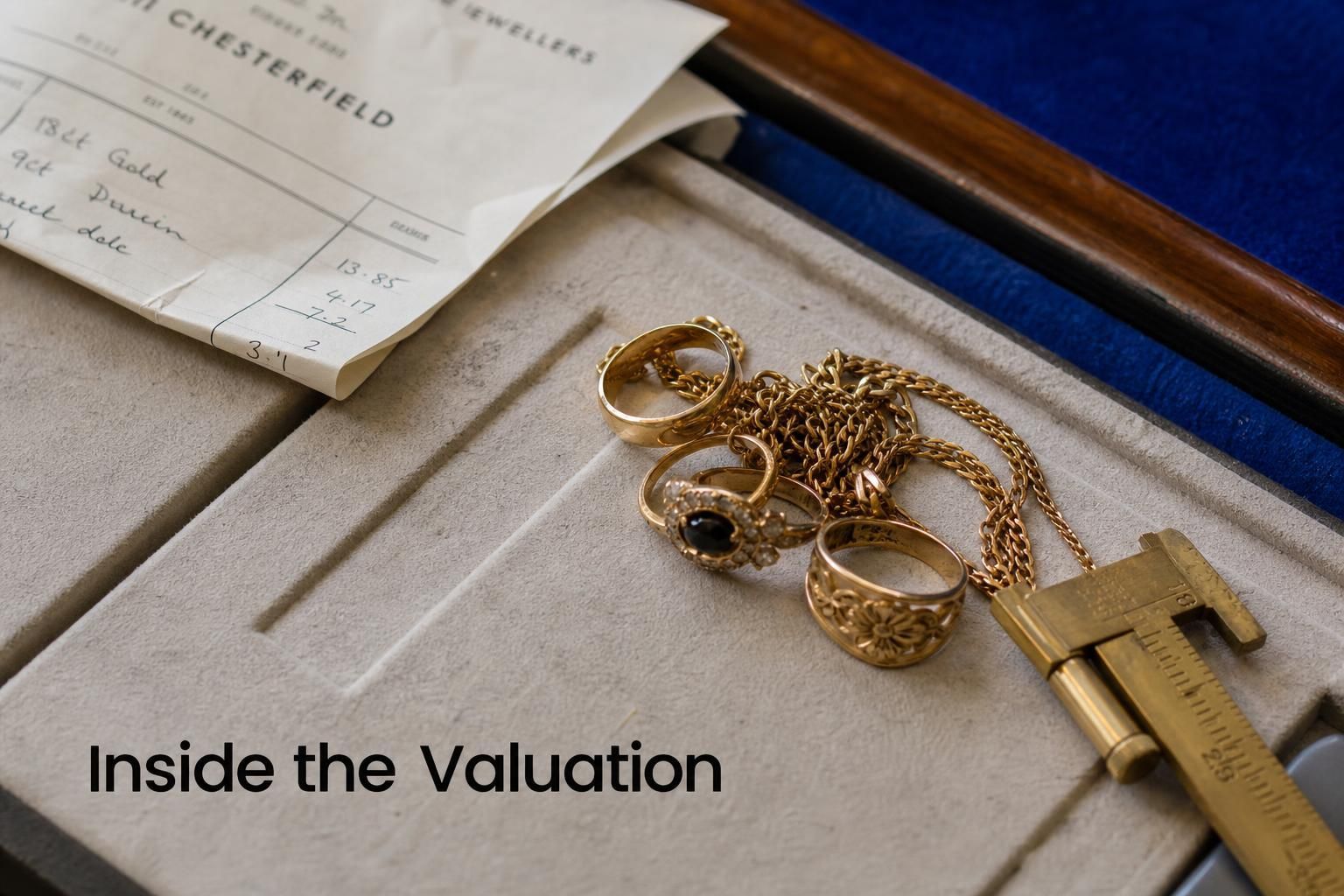
- weigh each group separately
- explain any non-gold parts that must be excluded
- make an offer based on the metal value
A short video can also help sellers understand the process visually. This one from The Auction Professor shows a real-world scrap gold sale:
If you are selling a mixed lot, it helps to know that scrap gold buyers do not pay for design, brand, or nostalgia. However, they should still explain any deductions clearly. That is why many sellers prefer a local appointment or home visit. It gives you a chance to ask questions before agreeing.
For comparison, some people like calculator-style research first. A live valuation guide can be useful, but it is still only a guide. Scrap gold buyers can give a firmer figure once the items are in front of them. That is especially true when pieces are tangled, damaged, or mixed by purity.
Do Stones, Clasps or Non-Gold Parts Affect Value?
Yes, they can affect the payout, but only because the buyer pays for gold content. Scrap gold buyers may need to remove or discount non-gold parts such as large stones, steel springs, magnetic clasps, or other attached materials.
That does not mean your item has no value. It means the buyer has to isolate the precious metal first. Our Sell Gold Jewellery in the Midlands page covers jewellery items that include settings and attachments. If your item is dental rather than decorative, our Dental Gold Buyers: Sell Gold Crowns, Bridges and Dental Scrap page explains that specialist category too.
Scrap gold buyers should be transparent here. For example, a ring with a stone may still be valuable as gold, but the gem is usually handled separately unless it is being sold as jewellery. Likewise, a clasp or hinge may add very little if it is not gold.
That is why clear testing matters. It protects you from vague offers and helps you understand what is being paid for. If you want to compare a local route with postal selling, our Home Visit Gold Buyer vs Postal Gold Buyer: Which Is Safer? page is a useful read. It explains why many sellers feel more comfortable with face-to-face scrap gold buyers.
A short news clip about gold selling can also be helpful context. CBS New York covered what sellers should know as prices moved higher:
Sell Scrap Gold Without Posting It Away
Yes, you can sell scrap gold without using a postal kit. In fact, many people prefer a local appointment because it keeps control in their hands.
This is where scrap gold buyers can be a safer choice. You can see the valuation happen, ask questions, and decide before any payment is made. If you want a guided local service, our Gold Buyer Near Me: Home Visit Gold Valuations Across the Midlands and South page explains how home visits work. You can also review our Sell Gold UK for a Fair Valuation and Instant Bank Payment page for the wider process.
Scrap gold buyers are often chosen by people who value convenience and reassurance. That includes retirees downsizing, families clearing inherited jewellery, and sellers with mixed boxes of items. A local appointment also works well if you are unsure whether pieces are gold, gold-filled, or plated.
If you are in the region, our Sell Gold for Cash in the Midlands page is a helpful local starting point. It is designed for people who want a simple sale with clear communication.
The main advantage is control. You keep the gold until you are happy with the offer. Then, once accepted, payment can be made by bank transfer. That is often the most comfortable route for sellers who want a safer alternative to sending items through the post.
Book a Scrap Gold Valuation
If you are ready to sell, the next step is simple. Contact scrap gold buyers who can assess your items in person and explain the offer clearly.
At Gold Buyer, we handle broken jewellery, mixed lots, necklaces, coins, bullion, and other gold items through clear appointments and fast payment after acceptance. If your lot includes chains, our Sell Gold Necklaces | Gold Buyer | Midlands & South page is a useful next stop. For investment pieces, you may also want Sell Gold Bullion | Gold Buyer | Midlands & South or Sell Gold | Gold Buyer | Midlands & South UK.
Scrap gold buyers are best when they are easy to understand. You should know what is being tested, what is being weighed, and what you are being paid for. If you want to arrange a valuation, the quickest route is to use our contact page and tell us what you have.
For mixed, broken, and unwanted gold, that approach usually gives the clearest result. It is practical, safe, and suited to people who want a fair sale without unnecessary hassle.
Key Takeaways
- Scrap gold buyers pay for gold content, not sentimental or retail value.
- Broken, odd, and mixed-carat items can still be valuable as scrap gold.
- Clear testing, weighing, and purity checks are essential for a fair offer.
- Stones, clasps, and non-gold parts can affect value, but do not erase it.
- A local valuation or home visit can be safer and clearer than posting gold away.
Frequently Asked Questions
Who pays the most money for scrap gold?
The highest-paying scrap gold buyers are usually the ones that explain their pricing clearly and base offers on live gold content, purity, and weight. In practice, the best result often comes from a trusted local buyer with low overheads and transparent testing, rather than a rushed postal or vague buy-back service.
How much is 1 gram of scrap gold worth?
1 gram of scrap gold is worth the metal value of that gram at its purity level. The exact amount changes with the gold market and the carat, so 9ct, 14ct, 18ct, 22ct, and 24ct all differ. Scrap gold buyers should explain the rate they use before you agree to sell.
How much will I get for scrap gold?
You will get paid for the gold content, not the retail price or original purchase cost. Scrap gold buyers work out the offer from purity, weight, and current market conditions, then deduct any non-gold material if needed. Mixed lots can still be worth selling, especially if the items are broken or unwanted.
How much is 1g of 9ct gold worth scrap?
1g of 9ct gold is worth less than 1g of 18ct or 24ct gold because it contains a lower proportion of pure gold. Scrap gold buyers should calculate the value using the 9ct purity and the day’s gold rate, then show you how the offer was reached.