

Selling White Gold: A Practical UK Step‑by‑Step Guide
If you’re selling white gold, start by confirming the karat and hallmarks, weighing each item, and checking live market prices; then choose a reputable buyer who pays by bank transfer the same day. Remove non-gold parts, gather ID, and request a clear, itemised valuation before you agree to proceed.
What Exactly Is White Gold and How Is Value Calculated?
White gold is an alloy: yellow gold blended with whitening metals like palladium, silver or nickel, usually finished with a rhodium plate to enhance brightness. Its value comes primarily from the gold content, not the rhodium or other alloy metals. When a buyer appraises your pieces, they typically identify karat (fineness), verify hallmarks, measure weight, and reference live bullion prices to determine a transparent offer.
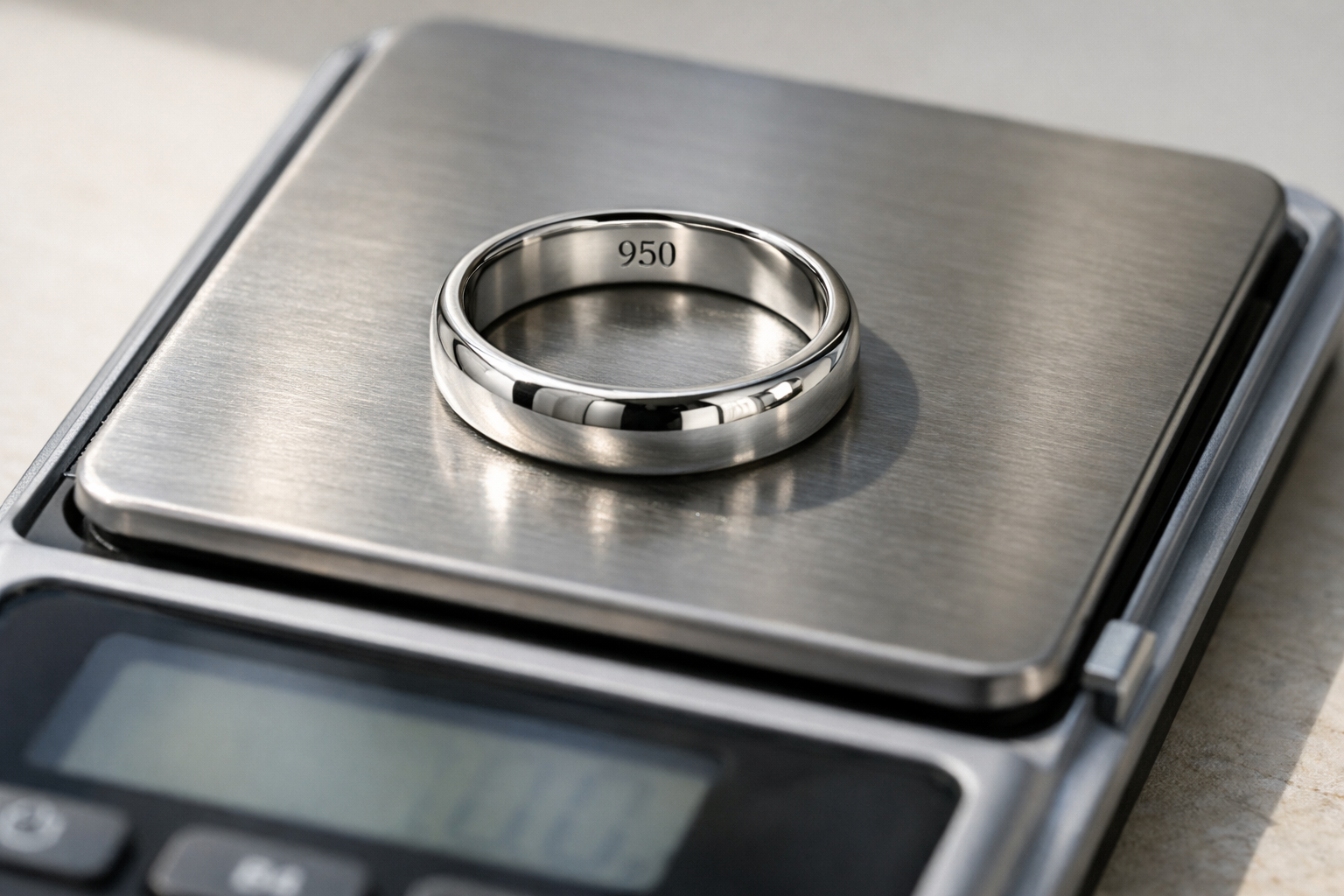
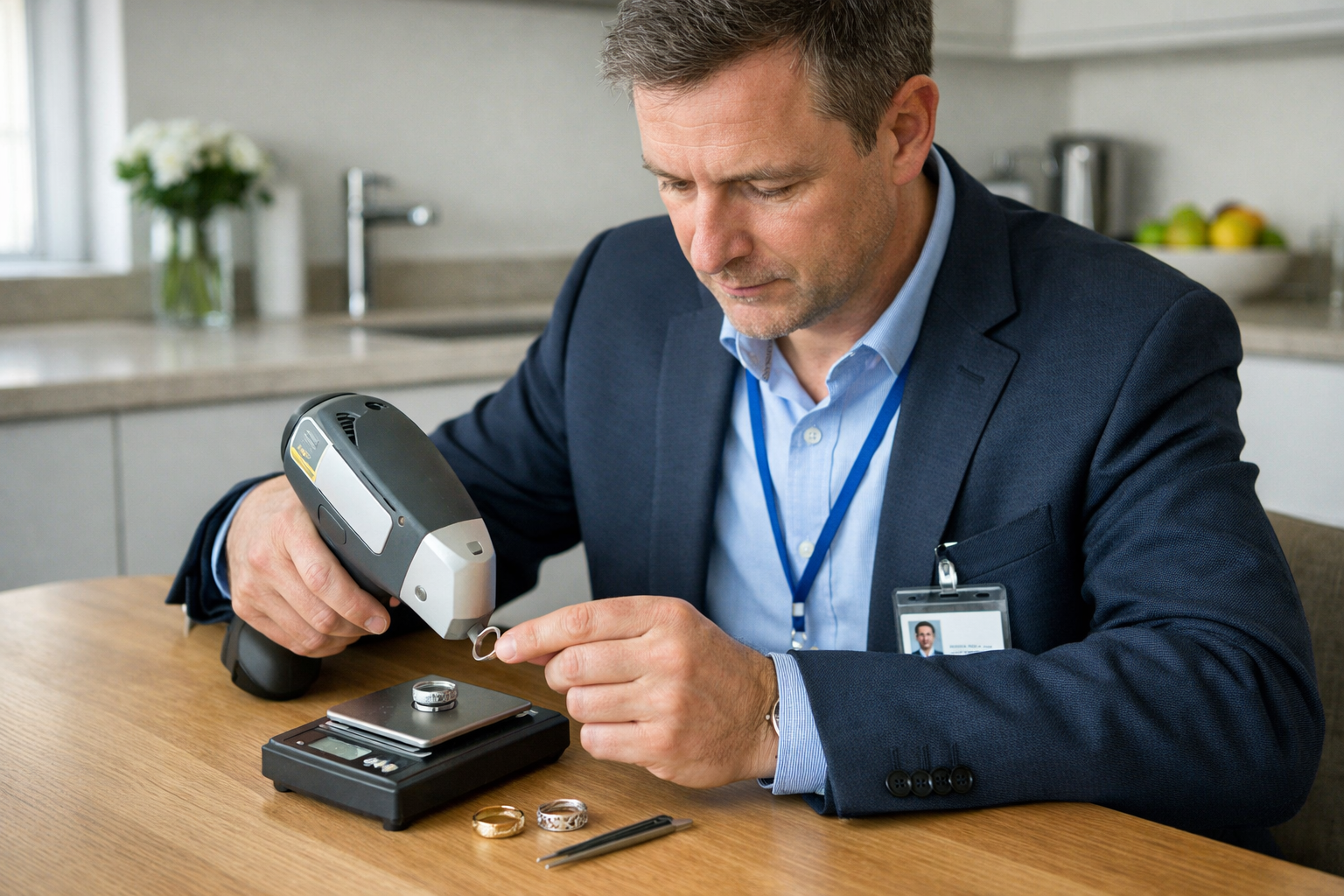
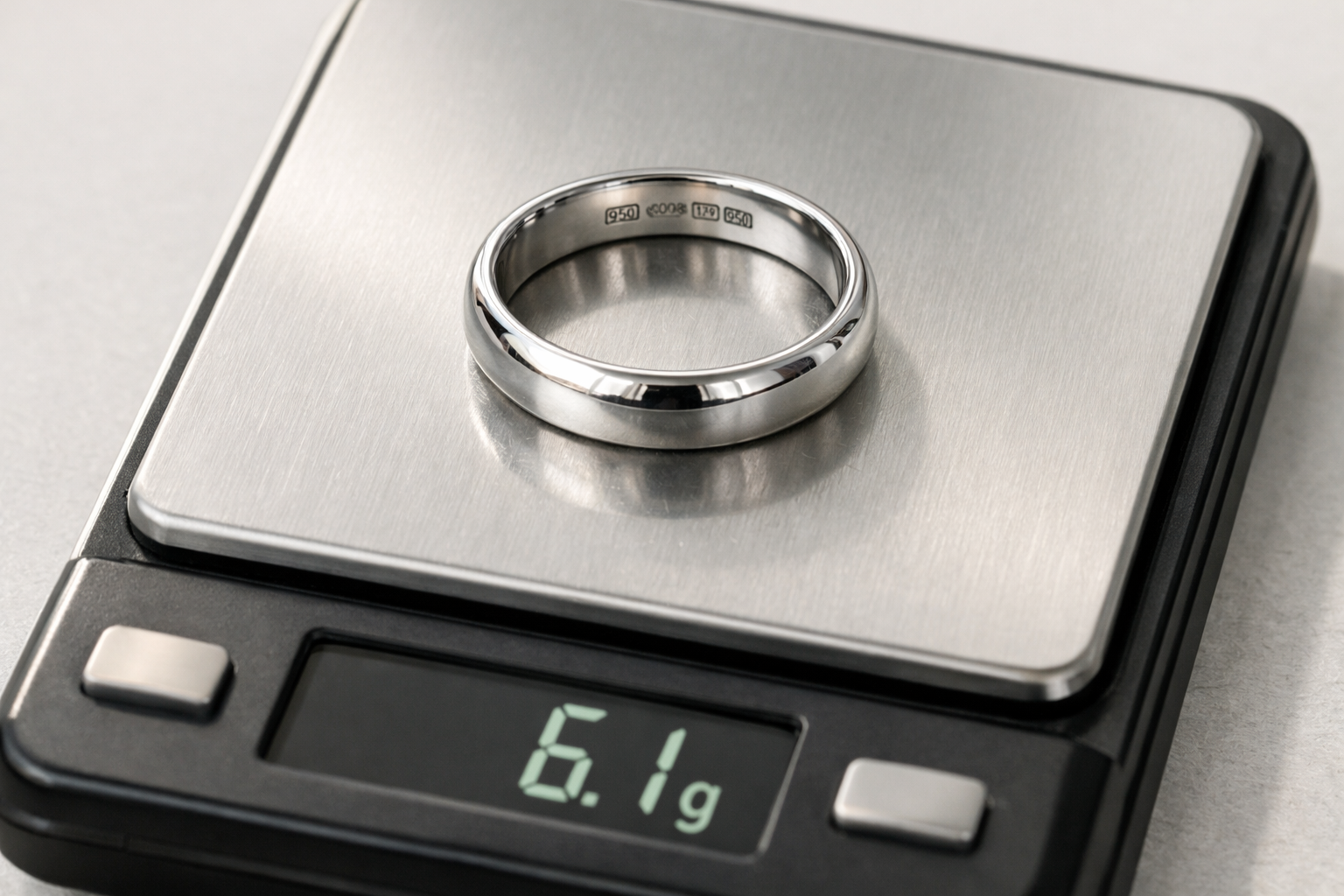
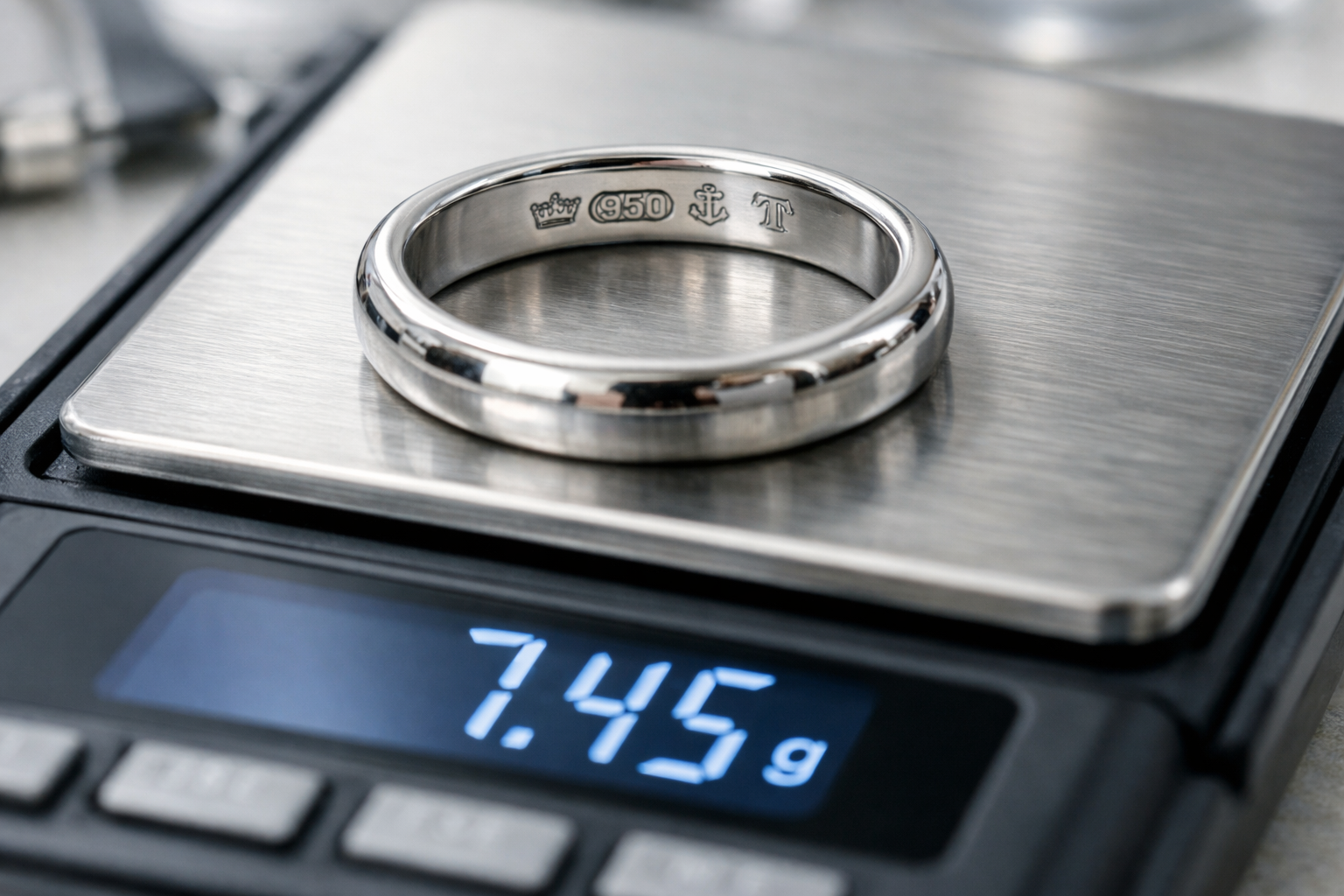
Hallmarks matter because they confirm fineness and give confidence to both buyer and seller. In the UK, hallmarking is legally required above certain thresholds, and you’ll often find a numeric fineness stamp (e.g., 375, 585, 750) and an assay office mark. Where hallmarks are missing or illegible, a professional will use acid or XRF testing. Expect an offer that reflects the fine gold weight multiplied by a market-based rate, minus reasonable fees for refining and handling.
Because alloys vary—some use palladium while older pieces may contain nickel—colour can range from bright white to slightly warm-grey. None of this affects the underlying gold value; only the fine gold content does. Always ensure pricing is pegged to recognised market references, such as LBMA benchmark prices, and that you can see the karat grouping and weights item by item.
| Karat | Millesimal Fineness | Common UK Hallmark | Typical Alloy Mix | Notes for Sellers |
|---|---|---|---|---|
| 9ct | 375 | "375" plus Assay Office mark | Gold with silver, copper, zinc (may include nickel in older items) | Entry-level purity; value mainly driven by weight and current rates. |
| 14ct | 585 | "585" plus Assay Office mark | Gold with palladium/silver/copper mix | Popular for rings; decent balance of purity and durability. |
| 18ct | 750 | "750" plus Assay Office mark | Gold with higher palladium/silver content | Premium category; strong resale linked to higher fine gold content. |
| 22ct | 916 | "916" plus Assay Office mark | Gold-rich, minimal whitening metals | Less common in white alloys; may present as yellow more often. |
For hallmarking rules, see the official guidance on UK hallmarking requirements. A reputable buyer will explain their testing method and supply an itemised breakdown so you can follow the valuation step by step.
Why Does White Gold Look Different, and Does Rhodium Matter?
White gold’s base alloy can be slightly grey or even faintly warm in tone. To achieve that crisp, chrome-bright finish, most jewellery is rhodium plated. Over time, daily wear can thin the plating so you might see subtle yellowing or dullness in high-friction areas like ring shanks and bracelet edges. Many owners re-plate pieces periodically to restore the original sparkle.
When you sell, that rhodium layer hardly affects payout. Rhodium weighs very little and is treated as a surface finish; your valuation is still driven by the gold content and total weight. If a ring is heavily worn, a buyer might re-plate for a future retail sale, but that’s their cost—not a deduction you should shoulder in a simple melt-value transaction.
It’s still sensible to present items clean and tidy: a quick wash in warm water with mild washing-up liquid helps. Avoid harsh abrasives or aggressive polishing right before a sale; they can remove minute metal, scuff hallmarks, or loosen stones. If you’re selling white gold with stones, a gentle clean improves inspection accuracy for settings without impacting intrinsic value.
If your skin reacts to certain metals, older items may contain nickel, a common sensitiser. For context, see NHS advice on nickel allergy. Whether or not nickel is present, buyers still assess based on gold content; your payout won’t change based on a personal sensitivity.
Step-by-Step: Selling White Gold in the UK
Getting prepared can add clarity and confidence. Here’s a practical, UK-focused process that shows exactly what to do before and during the sale.
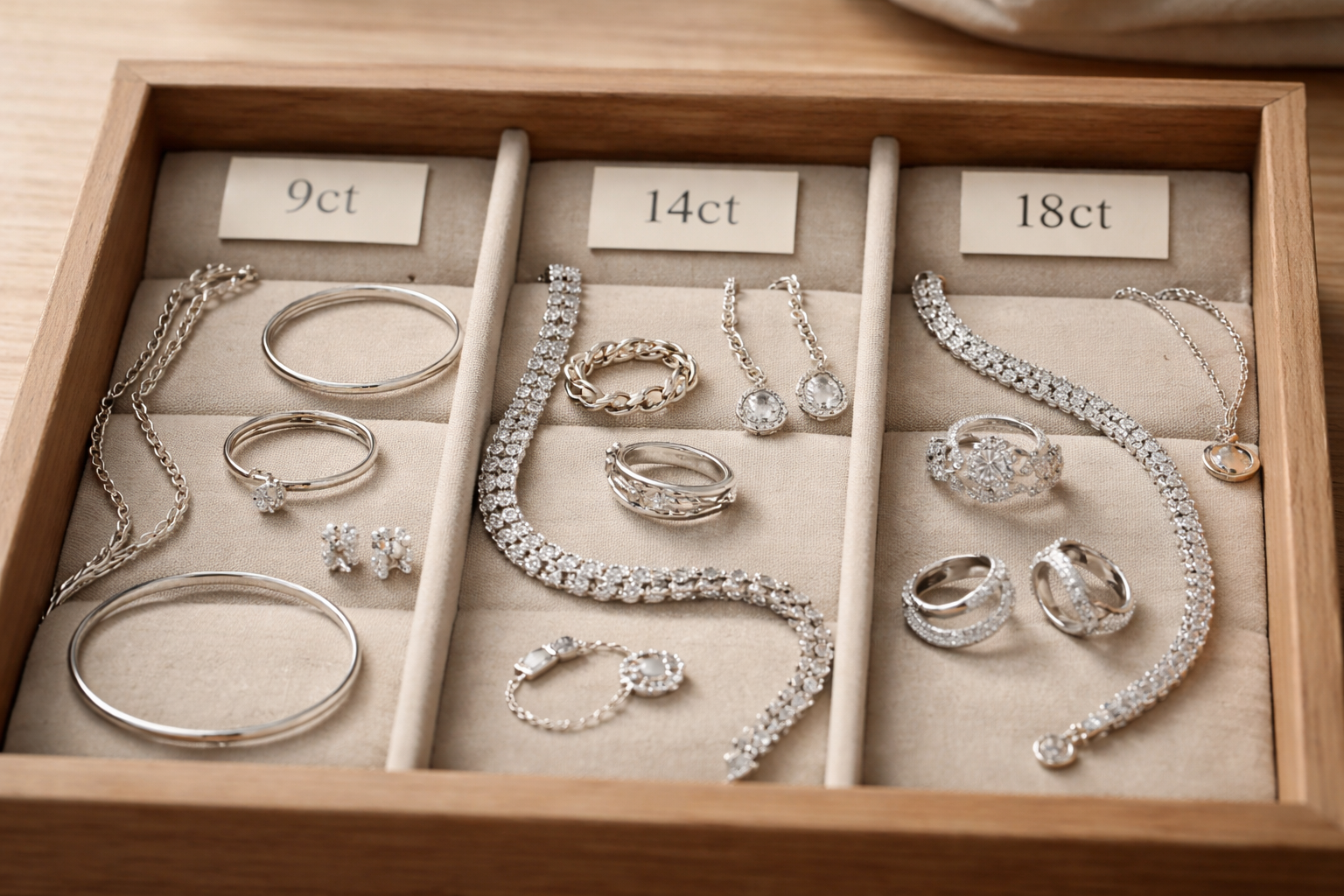
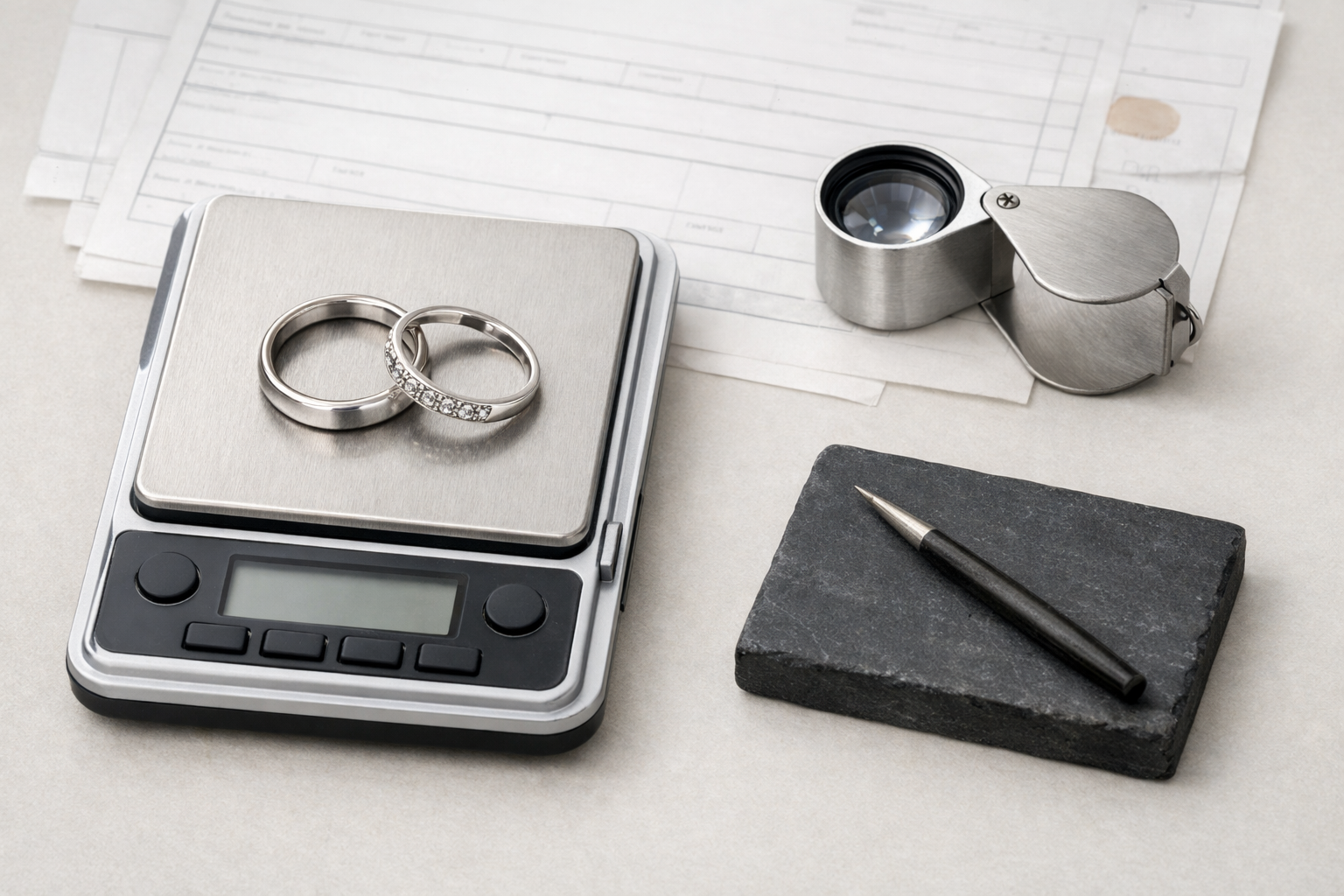
- Sort and identify. Group items by likely karat. Look for 375, 585, 750, and assay marks with a loupe or phone macro. Keep broken items (clasps, earring backs) together—they still carry value.
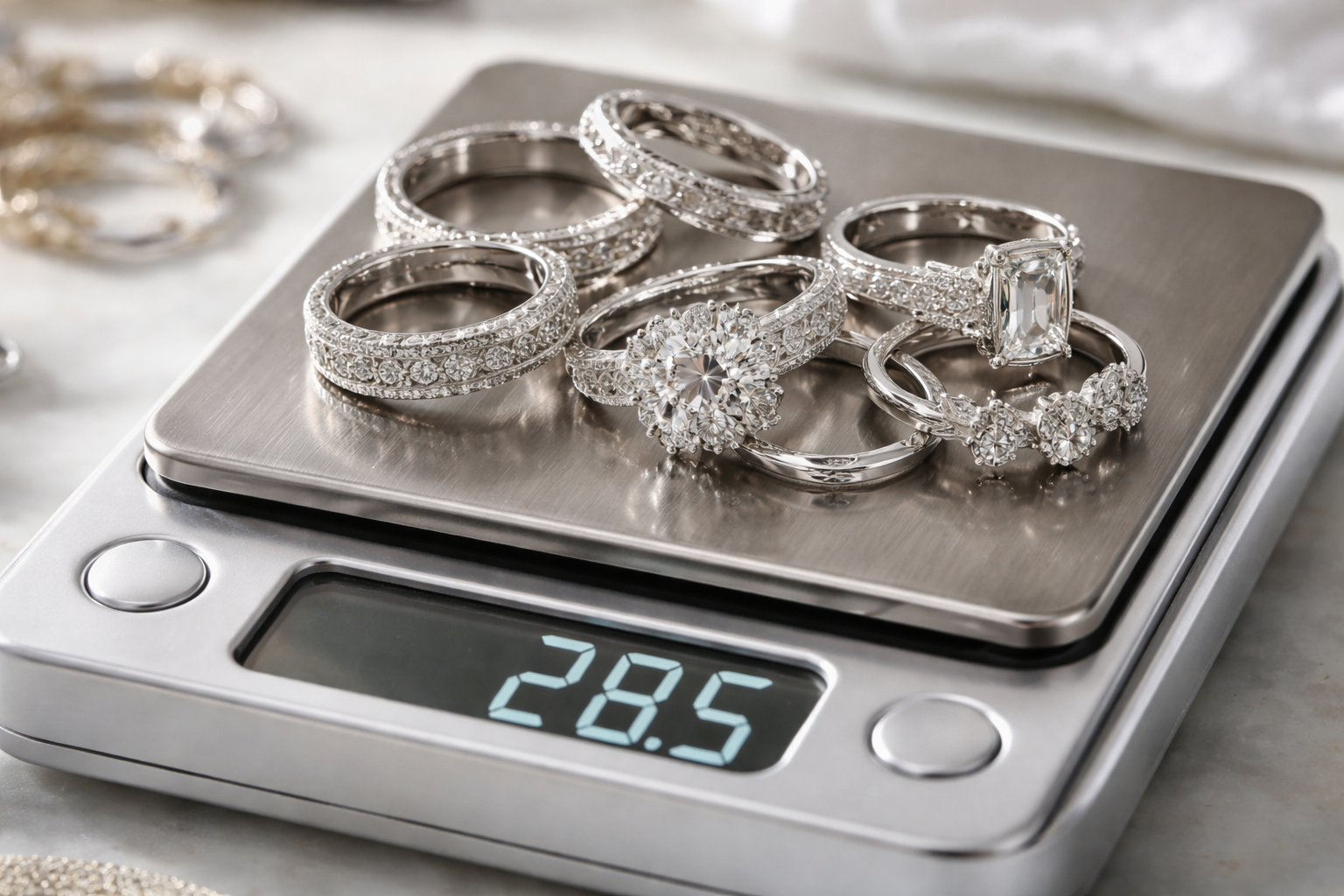
- Weigh accurately. Use a digital scale with 0.01 g resolution. Note weights by group (e.g., 18ct rings together). Photograph each set alongside the scale reading for your records.
- Remove non-gold parts. Leather straps, stainless pins, or steel springs add weight but no value; set them aside. Don’t attempt to pry out gemstones unless you’re confident—risking damage may cost more than it saves.
- Check market context. Review live bullion references such as the LBMA benchmark prices. You’re aiming to understand the day’s backdrop, not calculate a retail figure.
- Shortlist trusted buyers. Prioritise transparent, mobile specialists who provide on-the-spot valuations and same-day bank transfer. With Gold Buyer, you can arrange home visits, meet at local pop-up events, or use a secure home selling kit if travel isn’t convenient.
- Prepare ID. Good buyers verify identity to meet UK anti-money-laundering standards. Keep a photo ID and proof of address ready so the transaction runs smoothly.
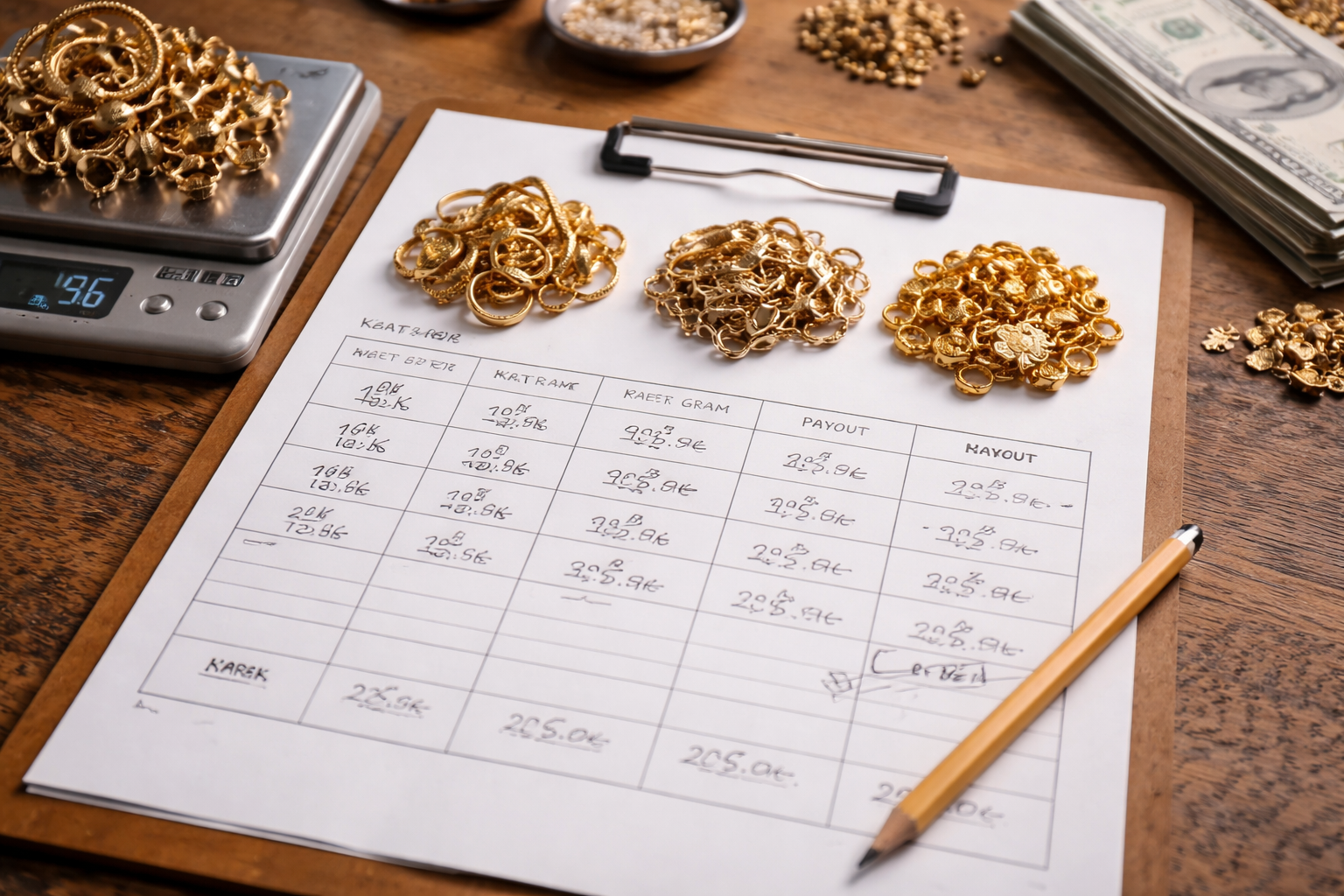
- Request an itemised quote. A clear breakdown by karat grouping, gross weight, applied rate, and payout helps you see exactly how your offer is constructed. This is vital when selling white gold that spans multiple purities.
- Decide and proceed to payment. Once satisfied, proceed to bank transfer. Reputable mobile buyers pay the same day, eliminating the wait and uncertainty you may face with postal-only routes.
- Keep your record. Save valuation notes, photos, and the receipt for your personal files. This is handy for insurance housekeeping and future comparisons.
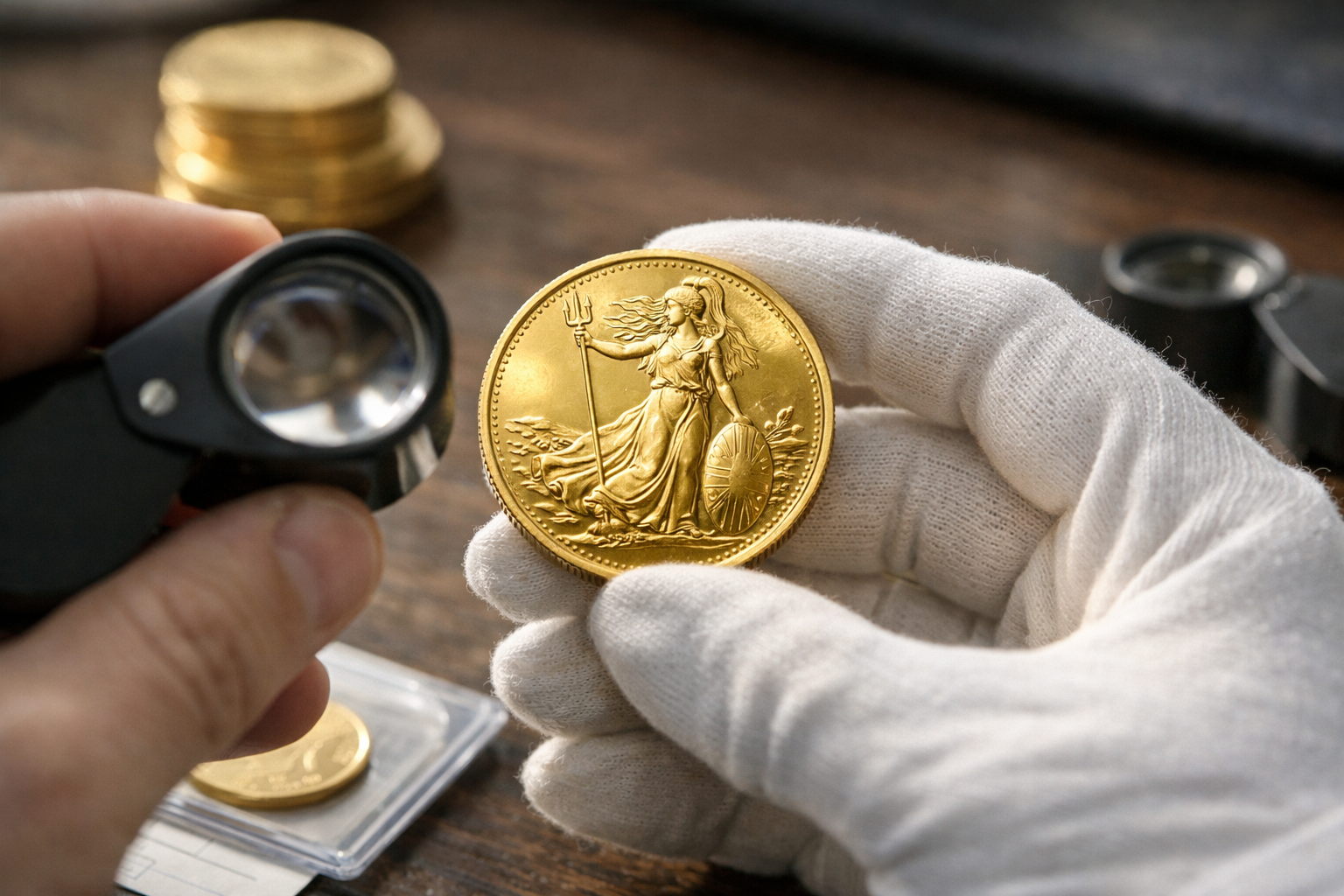
If you also own bullion, see our practical walkthrough to sell bullion bars in the UK. For UK coin sellers, our guide to selling Gold Britannia coins covers FAQs on purity and payouts.
What Affects the Price Today? Live Rates, Karat and Condition
Your payout reflects three main inputs: the live gold price, your items’ fineness, and the net weight of gold-bearing parts. Condition only matters if the buyer aims to resell jewellery as wearable pieces rather than melt it. For melt-value transactions, deep scratches or worn rhodium plating won’t reduce the maths; purity and grams drive the number.
Market timing can nudge value. Gold trades globally and the GBP/USD rate can shift your final figure. You don’t need to track every tick, but checking a reliable reference on the day supports realistic expectations. Buyers who peg pricing to recognised benchmarks generally provide the most consistent results.
If you’re selling white gold that mixes karats—say, a 9ct chain and 18ct rings—expect separate line items with different rates. Ask to see the grouped weights and the per‑karat rate before agreeing. Knowing this breakdown helps you understand why two similar-looking items can generate different offers.
Where and How Should You Sell for Convenience and Safety?
Not everyone wants to visit a shop or post valuables. Mobile buying solves this with discreet, ID-checked representatives who come to you, provide an on-the-spot valuation, and arrange same-day payment by bank transfer. Gold Buyer offers home visits across local areas, regular pop-up events for face-to-face appointments, and a listed office in Chesterfield if you prefer an office setting.
For people managing busy schedules or mobility concerns, in‑person home appointments can be both secure and time-efficient. You’ll see testing and weighing happen right in front of you. If you’d rather avoid appointments altogether, request a home selling kit: it includes tamper-evident packaging and tracked logistics to keep things straightforward.
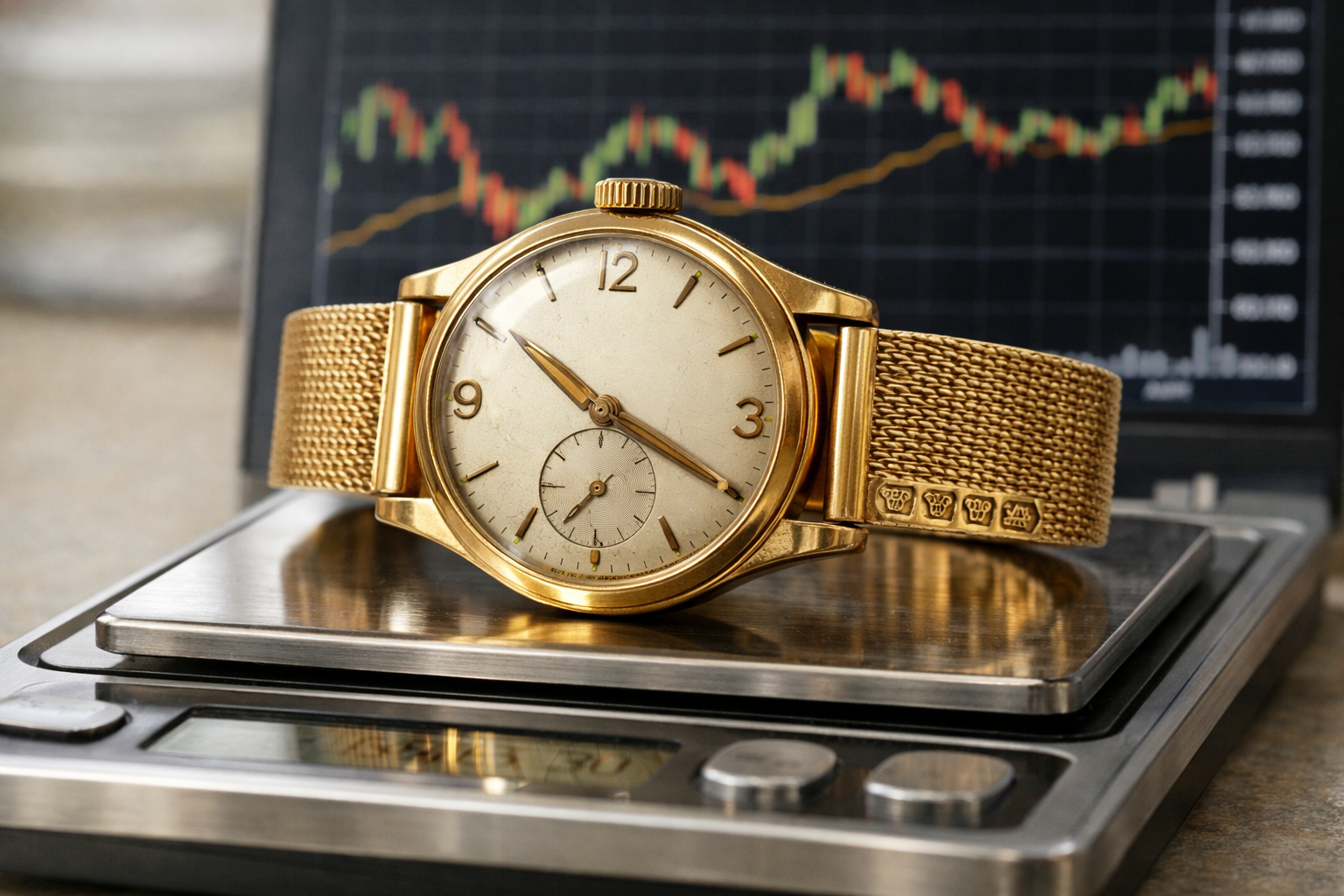
Those streamlining a broader collection—coins, bullion, or even timepieces—can mix and match service styles. Read our overview for watch owners in Who Buys Watches? Myths vs Facts for UK Sellers, and our bullion guidance in the bullion bars walkthrough. Whether selling white gold jewellery or other precious items, you’ll benefit from clear pricing tied to live rates and a smooth settlement process.
Ready to arrange a discreet visit or kit? Book a valuation and choose a time that suits you.
How to Maximise Your Payout Without Taking Risks
A few low-effort steps can lift clarity and confidence without risking damage or delays. Start by grouping items sensibly and keeping non-gold parts separate; this prevents surprise deductions for non-precious weight. Provide any paperwork you have—receipts, appraisals, or designer provenance—especially if an item could sell at more than melt value due to brand or craftsmanship.
Resist heavy at-home repairs. Over-polishing can remove tiny amounts of metal or blur hallmarks. If prongs are bent or stones loose, flag this during valuation rather than forcing a fix. In many cases, melt transactions ignore small aesthetic issues; it’s fine to leave pieces as-is. Where there’s potential for a resale premium, a good buyer will advise accordingly.
If you’re selling white gold in mixed batches (e.g., 9ct charms plus 18ct rings), insist on separate weigh-ins and rates for each fineness. Ask how the rate relates to live benchmarks and what fees are deducted. The aim is to walk away understanding each component of your final number, so you can compare like-for-like across offers.
Common Mistakes to Avoid When Moving On Pieces
Even straightforward sales can suffer from avoidable slip-ups. Here are pitfalls to sidestep so you stay efficient and in control.
- Guessing karat by colour. White alloys vary by mix and plating; appearance is not a reliable guide to purity. Rely on hallmarks and testing.
- Weighing with non-gold parts attached. Steel springs, clasps, or watch pins can distort totals. Remove them or have the buyer do it transparently.
- Mixing karats together. Combining 9ct and 18ct into one pot dilutes your rate. Keep them separate, especially when selling white gold items with subtle hallmark differences.
- Over-cleaning or buffing. Abrasives may remove metal and scuff marks. A mild wash is usually enough.
- Forgetting ID. You may face delays without photo ID and proof of address under compliance rules.
One more: don’t accept opaque lump-sum quotes when items clearly span karats. Ask for an itemised list with weights and per‑karat rates so you can track the arithmetic. Transparency protects both parties and makes comparisons meaningful.
Tax, ID and Legal Practicalities in the UK
Legitimate buyers must verify identity and keep transaction records under anti-money‑laundering regulations. Expect to provide a photo ID and proof of address, and for payments to be made by bank transfer. This protects both sides while creating a clear audit trail. Cash payments are less common due to compliance and safety considerations.
In the UK, private individuals usually don’t face income tax on selling personal possessions at a gain below certain thresholds, but circumstances vary. If you’re selling as a business or disposing of high-value assets, seek tailored tax advice. Keep your receipts and valuation notes—it’s good housekeeping and supports any future queries.
For an introduction to the regulatory environment, see the UK government’s overview of Money Laundering Regulations. A professional buyer will guide you through ID checks and payment protocols efficiently so the experience remains smooth.
What Do Realistic Payouts Look Like in Practice?
While exact numbers track the day’s market rate, examples help you frame expectations. Imagine a small household batch: an 18ct wedding ring at 6.50 g, a 14ct chain at 10.00 g, and two 9ct earring backs totalling 0.80 g (with steel posts removed). You’d expect three line items, each with its own per‑karat rate, multiplied by the verified weights, less reasonable handling/refining margins.
Contrast that with a designer piece in great condition: some items may sell above melt if brand and demand support it. Bring any documentation you hold—boxes, receipts, or certificates—which can unlock better options than immediate melt. In either case, separating parts and confirming karat ensures you’re paid for the fine gold you actually hold.
When you’re selling white gold among mixed metals—perhaps white gold jewellery alongside platinum rings—consider reading our guidance on selling a platinum ring to avoid conflating metal values. Platinum behaves differently at the refinery and commands its own market rate.
How Does a Mobile Buyer Keep You Safe and Informed?
Mobile buying is built for convenience without sacrificing rigour. ID‑checked representatives visit by appointment, test and weigh your items in clear view, and explain the price logic step by step. You should receive an itemised summary and payment by bank transfer the same day, which avoids postal risk and waiting periods.
With Gold Buyer, you can choose a private home visit, a local pop‑up event, or request a home selling kit if you prefer not to arrange a meeting. Pricing is tied to live metal rates, and you’ll see transparent quantities and karat groupings before you decide. For many people, this blend of clarity and speed is the simplest path to completion.
As with any transaction, your role is to ask questions until you’re satisfied. A good buyer welcomes this. If you’re selling white gold along with coins or bars, tell them upfront so everything can be weighed and priced efficiently during a single appointment.
Frequently Asked Questions
This section addresses the points sellers raise most often. Each answer is concise and practical, and reflects common UK scenarios in —from hallmarking to payment and identification.
Do I need to re-plate rhodium before I sell?
No. Re-plating is a cosmetic choice that rarely changes a melt-value payout. Present items clean and intact; a buyer values gold content, not the brightness of the plating. If an item has resale potential beyond melt, discuss options first so you don’t spend unnecessarily.
How important are hallmarks if my piece is vintage or worn?
They’re useful, but not the only route. A professional can test with acid or XRF if hallmarks are faint or missing. Itemised pricing should still separate your pieces by verified karat so you can see how each item contributes to the total.
Can stones or settings increase the offer?
Sometimes. Melt transactions usually ignore gemstones except where they can be easily recovered or where brand/resale potential exists. Provide any certificates or receipts you have; a buyer may suggest a resale path with a premium if the piece and market justify it.
What ID will I be asked for?
Expect a photo ID (passport or driving licence) and proof of address (utility bill or bank statement). This supports anti‑money‑laundering compliance and ensures secure, bank‑transfer settlement. Having documents ready speeds up the appointment.
Is posting my jewellery safe compared with a visit?
Tracked, insured post can work, but many sellers prefer in‑person appointments to watch testing and avoid transit risk. A home visit or local pop‑up lets you see the process end to end and receive same‑day bank transfer without delays.
Ready for a transparent, on-the-spot valuation and swift payment? Arrange a discreet visit or request a secure kit: book a valuation today.