1 oz Maple Leaf Gold Coin: How to Value and Sell Yours
A 1 oz Maple Leaf gold coin is generally valued against the current gold market, with the final offer depending on the buyer’s assessment, the coin’s condition and any relevant premium. If you want to sell without visiting a shop, you can arrange a valuation at home, attend a local event or ask about a home selling kit.
What Is a 1 oz Maple Leaf Gold Coin?
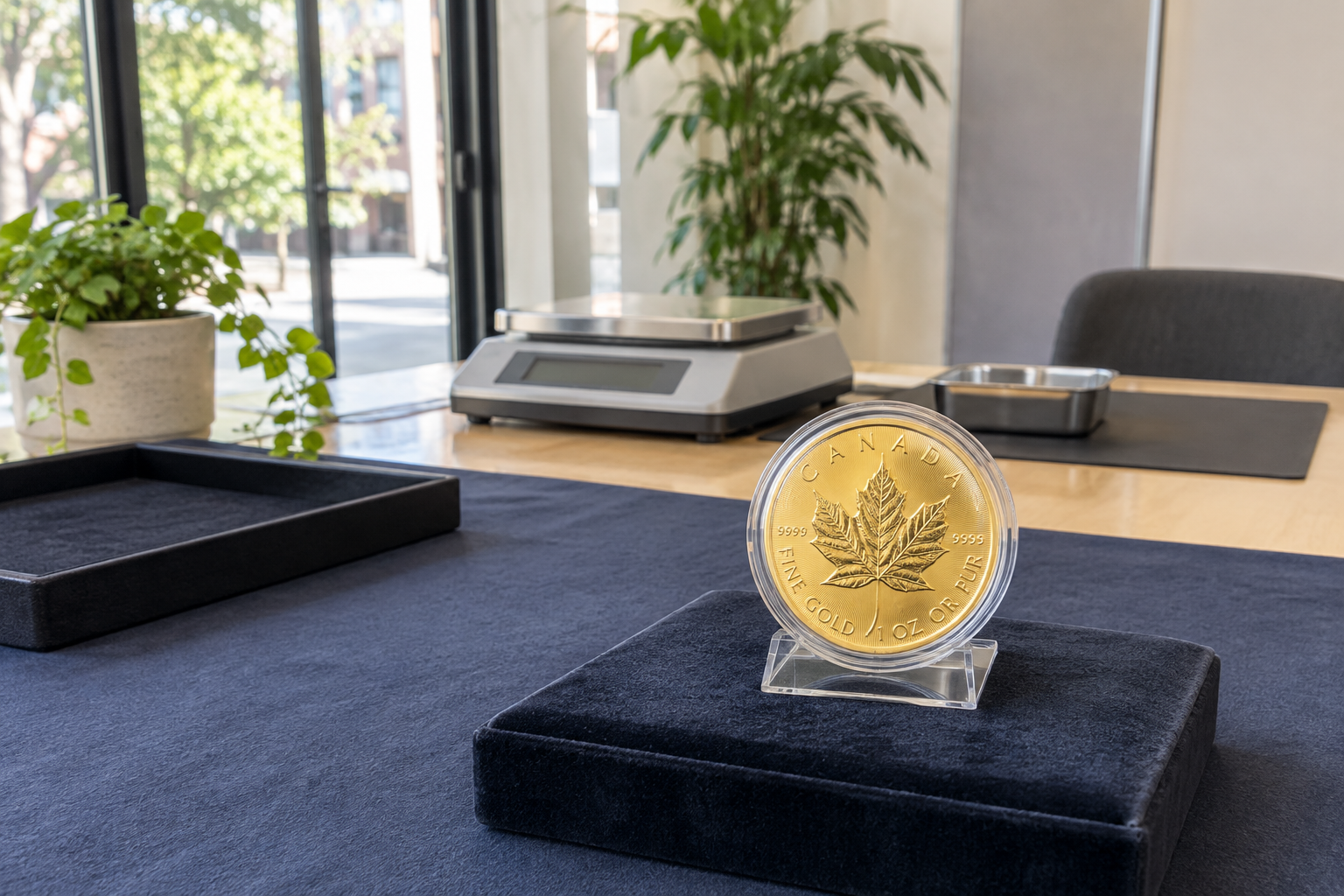
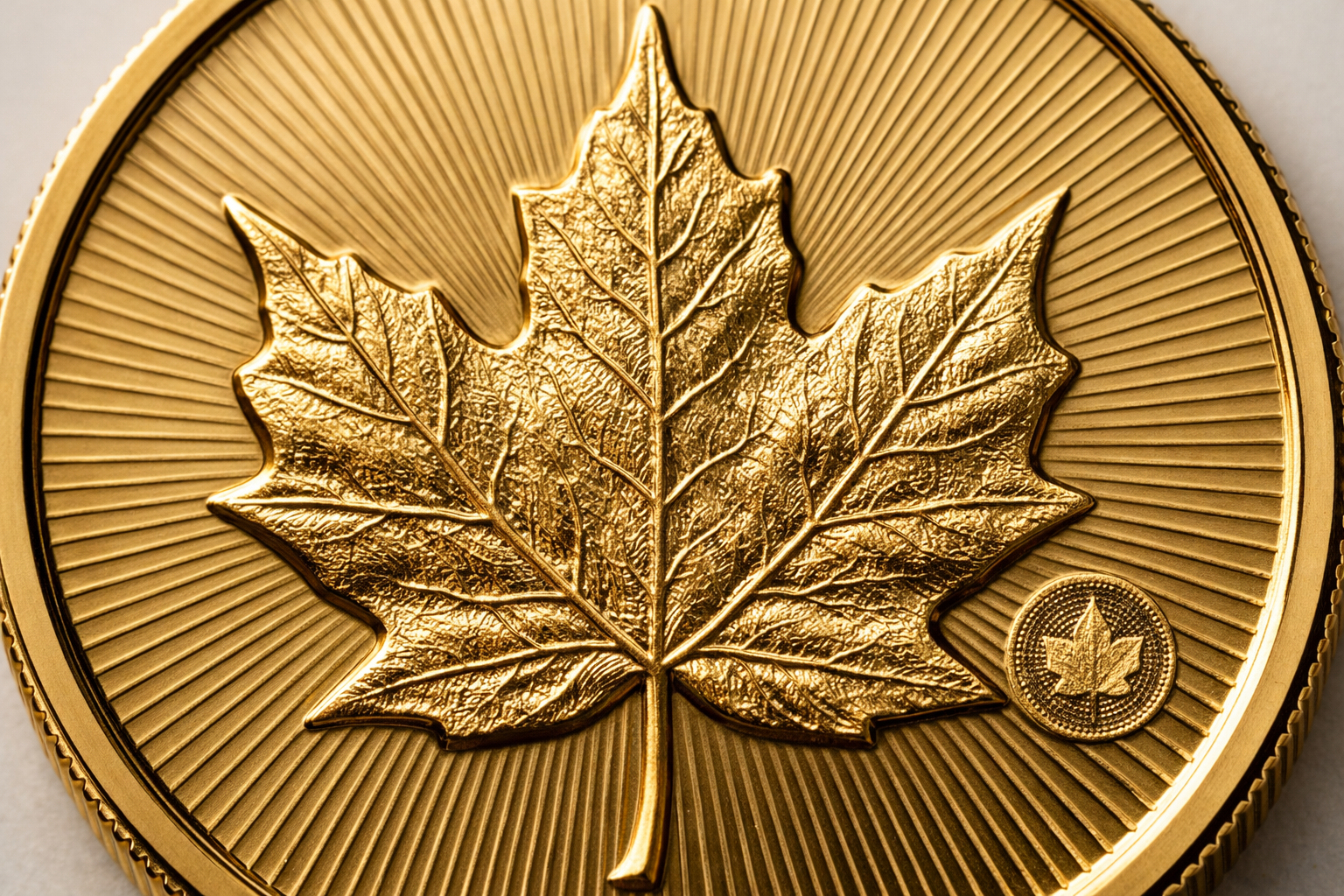
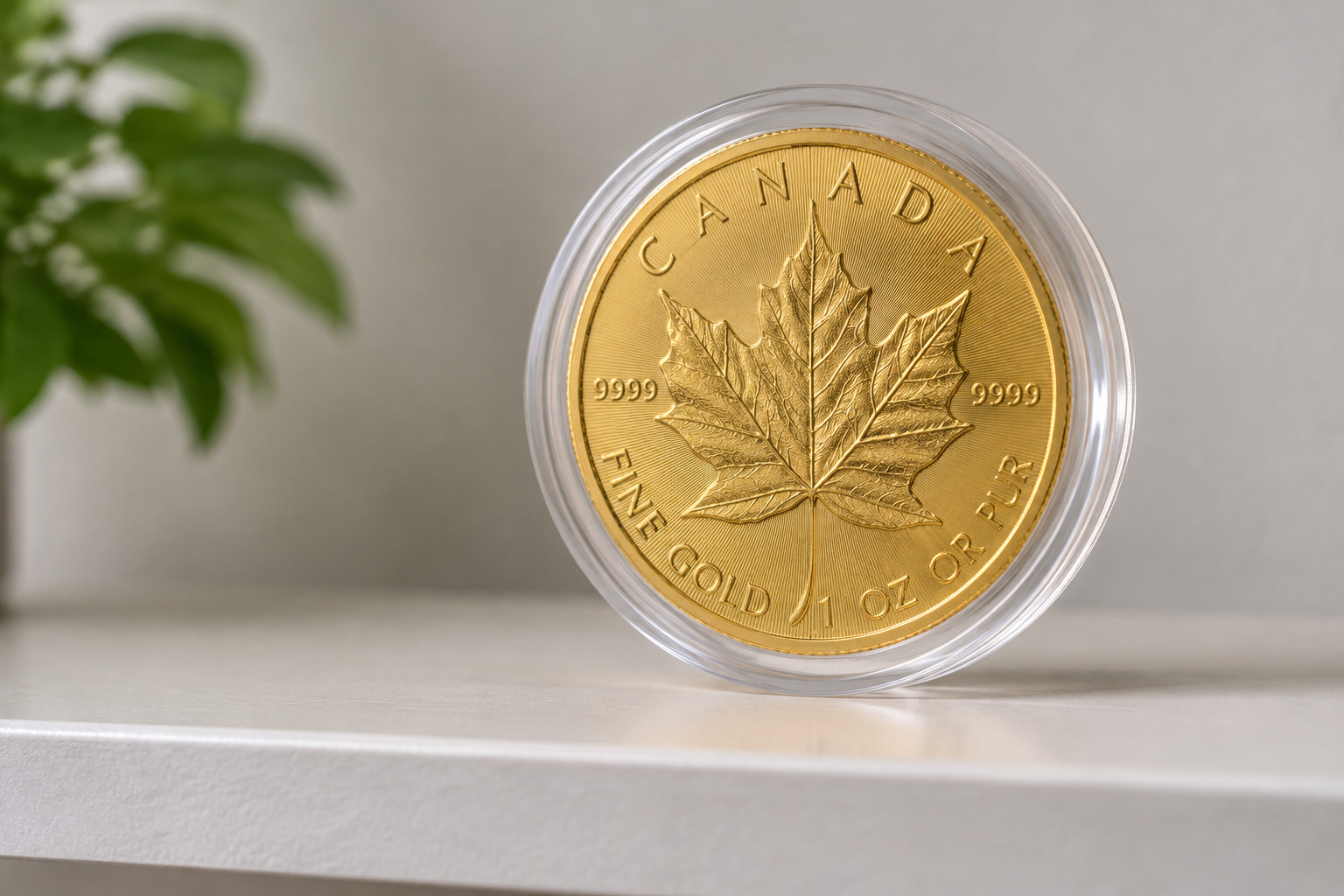
The Canadian Gold Maple Leaf is a bullion coin issued by the Royal Canadian Mint. Its value is primarily linked to its gold content, although particular dates, finishes or editions may attract interest from collectors. The face value shown on a coin is not the same as its bullion market value or the amount a buyer will offer.
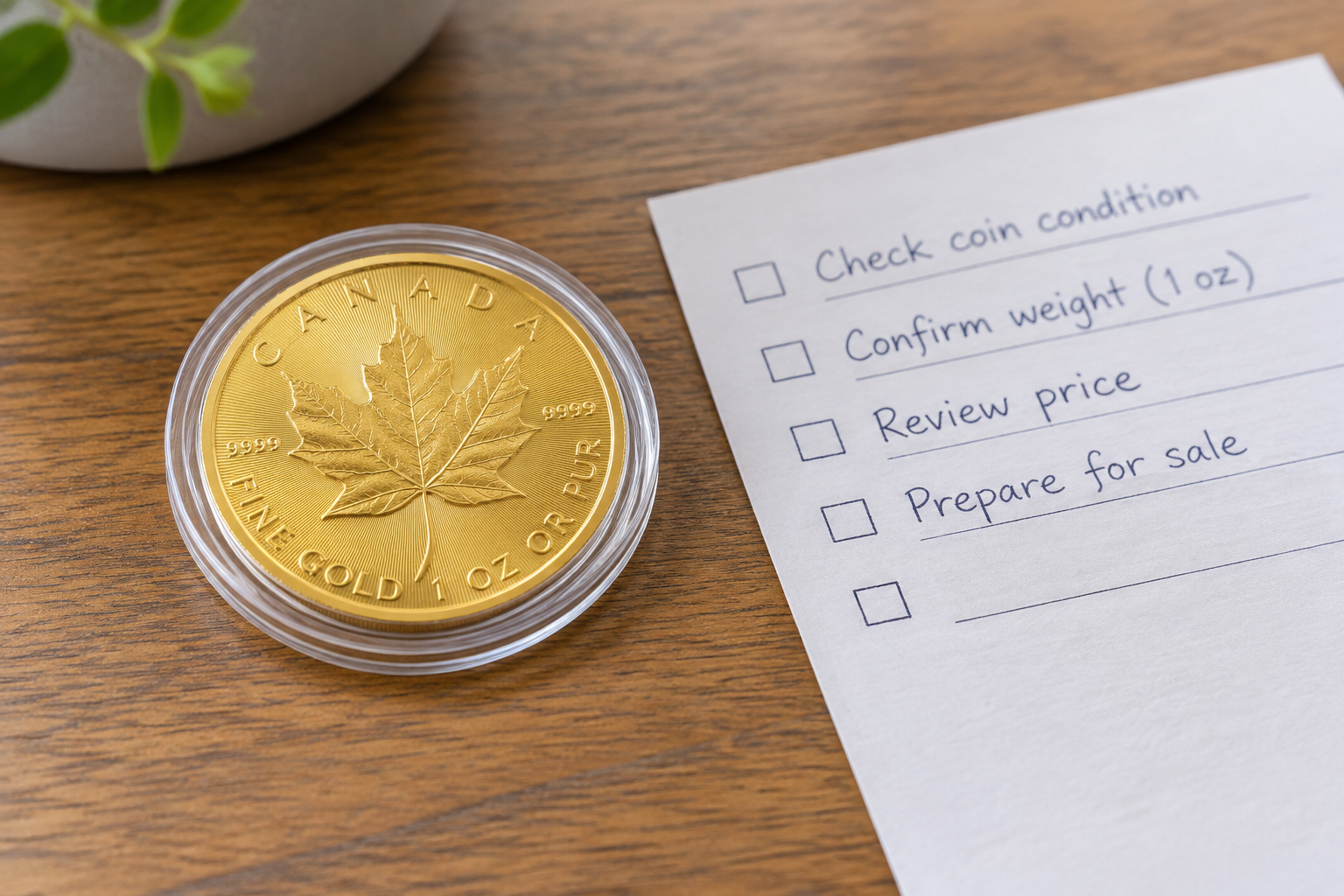
The standard one-ounce Gold Maple Leaf contains one troy ounce of fine gold. Bullion specifications and designs can vary across editions, so check the details of your particular coin rather than assuming that every Maple Leaf is identical. The Royal Canadian Mint is a useful starting point for information about its coins.
Do not confuse a one-ounce coin with a smaller denomination just because the designs look similar. Size, markings and weight all help establish what you have, but they are not a substitute for a buyer’s inspection. A protective capsule can also make visual comparison less straightforward.
When researching the coin, look for information that matches its date and edition as well as its stated weight. Record details you can see clearly and make a note of anything you cannot read rather than guessing. If a listing or reference shows a different finish or denomination, it may not be a useful comparison even if the design looks familiar.
A Hypothetical Sale: Starting With the Coin
Imagine someone in the UK has a 1 oz Maple Leaf gold coin that they would like to sell. They inherited it and have a capsule but no purchase receipt. They want a convenient sale, but they also want to understand the offer before agreeing to it. This is an illustrative scenario, not an account of a real customer or transaction.
The first step is to record the visible details without unnecessarily handling the coin. The owner notes the date, denomination and any markings they can read, and checks whether the capsule is intact. They keep any original packaging or paperwork with the coin, while recognising that paperwork alone does not establish authenticity or value.
If the coin appears to be an unusual edition, the owner can ask whether the buyer will consider any collector interest as well as the gold content. They should avoid describing it as rare solely because it is old, shiny or in a presentation case. A specialist assessment may be needed before a collector premium can be established.
Before contacting a buyer, the owner makes a short list of questions: how the coin will be checked, whether an estimate can change after inspection and what happens if they decline. They can also note their preferred way to sell. Having those details ready makes it easier to compare the practical terms as well as the amounts quoted.
How Can You Estimate Its Gold Value?
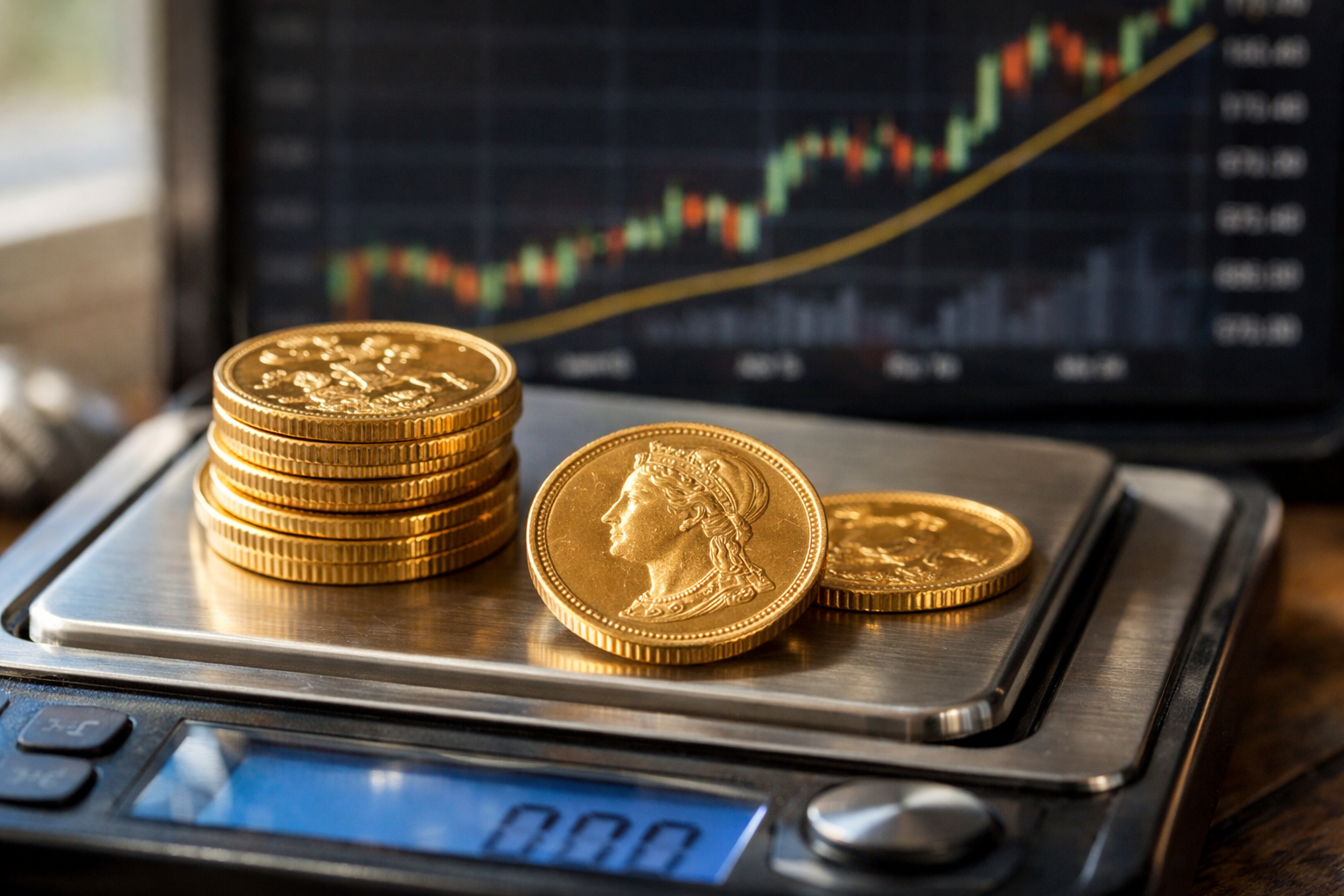
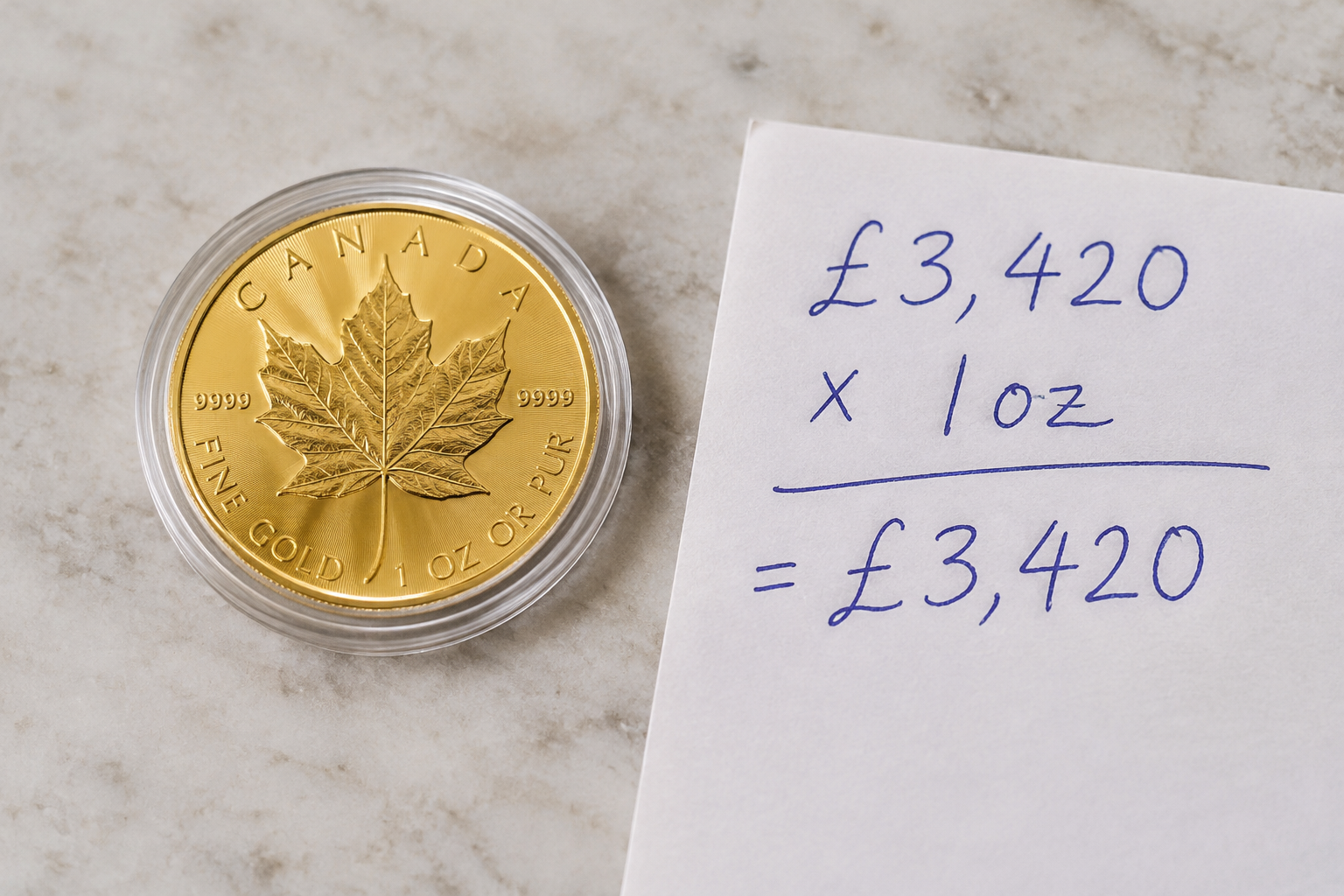
Start with a current gold price quoted in pounds per troy ounce. Because a standard one-ounce Maple Leaf contains one troy ounce of fine gold, that quotation gives a useful reference point for its metal value. It is not a guaranteed payout: a buyer’s offer may be below the quoted market price and will depend on the coin being accepted after inspection.
The London Bullion Market Association’s precious-metal prices provide a recognised market reference. Check the currency, unit and time of any quotation you use. A benchmark set at a particular time is not necessarily the same as a continuously changing dealer quote.
To compare an offer with the reference price, divide the offer by the relevant gold reference value and multiply by 100. This gives a comparison percentage, not a measure of whether the deal is automatically fair. Ask what reference price and time the buyer used, and whether the quoted amount is the final sum payable after any deductions.
For example, if a reference value were £2,000 and an offer were £1,900, dividing 1,900 by 2,000 and multiplying by 100 would give 95%. These figures are illustrative, not current prices or a promised offer. The calculation is only useful if both figures relate to the same quantity of gold and a comparable point in time.
Keep the calculation alongside the quote rather than treating the percentage in isolation. An offer with a higher headline amount may be less attractive if a charge is deducted later, while an earlier quote may reflect a different market price. Check whether each amount is an initial indication or an offer following inspection.
| What to check | Why it matters | Question to ask |
|---|---|---|
| Gold reference price | Prices change, and sources may use different currencies or units. | Which price and time is the offer based on? |
| Coin specification | The buyer needs to establish the coin’s weight and gold content. | How will you check the coin? |
| Condition and edition | Damage or a specialist edition may affect how the coin is assessed. | Is there any collector value in addition to the metal value? |
| Deductions | Fees or adjustments can change the amount received. | Is this the final amount I would be paid? |
| Payment | A prompt valuation is not the same thing as cleared funds. | When and how will payment be made? |
For another perspective on assessing this type of coin, read how to value and sell a 1oz Canadian Maple Leaf gold coin. If you compare buyers, try to obtain quotes close together in time and provide the same description to each one.
What Should You Check Before a Valuation?
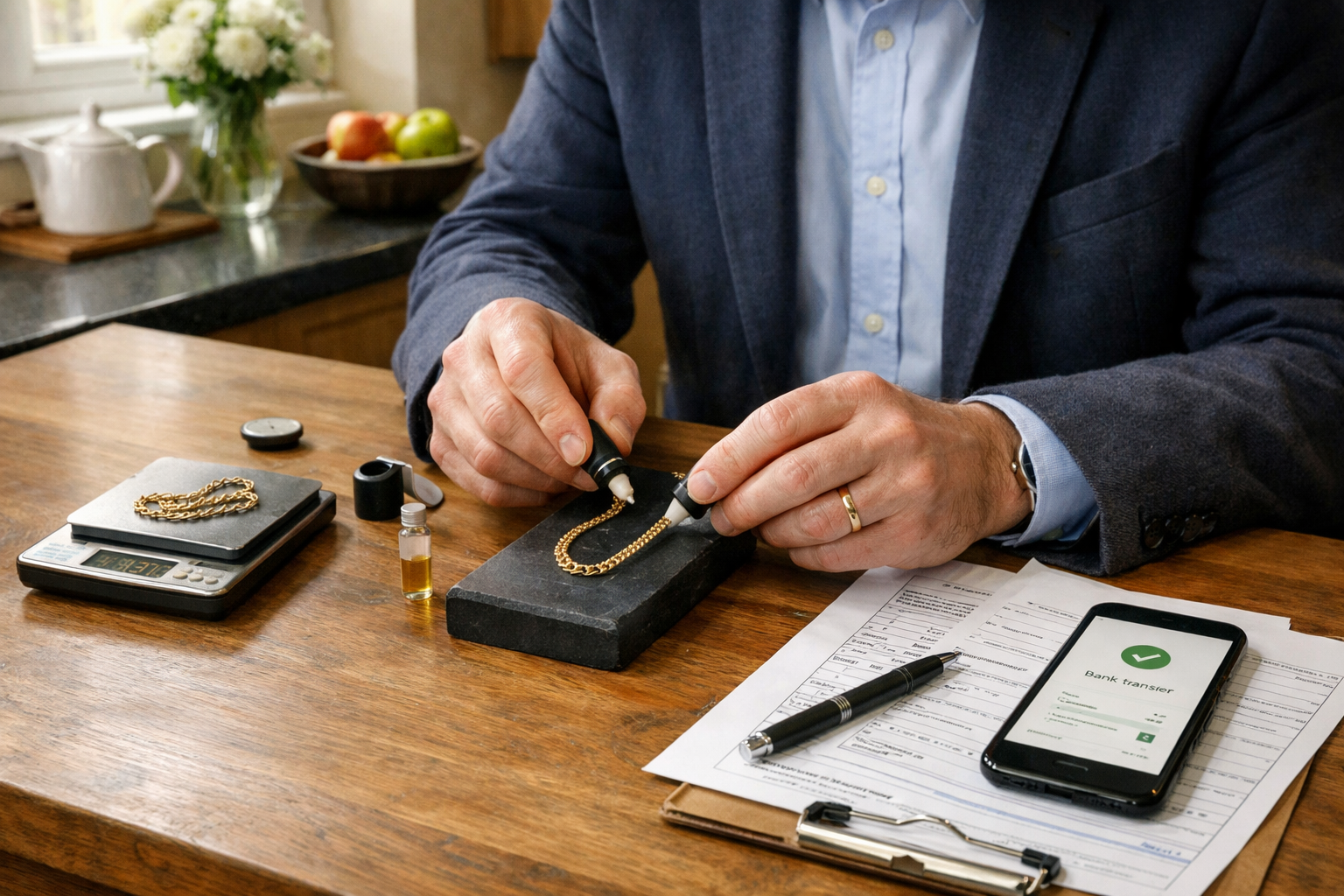
In the hypothetical scenario, the owner checks the coin visually but does not try to test it with chemicals or abrasive materials. Cleaning, polishing or removing a coin from its capsule can damage its surface and may affect its appeal to a collector. If inspection requires the capsule to be opened, ask the buyer to explain the process first.
- Check the visible details: note the date and denomination, and distinguish the coin itself from its packaging.
- Keep supporting items together: retain packaging and any purchase records, but do not assume they prove the coin is genuine.
- Photograph carefully: if requesting an initial estimate, take clear photographs without sharing personal information in the background.
- Ask about testing: find out whether the proposed checks are non-destructive and whether you need to give permission before any further test.
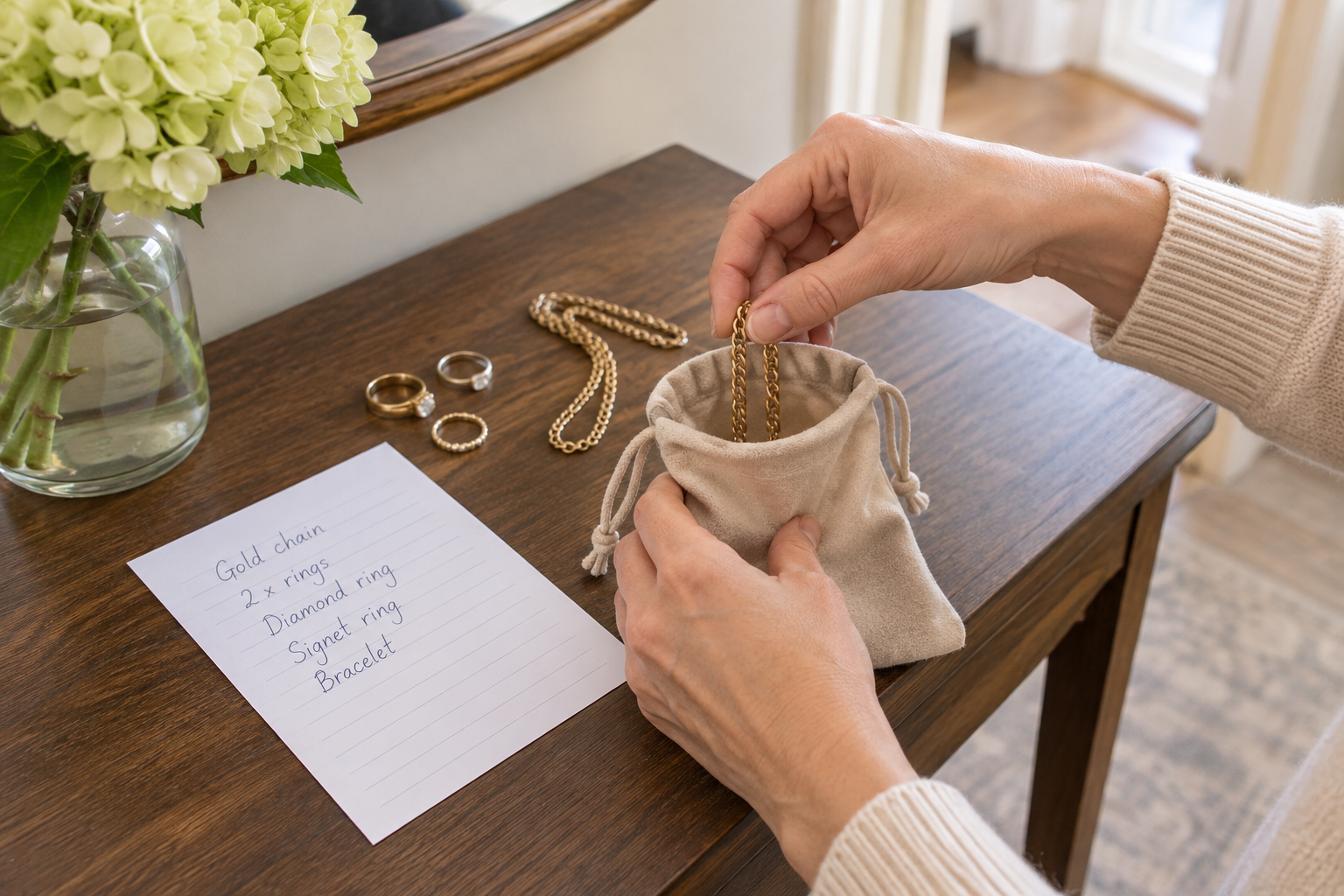
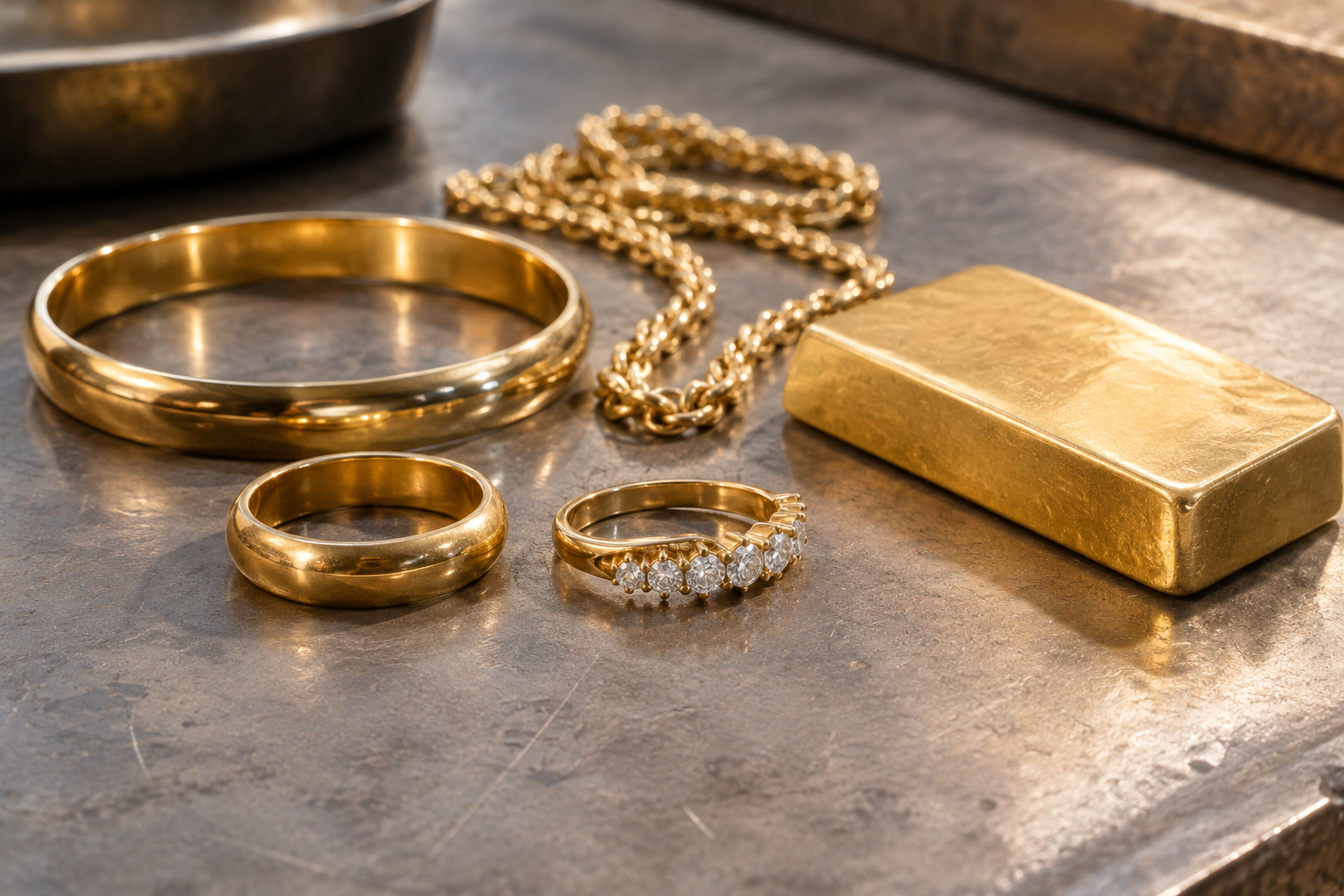
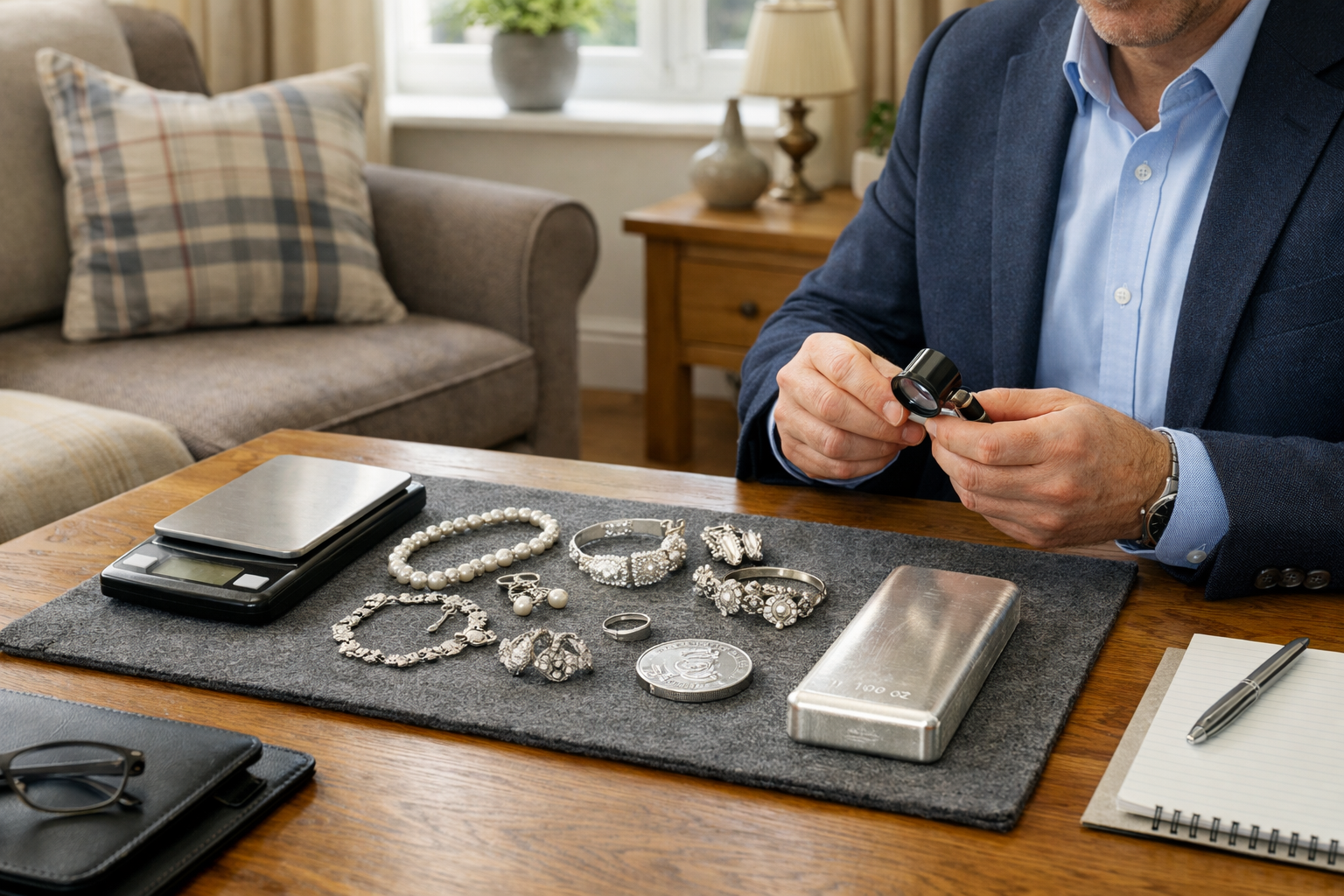
- Consider other items separately: jewellery, scrap and different coins may be valued on different bases.
A buyer may be able to give an indication from a description, but a firm offer can depend on an in-person examination. If the coin is damaged or its identity is uncertain, ask how that affects the offer rather than assuming a standard bullion price applies.
When taking photographs, capture both sides and any readable markings, while avoiding unnecessary handling. Glare from a capsule can obscure details, so a different angle may be more useful than removing the coin. Tell the buyer if a mark appears to be on the capsule rather than the coin, but leave the final assessment to inspection.
Which Selling Route Suits You?
For a seller who would rather not travel to a shop, Gold Buyer offers mobile home visits and local pop-up events. Customers can also request a home selling kit. Availability and practical arrangements should be confirmed when making an enquiry, especially if you need a particular date or location.
A home visit allows the owner to be present while the coin is assessed. A local pop-up may suit someone who prefers to meet a representative away from home. A kit offers another route, but the seller should understand the packing instructions, delivery arrangements and what happens if an offer is declined before sending anything.
Consider what matters most to you before choosing. If you want to ask questions during the examination, confirm that the appointment format allows enough time. If using a kit, ask how you will receive the offer and how long you have to respond. For an event, check the location and arrangements in advance rather than assuming a representative will be available at any time.
Whichever route the hypothetical owner chooses, they can ask how the representative’s identity is checked, what identification the seller needs to provide, and whether the valuation is carried out immediately. They should also confirm when an offer becomes binding and whether there is any cost or obligation if they decide not to sell.
Ready to discuss your coin? Book a valuation with Gold Buyer and ask about the options available in your area.
What Happens During the Valuation?
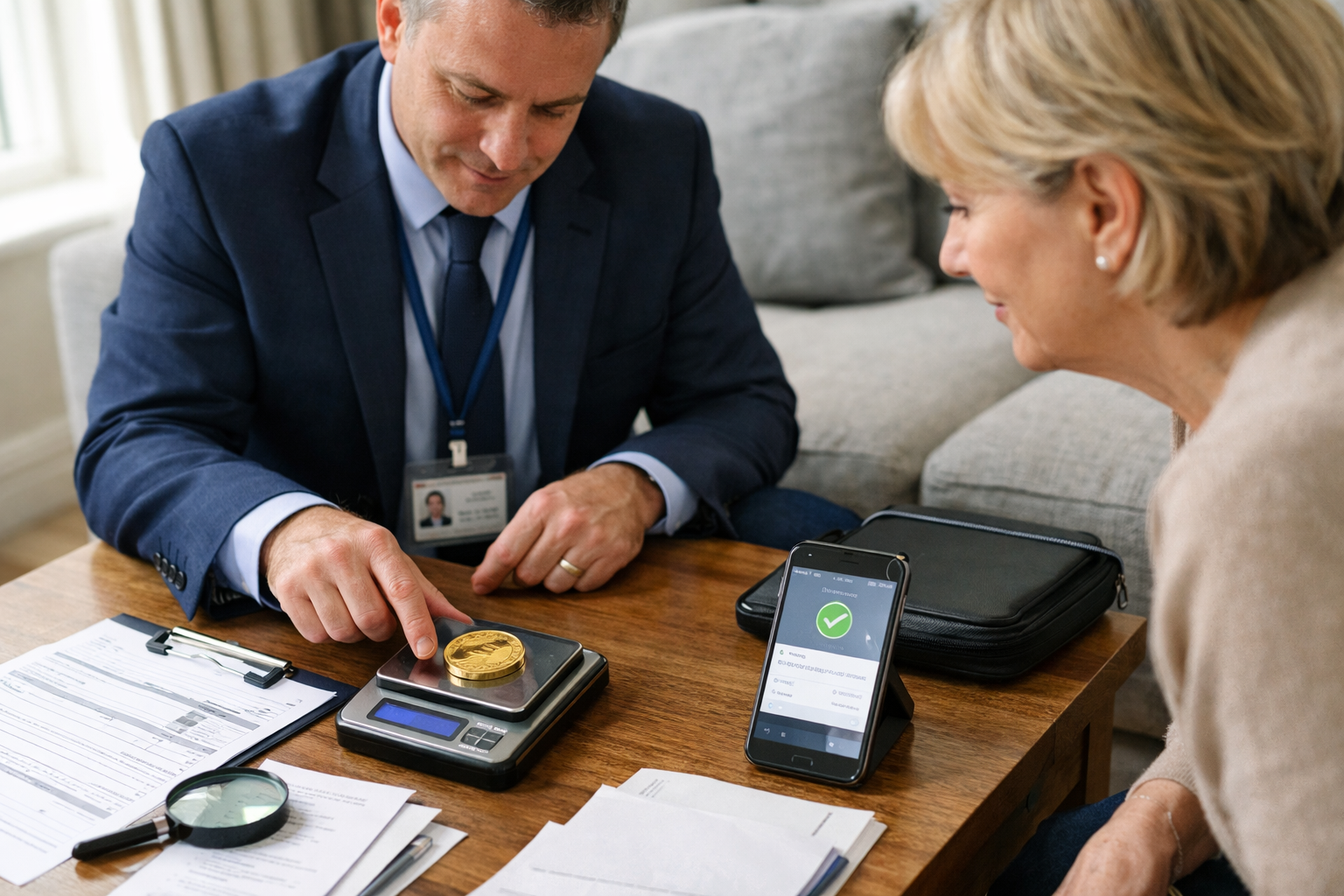
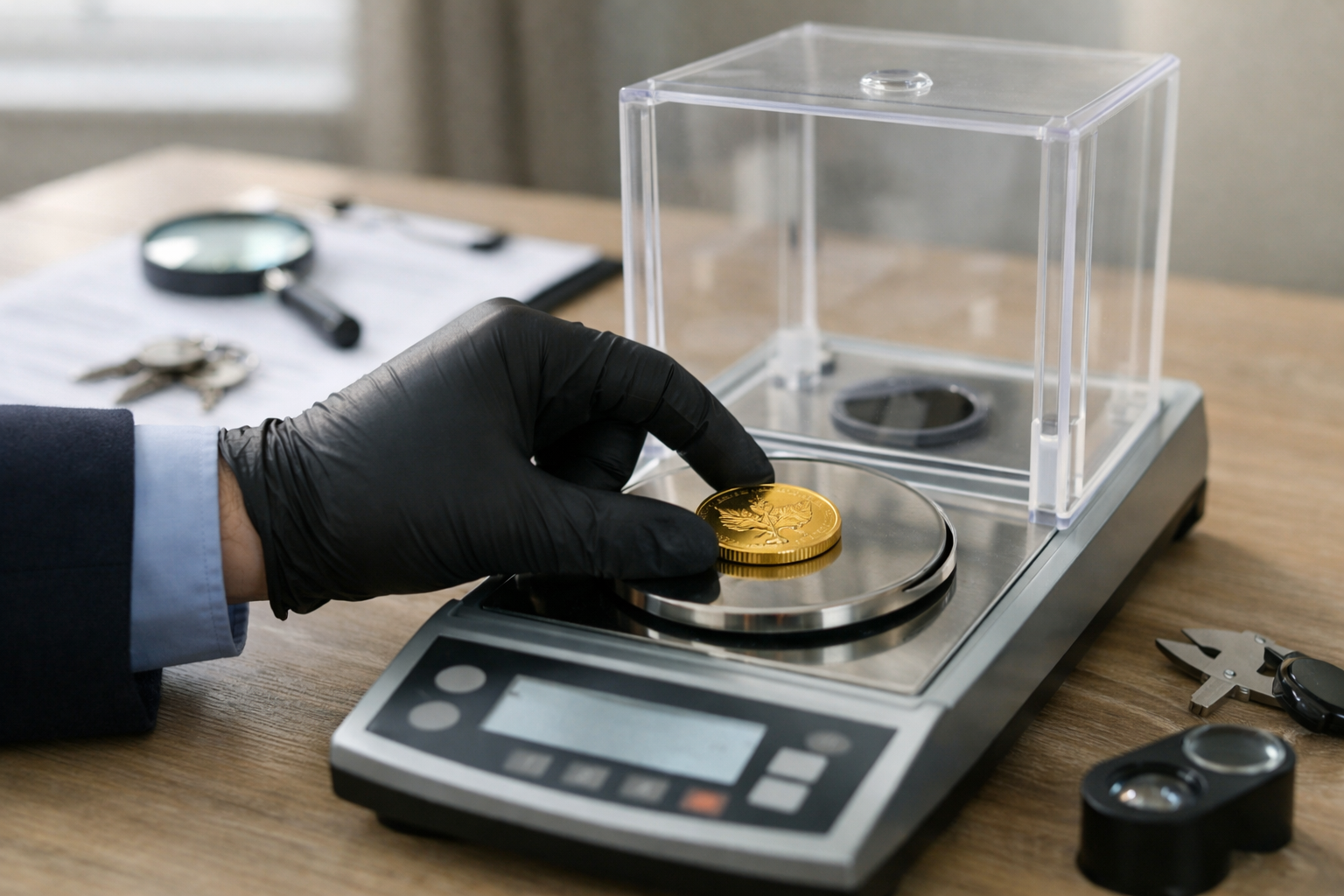
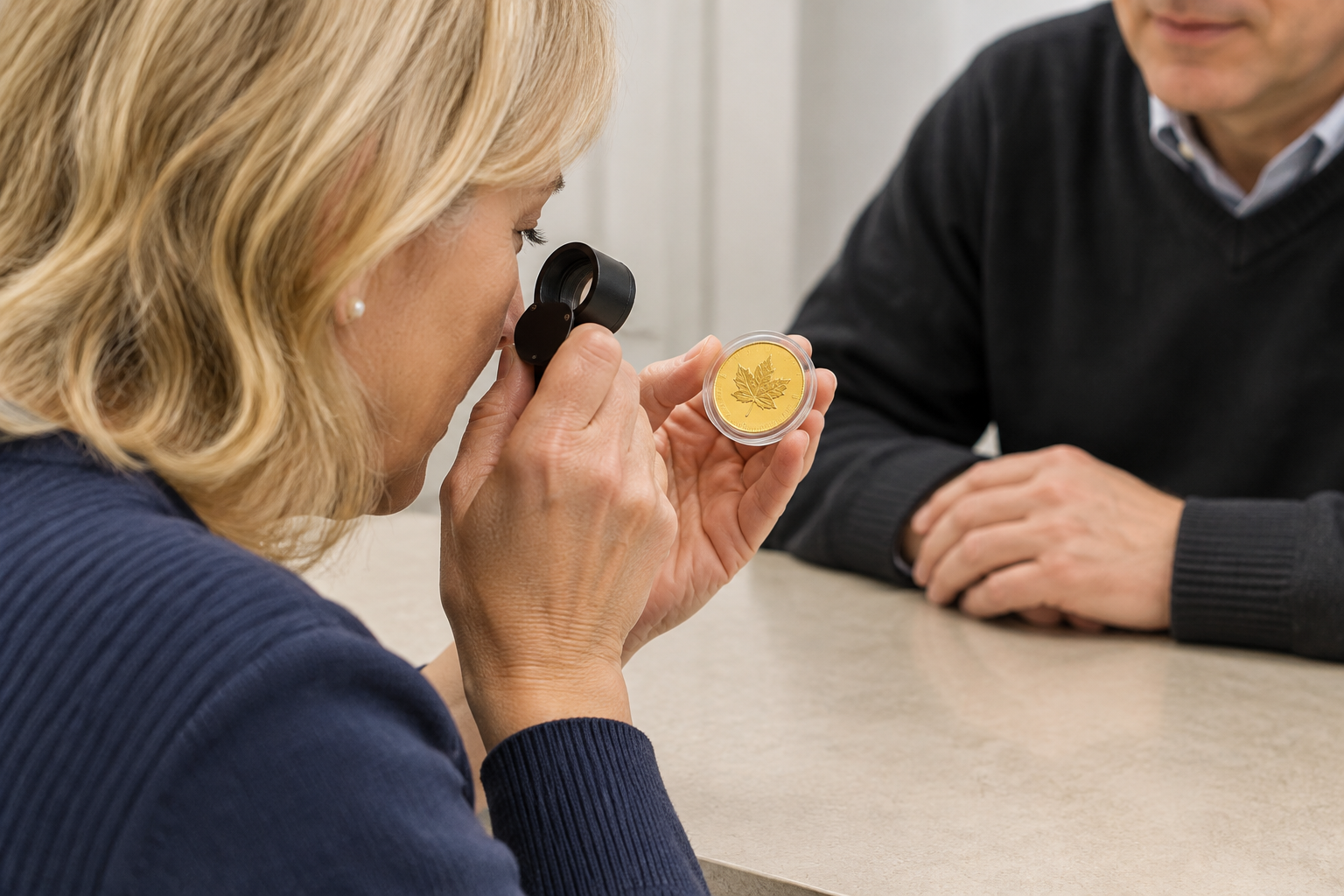
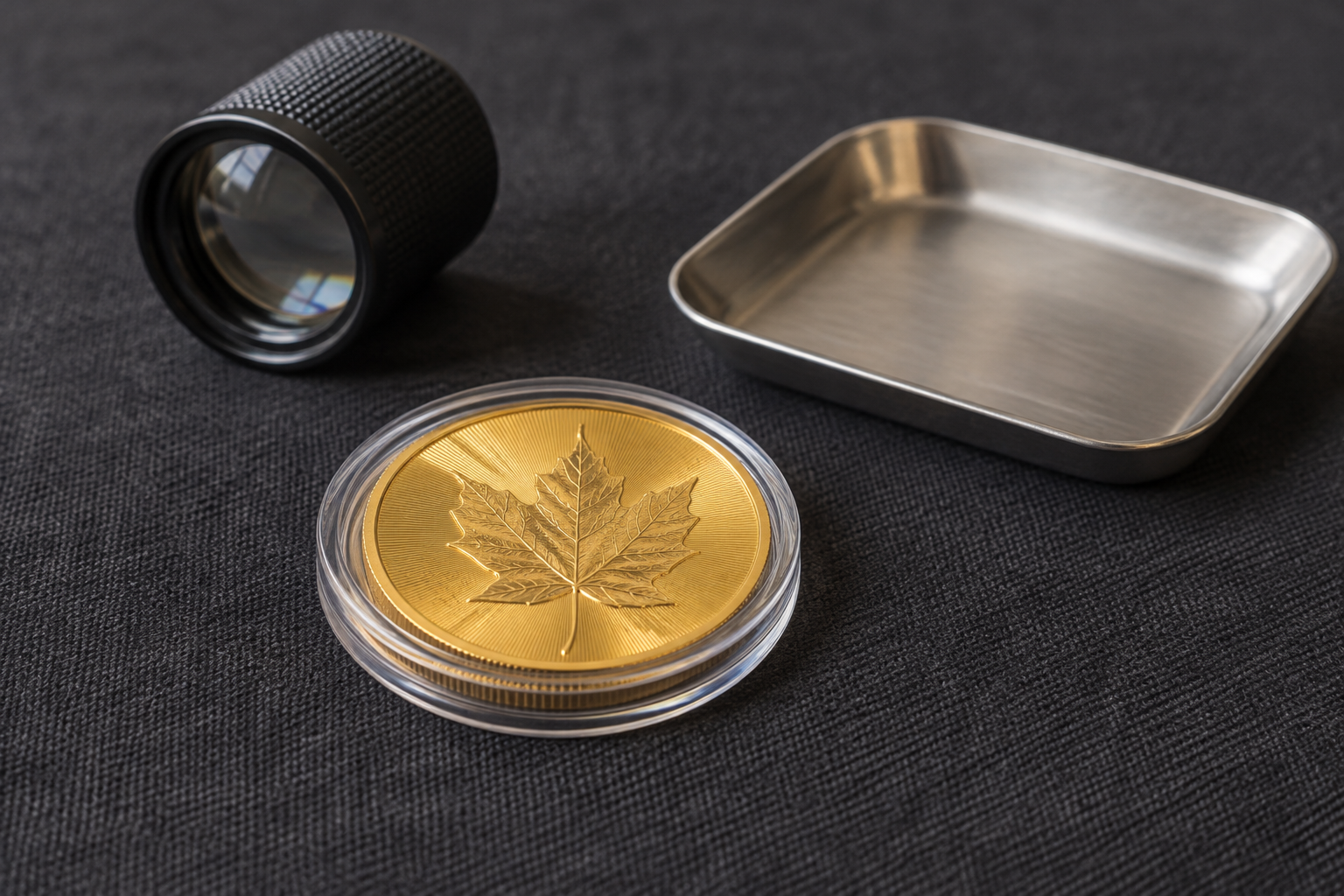
At an appointment, the seller can show the coin and explain anything they know about its history. The representative can then examine its features and assess the relevant gold value. The precise checks may depend on the item, so ask what equipment will be used and whether the coin needs to leave its capsule.
Gold Buyer offers on-the-spot valuations. Ask the representative to explain the proposed amount in pounds, the market reference used and any adjustment for condition or uncertainty. If you have more than one item, request a breakdown so you can understand the offer for each one rather than relying only on a combined figure.
In the scenario, the owner does not have to decide merely because an inspection has taken place. They can take time to understand the figures and ask whether the offer remains open if they want to compare it. Because gold prices change, an indication given earlier may differ from a later offer; ask when a price is confirmed and how long it applies.
If the explanation is unclear, ask the representative to distinguish the metal reference from the amount offered for the coin. Note any stated conditions, including whether the amount could change after further checks. If you seek another opinion, share the same information about the coin and disclose any uncertainty rather than presenting an earlier estimate as a confirmed value.
If the coin may have a collector premium, clarify whether the offer reflects that possibility. A bullion buyer and a specialist coin dealer may approach the same item differently. Neither a high asking price seen online nor a low estimate proves what a particular coin will sell for.
How Can You Complete the Sale Securely?
Before accepting, confirm the final amount, the payment method and any conditions. Gold Buyer states that same-day payment is made by bank transfer. Ask when the transfer will be initiated and check your own bank account rather than relying solely on a message or an image presented by someone else.
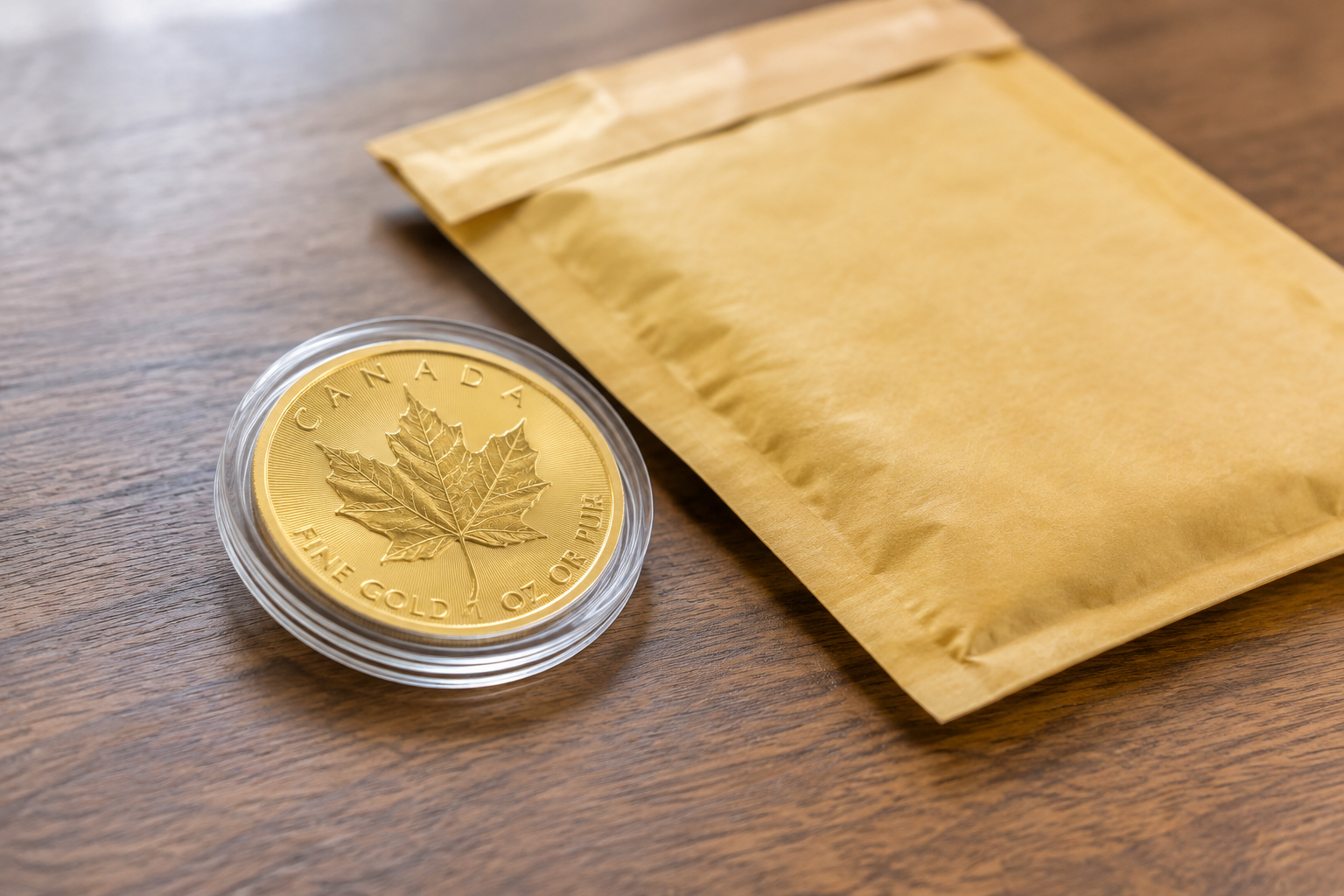
Keep a record of the transaction and the details of the item sold. If you are sending the coin using a kit, ask how it should be packaged, what delivery or cover arrangements apply and how an item would be returned if you decline the offer. Do not send it until you understand and accept those terms.
Your record can include the date, the agreed amount, a description of the coin and any information supplied about payment. Keep any correspondence about the offer and return arrangements together so you can refer to it if a question arises. Before handing over or sending the coin, make sure you understand at what point you are agreeing to the sale.
For a home appointment, agree the arrangements in advance and check the representative’s identity through the business using contact details you have independently found. Keep your banking and identity information private except where it is genuinely needed for the transaction. You can ask a trusted person to be present if that makes you more comfortable.
Watch: Understanding Gold Coin Valuations
A visual explanation can help you understand the difference between a coin’s gold content and an offer from a buyer. Check the source and date of any video, and treat quoted prices as historical unless they are clearly current.
Frequently Asked Questions
Is a Maple Leaf coin worth its face value?
Its face value is a denomination, not a reliable guide to what a gold buyer will pay. A bullion coin’s gold content is generally the starting point for a valuation. The actual offer depends on the market reference, inspection, condition and the buyer’s terms, with any collector appeal considered where relevant.
Do I need a receipt to sell my coin?
A receipt can help provide background, but the buyer will still need to assess the coin. If you do not have one, explain what you know and ask what identification or other information is required. Do not create or alter paperwork to fill gaps in the coin’s history.
Should I clean the coin before selling?
No. Avoid polishing or using cleaning products, as they can mark the surface and potentially affect collector interest. Leave the coin in its existing capsule where practical. If a buyer needs to remove it for inspection, ask how it will be handled and whether the proposed checks could alter it.
Can I sell other precious metals at the same appointment?
Gold Buyer purchases gold, silver, platinum and palladium items, including jewellery, bullion and scrap. Tell the business what you want assessed when arranging the appointment. Ask for a separate valuation or clear breakdown for different items, since their metal content, condition and resale considerations can differ.
Will I receive the quoted market gold price?
Not necessarily. The market price is a reference for the underlying metal, while a buyer’s offer reflects its assessment and commercial terms. Ask which price was used, whether there are deductions and what final amount you would receive. Compare offers at similar times where possible, because gold prices change.
If you are considering a sale, use the valuation booking link above to discuss your coin, preferred selling route and payment questions before committing.