Canadian Gold Maple Leaf: How to Value and Sell Your Coin
A canadian gold maple leaf is a bullion coin whose value usually follows the market price of its gold, although its size, condition and any collector interest can also affect an offer. To sell one in the UK, identify the coin, compare clear quotes and choose a secure valuation and payment method.
What Is a Canadian Gold Maple Leaf?
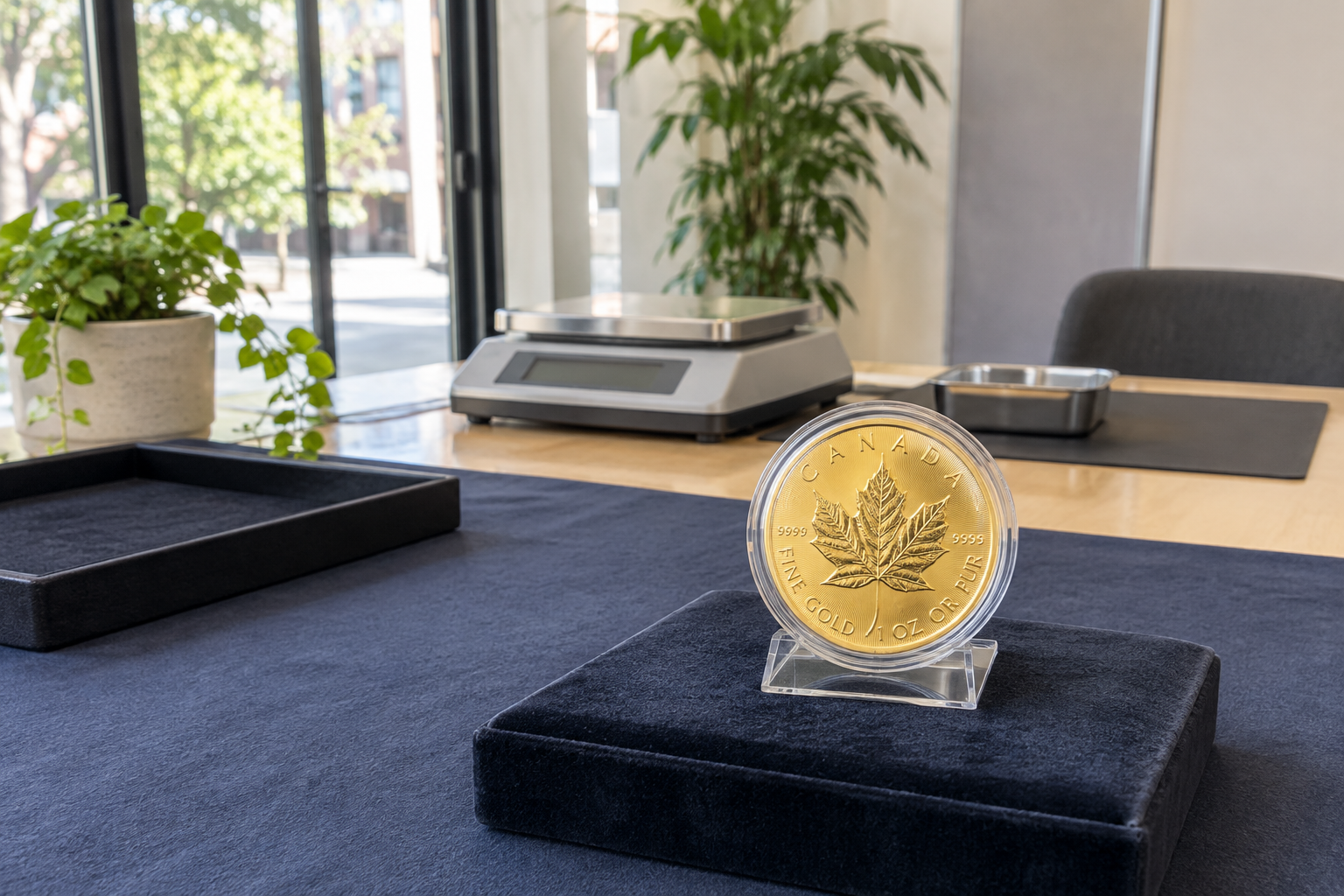
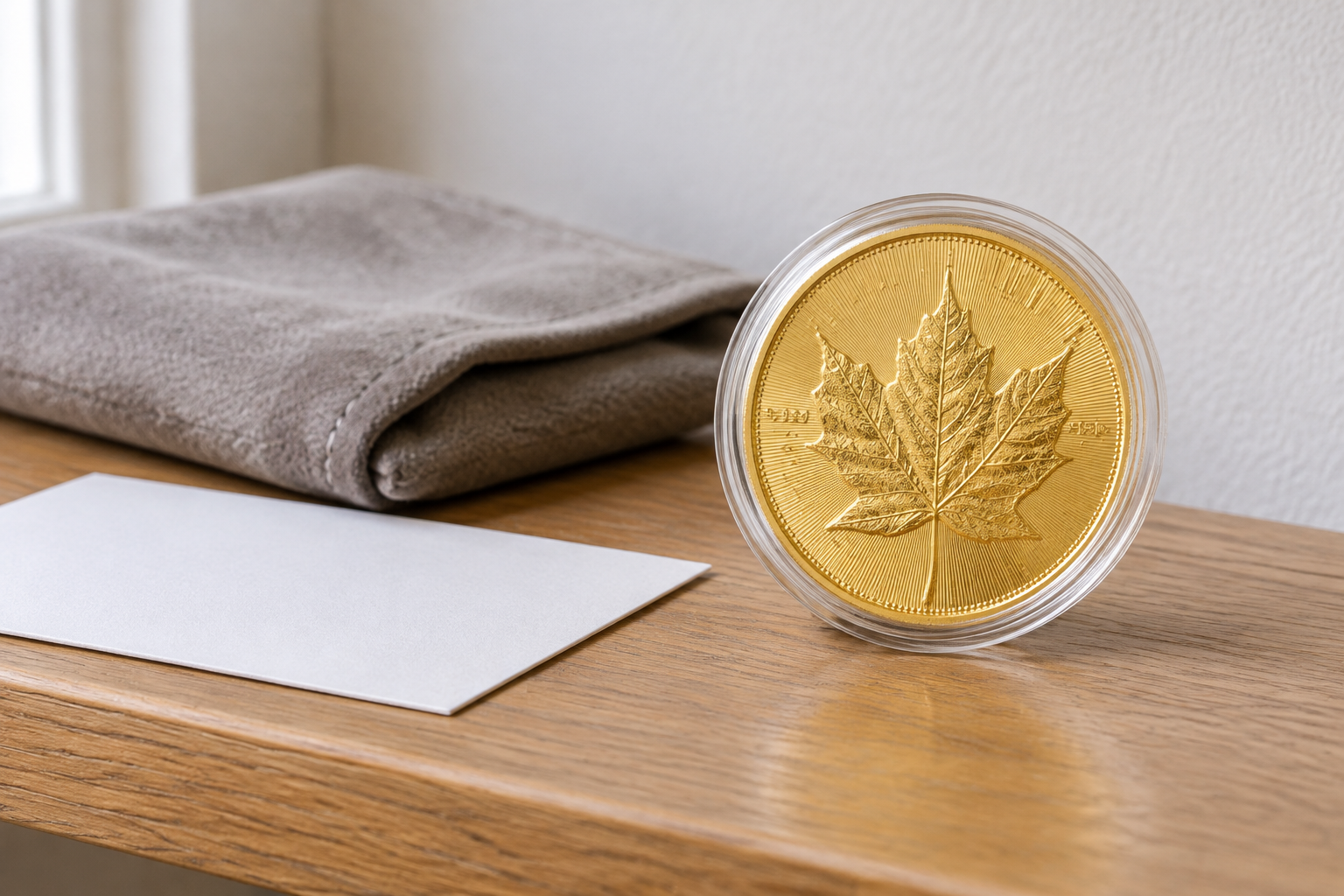
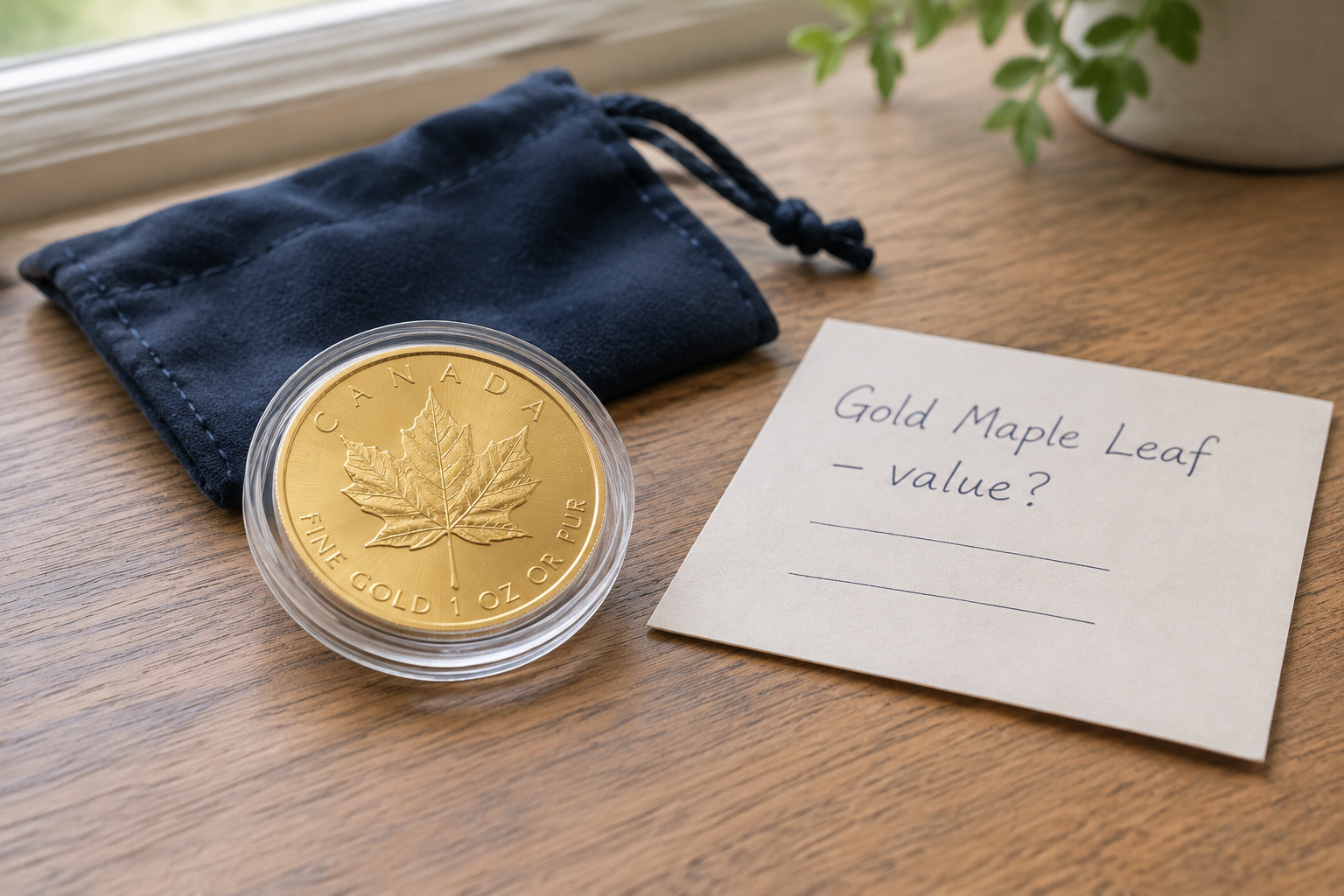
The Canadian Gold Maple Leaf is a gold bullion coin produced by the Royal Canadian Mint. Its maple leaf design makes it recognisable, but appearance alone is not enough to establish authenticity or value. Coins have been issued in different sizes and years, so check the details of your particular piece before relying on a price quoted for another coin.
Bullion coins are generally bought and sold primarily for their precious-metal content. Some individual coins may also attract interest because of their issue, condition or collectability. A buyer who specialises in bullion may assess those features differently from a collector or numismatic dealer.
The Royal Canadian Mint provides information about its bullion products. Use the mint’s information as a starting point, then have your own coin examined if you are unsure about its size, issue or authenticity. Avoid assuming that a gold-coloured coin with a maple leaf is necessarily a genuine bullion piece.
How Much Is Your Coin Worth?
There is no single fixed selling price. The starting point is the market value of the fine gold in the coin at the time of valuation. A buyer’s offer may be lower than that market value because the buyer needs to account for costs, market movement and its own margin. Conversely, a coin with genuine collector appeal might be worth discussing with a specialist before accepting a bullion-only offer.
A practical way to understand an offer is to ask the buyer to explain the coin’s fine-gold content, the market price used and the amount they are willing to pay. The LBMA precious-metal prices provide a recognised market reference, but a published reference price is not a guaranteed quote for your coin. Prices can move between checking a reference and receiving an offer.
| Factor | Why it matters | What to ask |
|---|---|---|
| Coin size and fine-gold content | These establish how much gold is being valued. | Which size and gold content have you identified? |
| Gold market price | The underlying reference changes over time. | What price and time is the offer based on? |
| Buyer’s margin and costs | The amount offered can differ from the metal’s reference value. | Is this the final amount I would receive? |
| Authenticity and condition | Inspection may affect whether and how the buyer purchases the coin. | What checks are needed before the offer is confirmed? |
| Collector interest | An unusual issue or desirable condition may appeal to collectors. | Have you considered any value beyond the gold content? |
Compare like with like. A retail price for buying a coin is not the same as a dealer’s price for purchasing one from you. Likewise, a quote for a different size or an offer given on a different day may not be a useful comparison. Ask whether any costs will be deducted and how long the quote remains available.
To make a comparison, first confirm that each buyer is quoting for the same coin and fine-gold content. Note the reference price and time if provided, then write down the amount you would actually receive after any stated charges. If one buyer has inspected the coin and another has only seen a description, mark that difference: the second figure may still change.
Do not treat the denomination stamped on a coin as its precious-metal valuation. Ask the buyer to explain how they have identified the coin and calculated the offer, rather than using the denomination or a retail listing as a shortcut. If the explanation is unclear, request a breakdown before deciding.
How Can You Check Your Coin Before a Valuation?
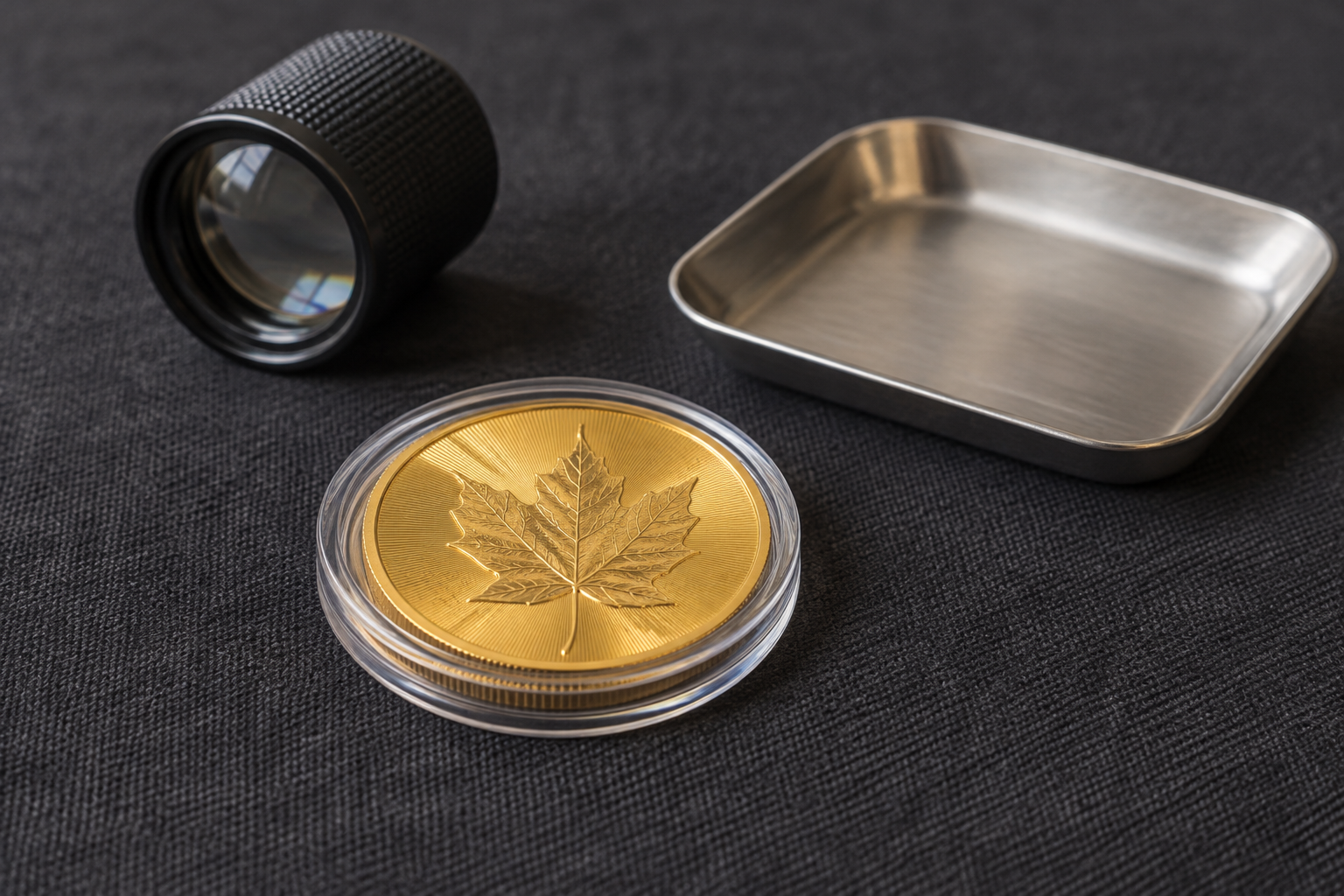
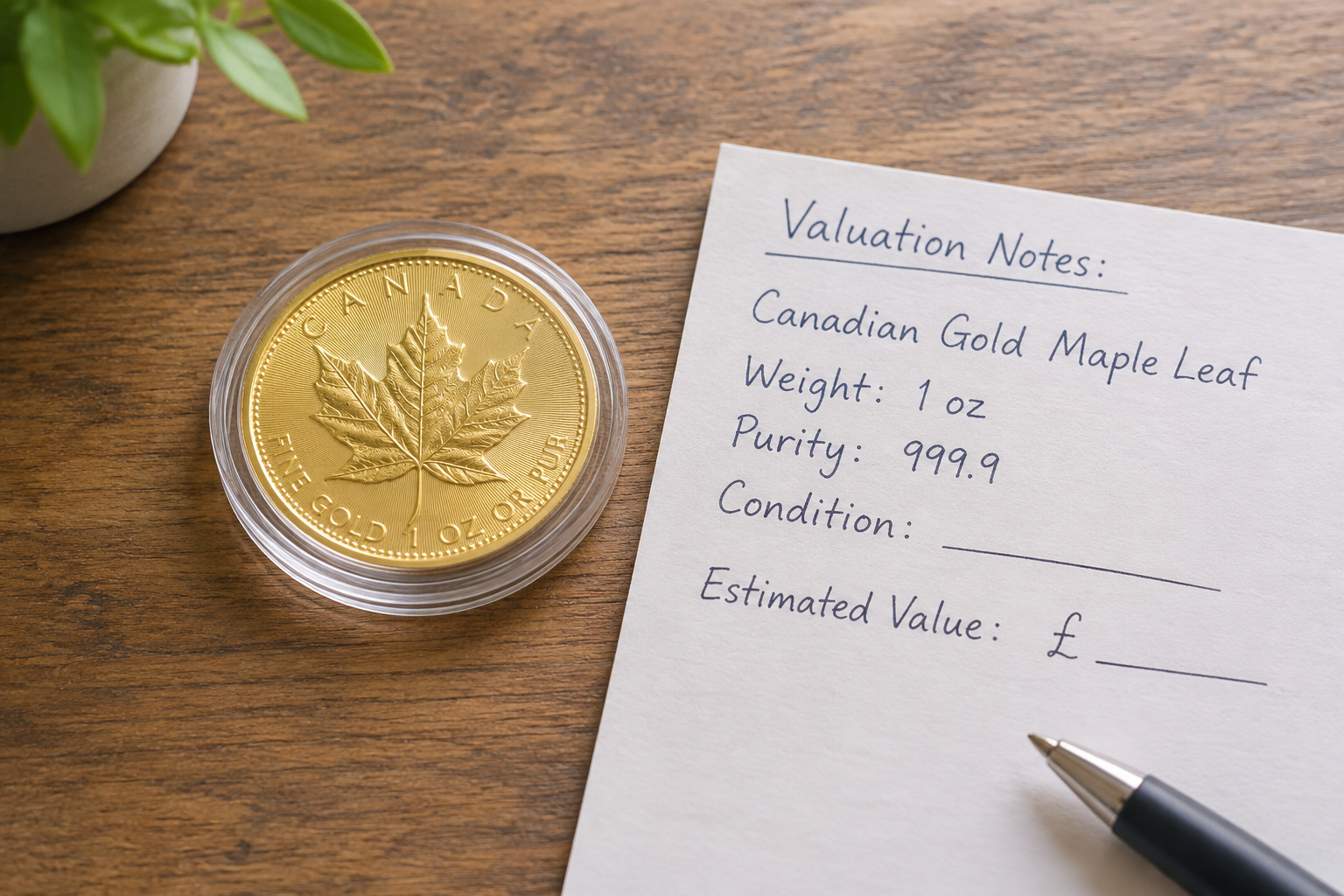
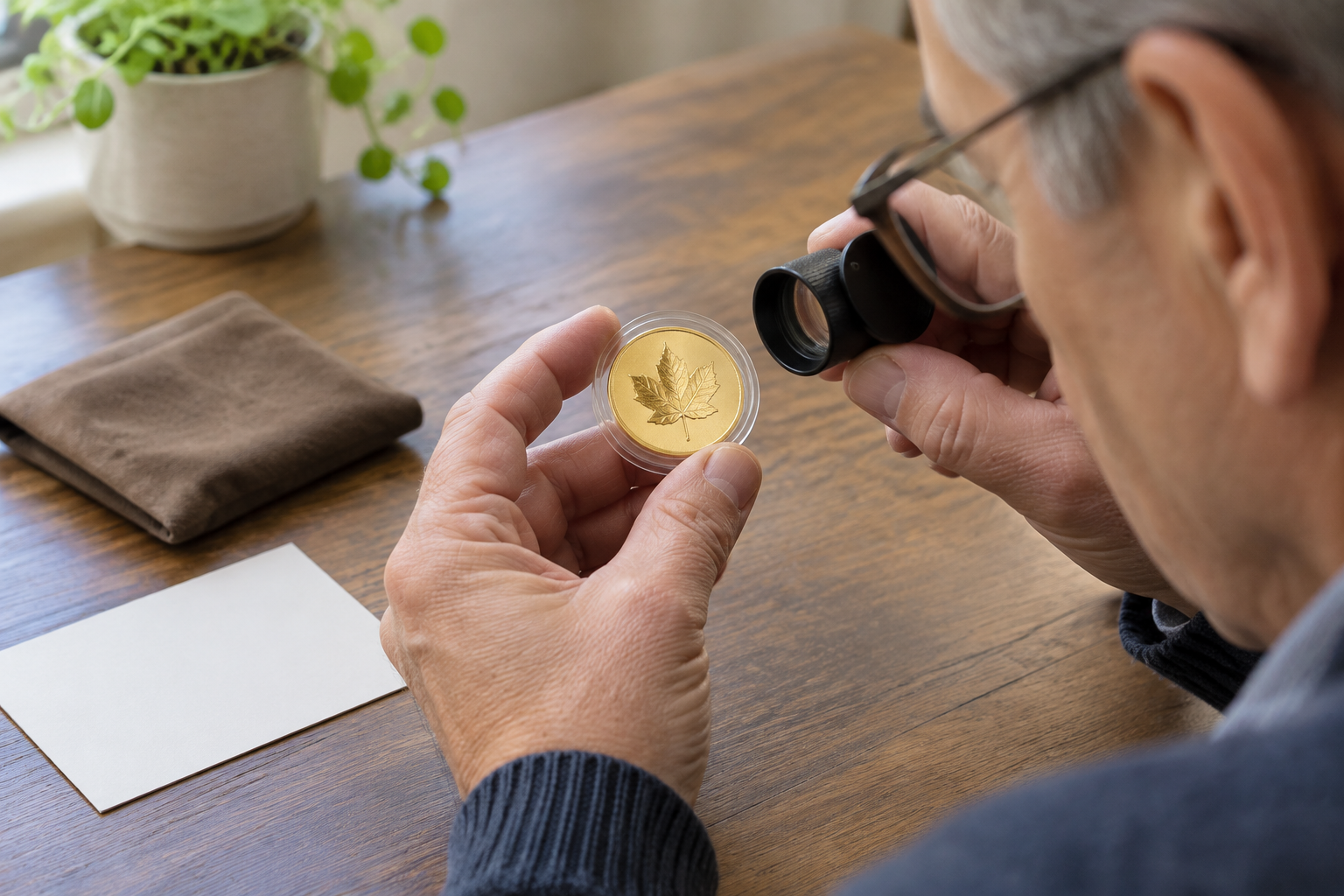
Start by looking at the visible markings without removing the coin from its protective holder. Note the issue year, stated denomination, any weight or purity markings and the general appearance. Record these details as a description rather than a guarantee: a convincing-looking coin can still require professional testing.
If you have the original packaging or purchase paperwork, keep it with the coin. It may help a buyer understand its history or identify a particular issue, although paperwork alone does not prove authenticity. If the coin came from an inheritance or gift and you have no documents, explain what you know and let the buyer assess the item.
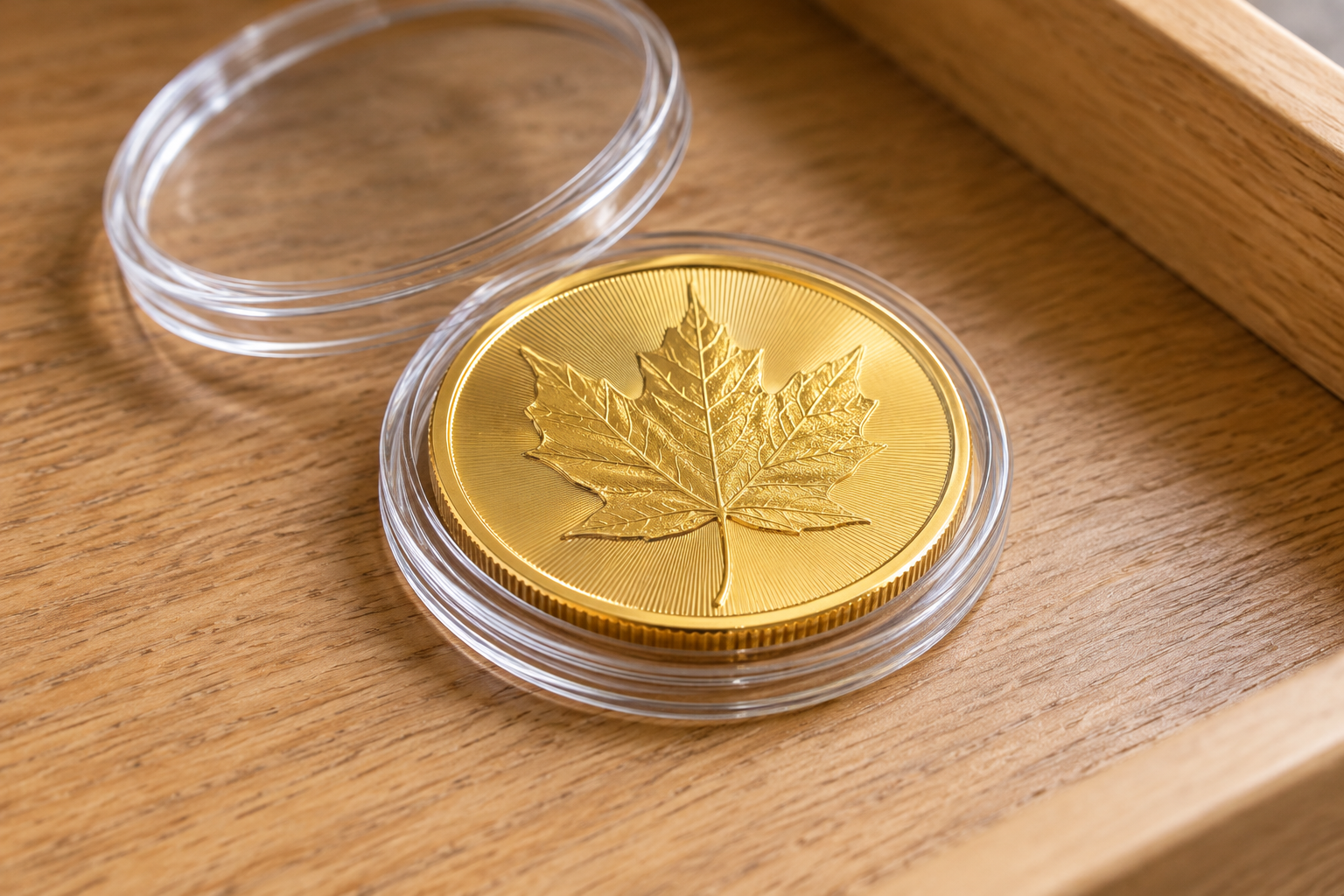
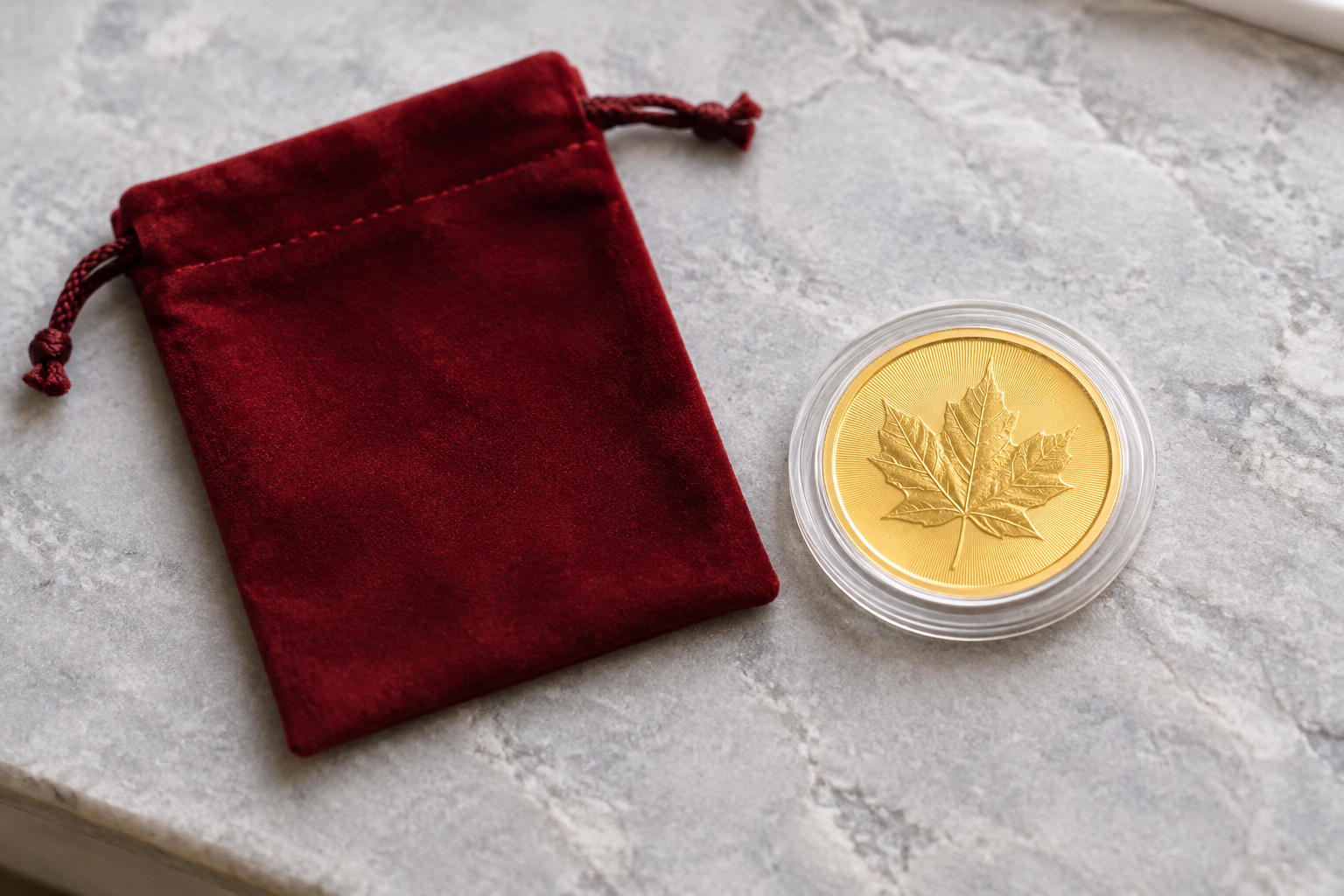
- Leave protective packaging in place: a capsule can help prevent accidental handling marks. Ask the valuer if it needs to be opened for inspection.
- Do not clean or polish the coin: cleaning can damage its surface and may reduce collector interest.
- Keep separate coins separate: avoid letting them rub together, especially if they are loose.
- Describe any visible damage: mention scratches or marks when requesting an initial quote, but allow for inspection before the offer is final.
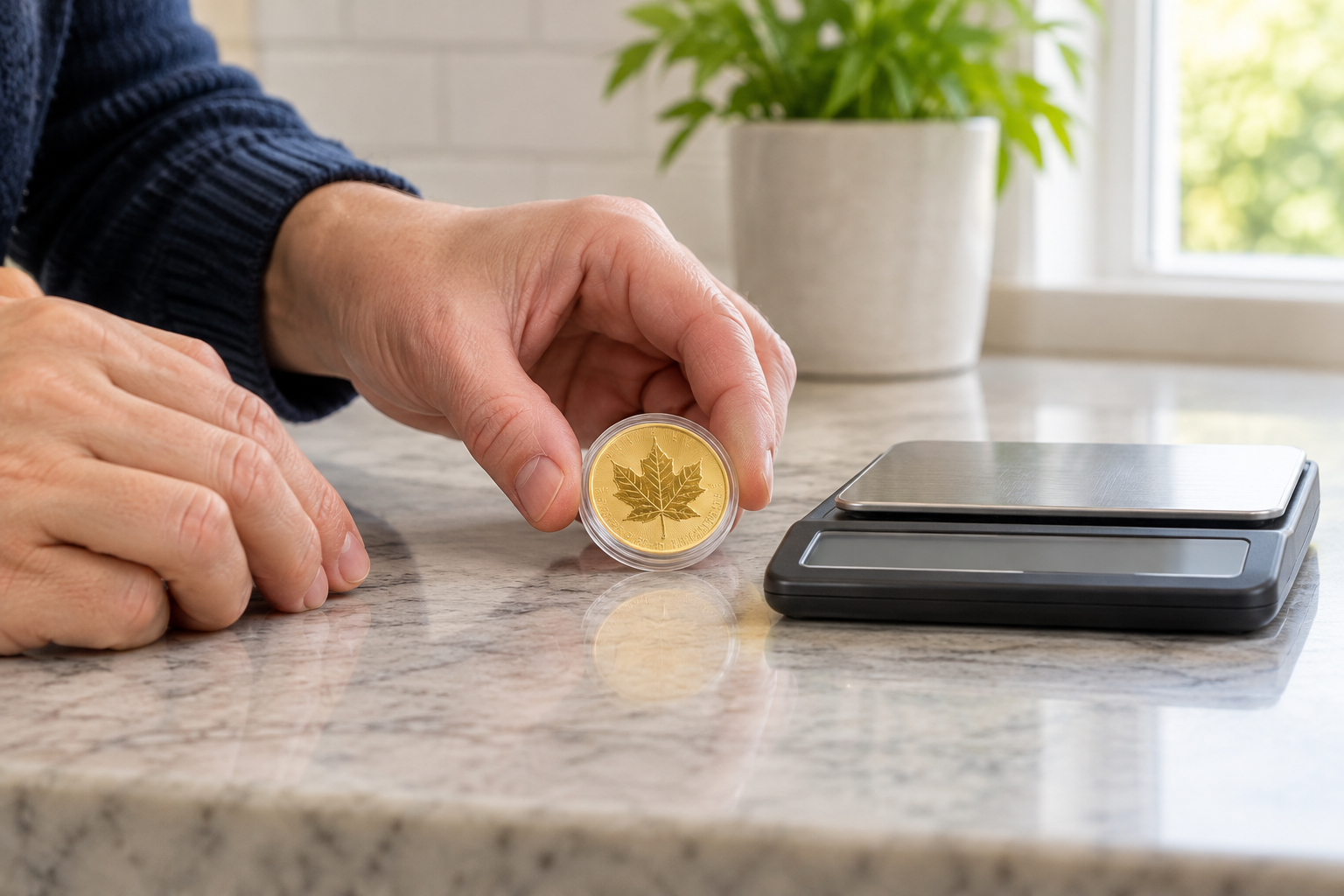
Home scales and photographs can help you prepare, but they are not a substitute for an assessment. A scale may lack the precision needed for a useful check, and a photograph cannot establish a coin’s metal content. Ask what testing the buyer uses and whether any proposed test could affect the coin before agreeing to it.
When requesting an initial assessment, provide clear photographs of both sides and any relevant markings visible through the holder. Include the details you can read, but say when a marking is uncertain instead of guessing. If you have several coins, identify each one separately so a buyer does not mistake a group description for a single coin’s specification.
Keep your notes and paperwork available for the appointment, while avoiding unnecessary handling. You can also write down questions about identification and testing beforehand. That makes it easier to check what the buyer has established, what remains uncertain and whether the figure discussed is provisional or final.
What Is the Difference Between Bullion and Collector Value?
Bullion value relates to the precious metal in the coin. Collector value depends on what a buyer might pay for characteristics beyond that metal, such as a particular issue or exceptional condition. Not every older coin is rare, and a coin in attractive packaging does not automatically command a premium.
If you suspect your Canadian Gold Maple Leaf has collector appeal, obtain an assessment from someone familiar with that market as well as a bullion quote. Tell each buyer what you have and ask whether their offer includes any collector premium. You can then decide whether a convenient bullion sale or a more specialist route suits your priorities.
A specialist assessment is especially useful when you have a question about an issue or its condition that a metal-based quote does not address. Describe the same features and disclose the same marks to both buyers. Ask whether any suggested premium is included in an immediate offer or is only an estimate of what a collector might pay.
Consider the terms as well as the headline figure. A direct bullion offer and a possible specialist sale may involve different timescales and charges. Before choosing either route, establish what you would receive, when payment would be made and what happens if the suggested sale does not proceed.
For a closer look at the standard bullion selling process, read our guide to valuing and selling a 1 oz Canadian Maple Leaf gold coin. The relevant size and issue still need to be confirmed for your own coin.
Where Can You Sell Your Coin in the UK?
Your options include a precious-metal buyer, a bullion dealer, a coin specialist or a private sale. Each route involves a different balance of convenience, expertise, security and time. The best choice depends on whether you want a straightforward metal-based offer or believe your coin warrants a specialist collector assessment.
| Selling route | Potential benefit | Point to check |
|---|---|---|
| Mobile precious-metal buyer | An in-person valuation can be arranged without visiting a shop. | Confirm coverage, identification, the offer and payment arrangements. |
| Bullion or coin dealer | A dealer can assess the coin and explain its purchase price. | Check whether an appointment, travel or delivery is needed. |
| Specialist collector market | May be worth exploring for an unusual or sought-after issue. | Ask about fees, timing and whether a sale is assured. |
| Private sale | You can agree terms directly with another individual. | Consider personal safety, payment verification and the risk of disputes. |
Gold Buyer offers mobile valuations, including home visits and local pop-up events, and has an office listed in Chesterfield. You can also ask about a home selling kit if you prefer not to arrange a visit. Confirm availability in your area and the process for your particular coin before deciding how to proceed.
Before choosing a route, consider whether you want to be present during inspection or prefer to send the coin for assessment. For a visit or event, confirm the location and appointment arrangements. For delivery, ask for packing instructions and check the applicable transit cover and return procedure before sending anything.
For a private transaction, agree the inspection and payment arrangements in advance and consider how you will verify payment safely. Do not hand over the coin simply because a buyer shows a payment message. Whatever route you choose, keep a record of the agreed terms and any final transaction details.
Ready to find out what your coin may be worth? Book a valuation with Gold Buyer and ask about a home visit, local event or home selling kit.
What Happens at a Home Valuation?
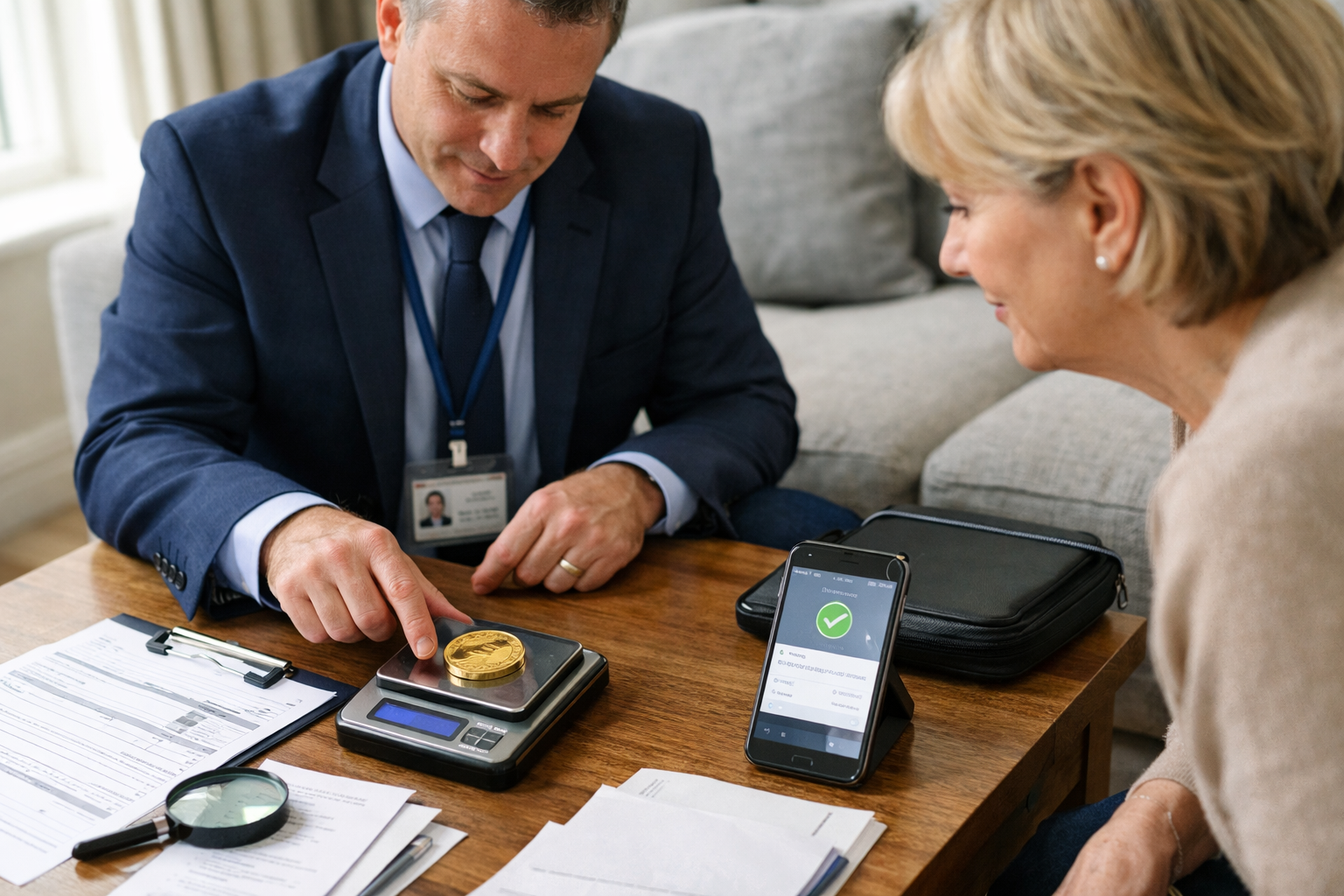
Before the appointment, describe the coin and mention whether you have other precious-metal items to sell. Ask who will attend, how to identify the representative and what you should have ready. Gold Buyer says its representatives are ID-checked; you can ask how to verify the person who arrives and what identification you will need to provide.
At the valuation, the buyer can inspect the coin, discuss any checks needed and explain an offer. Gold Buyer offers an on-the-spot valuation and same-day payment by bank transfer. Before agreeing to sell, confirm the final amount, the payment method and any conditions that apply. Make sure you are comfortable with the proposed checks and the offer.
You do not have to make a decision before you understand the price. Ask the representative to explain anything unclear, including how the live gold rate relates to the offer and whether collector value has been considered. If you want to compare another quote, establish how long the current offer will remain valid; a later price may differ as the market moves.
For broader preparation, our guide to selling jewellery safely and getting a fair valuation covers useful questions about checking a buyer and understanding an offer. The same general precautions can help when selling coins.
How Can You Compare Offers and Stay Secure?
Keep a simple record of each quote: the date, the coin described, the proposed payment and whether inspection is still required. An indicative quote based on a photograph is not necessarily the same as a final offer after the coin has been checked. If a buyer gives a price range, ask what could move the offer towards either end.
Also ask about practical terms. Is the quoted amount the amount paid to you? Are there any charges for a visit, testing, delivery or a returned item if you decline? Do not assume a particular charge applies; ask the buyer to set out its terms before you commit. If using a home selling kit, check how to pack the coin, what cover applies in transit and what happens if you decide not to sell.
- Use contact details you have independently checked when arranging an appointment.
- Keep personal information private and share only what is necessary for the transaction.
- Ask for an explanation of any identity checks and how your information will be handled.
- Confirm the payment amount and method before handing over the coin.
- Check your bank account directly to confirm receipt rather than relying only on a message or screenshot.
If two offers differ, ask each buyer what their figure includes rather than comparing the numbers alone. One may have allowed for inspection or delivery while another has not. Note any conditions and expiry times beside the amounts, then decide whether the difference still matters after the practical terms are taken into account.
Keep the buyer’s contact details and a record of the agreed price and payment method. If anything changes between the initial quote and final inspection, ask for the reason and the revised amount before proceeding. You can use that information to decide whether to accept the new offer or consider another option.
If you are also considering other coins, see our guide to how to sell Krugerrands for another perspective on preparing a bullion coin for sale. Different coins have different specifications, so do not transfer a valuation from one type to another.
Watch: How Are Gold Bullion Coins Valued?
A demonstration can help you understand the difference between a coin’s gold content and a buyer’s offer. Look for an explanation that identifies the coin being discussed and separates the market reference price from the price a seller may receive.
Treat any figures in a video as relevant to the time and circumstances in which they were recorded, not as a current quote. Your own coin still needs to be identified and assessed.
Frequently Asked Questions
Does the date on my coin determine its value?
The date helps identify the issue, but it does not determine the value on its own. Gold content and the current market price are usually central to a bullion offer. An issue that attracts collector interest may be assessed differently, so ask a specialist if you think the date or other features make your coin unusual.
Can I sell my coin without its original packaging?
You can ask for a valuation even if the original packaging is missing. The buyer will need to inspect the coin and decide whether they can purchase it. Missing packaging may matter more to a collector than to a buyer focused on metal content, so mention it when comparing offers.
Should I remove my coin from its capsule?
It is sensible to leave it protected until the buyer explains what inspection is necessary. Removing or handling a coin can expose its surface to marks. If a buyer needs access for testing, ask what the process involves and whether it could affect the coin before giving permission.
Will I receive the live gold price?
A buyer may use a live or recent market rate as a reference, but the offer for your coin is not necessarily the full reference value of its gold. Ask which rate is being used, how the offer was calculated and whether the quoted figure is the final amount you would receive.
Can I sell other precious metals at the same time?
Gold Buyer purchases gold, silver, platinum and palladium items, including jewellery, bullion, scrap and dental gold. If you have other items, mention them when arranging your valuation so the representative can explain what can be assessed and any identification or practical requirements.
To discuss your Canadian Gold Maple Leaf and the available selling options, contact Gold Buyer through the valuation booking link above.