Gold Price Per Gram UK: 9ct, 14ct, 18ct, 22ct and 24ct Prices

Gold Buyer • August 18, 2026

Quick Answer

The gold price per gram UK changes throughout the day and depends on purity, so 9ct, 14ct, 18ct, 22ct and 24ct all have different values. If you want to sell, use the live gold price per gram UK as a starting point, then expect a final offer to reflect testing, weight, and market conditions.

If you are checking the gold price per gram UK, you are usually trying to answer one practical question: what is my gold worth today, and what could I realistically be paid for it? The short answer is that the gold price per gram UK changes with the market, and your item’s carat, weight, and condition all affect the final offer. That matters whether you are selling broken jewellery, inherited pieces, sovereigns, bullion, coins, or dental gold.

This page is designed as a live-style pricing guide and a trust-building starting point before you book a valuation. It helps you understand how 9ct, 14ct, 18ct, 22ct and 24ct gold prices are worked out, why buyers do not pay the headline market figure, and how to compare offers more confidently. If you are planning to sell, you can also use our gold valuation in the Midlands guide to see how we assess items, or visit our cash for gold service page for a simple next step. For many sellers, especially those with older jewellery or mixed items, understanding the gold price per gram UK first makes the whole process feel much clearer.

Today’s Gold Price Per Gram UK

The gold price per gram UK is the baseline used to value gold by weight and purity. In plain terms, it tells you what one gram of fine gold is worth before any buyer applies testing, refining, handling, or business costs.

For sellers, this is the best starting point for a realistic expectation. However, it is not the same as the amount you will automatically receive. A buyer first checks the carat, then weighs the item, and then calculates the fine gold content. If you are selling to a local gold buyer, that process should be explained clearly before you accept an offer.

Live gold data can be viewed on market chart pages such as live gold price in GBP per gram and gold price charts live in Pound Sterling. Those charts are useful for context. Even so, scrap jewellery and investment items are priced differently. If you need a buyer who explains the numbers in person, our gold buyers near me page is a practical place to start.

You can also watch a simple breakdown of weighing and pricing before a sale. The process is easier to understand once you see how gold is handled, weighed and separated by purity:

The gold price per gram UK is useful because it gives you a fair reference point. It also helps you spot weak offers, especially when you are selling gold that has been sitting unused for years. If you compare more than one valuation, you will usually notice that the best offers explain their calculation clearly and avoid vague wording.

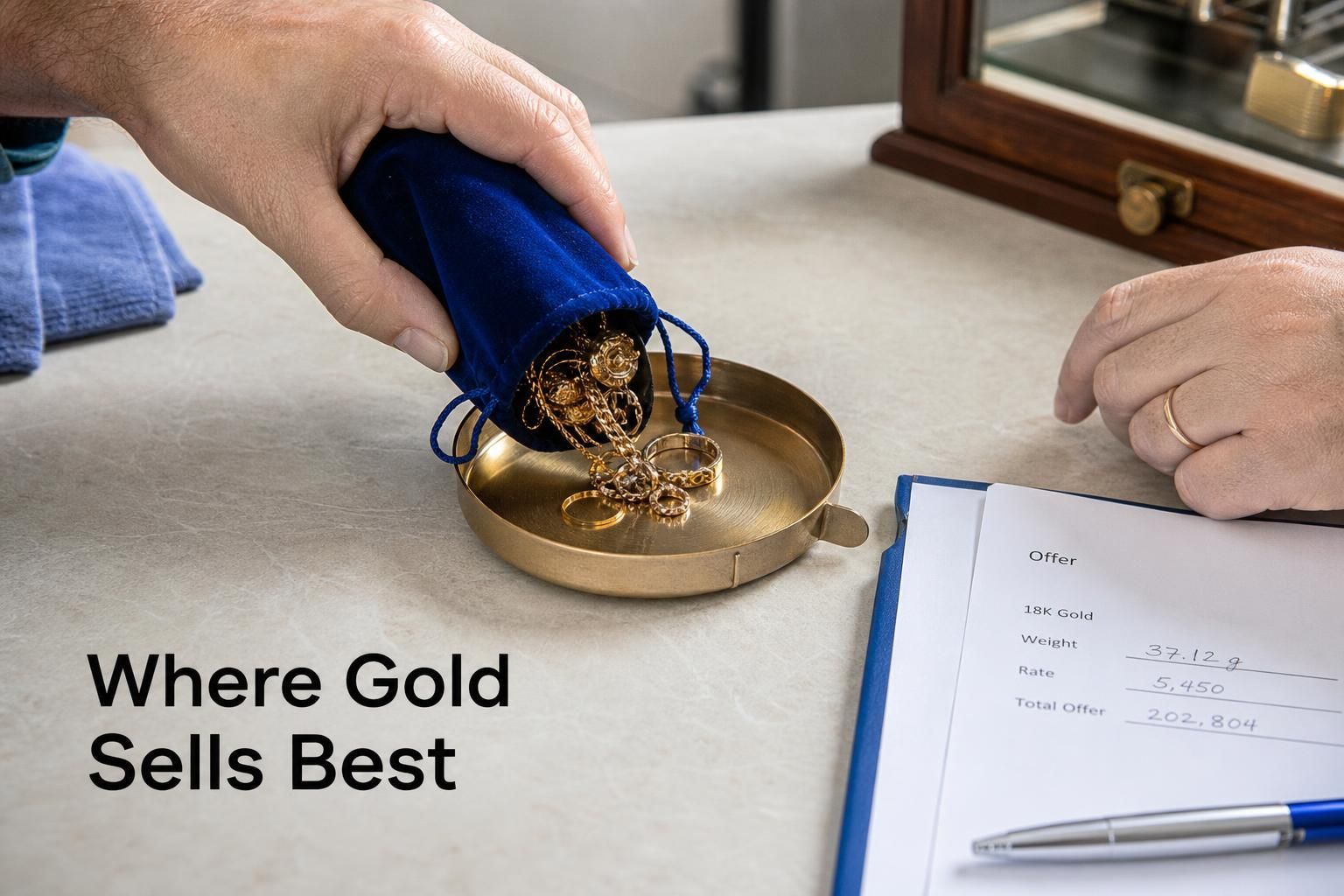
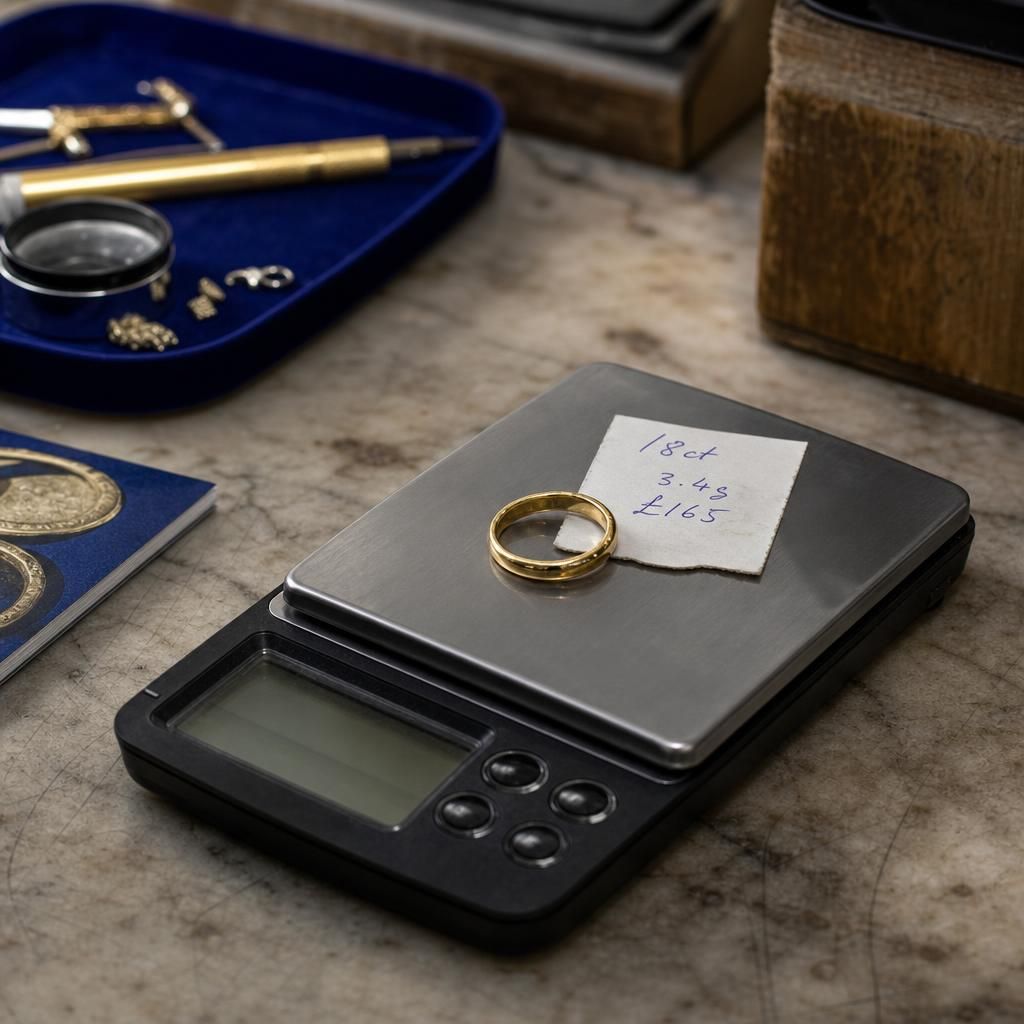
Gold ring on jeweler’s scale with valuation slip 

Gold Price Per Gram UK by Carat

The gold price per gram UK changes by carat because each carat contains a different amount of pure gold. Higher carat gold contains more fine gold, so it is worth more per gram.

This is why 24ct gold is highest in value, while 9ct gold is lower. The same rule applies whether the item is a necklace, ring, coin, bar, or broken scrap piece. For a clear comparison of how purity affects pricing, you can also review our gold price today page, which is useful when checking current selling conditions.

If you want a simple explanation of the purity maths, this guide from scrap gold prices per gram and this gold price per gram UK today calculator page show the same basic principle: purity determines the fine gold content, and fine gold content determines value.

When you see the gold price per gram UK, remember that it is only the first stage. The next stage is carat testing. After that comes accurate weighing. Finally, a buyer applies the trade offer. That is normal across the market, and it is especially important for mixed lots, inherited jewellery, and items with stones that must be removed before payment.

9ct gold price per gram

The 9ct gold price per gram UK is lower than higher-purity gold because 9ct contains less fine gold. It is still one of the most common carats found in UK jewellery, especially older rings, chains and bracelets.

If you are selling 9ct items, the best approach is to group them by carat before valuation. That makes the process faster and reduces confusion. Broken items can still be valuable, so do not discard a damaged chain or bent ring. Many sellers use our broken gold buyer page when they realise damaged gold still has melt value.

The 9ct gold price per gram UK is also the most searched rate for scrap jewellery sellers. That is because 9ct is common in everyday items and family inheritances. A buyer should always tell you how they tested it and whether the price is based on weight only or includes any deductions for stones, clasps, or non-gold parts.

14ct gold price per gram

The 14ct gold price per gram UK sits between 9ct and 18ct because it contains more fine gold than 9ct, but less than 18ct. It is common in imported jewellery and some higher-quality pieces.

For sellers, 14ct is easy to overlook because it is less familiar in the UK than 9ct or 18ct. However, it can still achieve a strong return, especially if the item is heavy. If you are unsure what you own, a professional appraisal is safer than guessing. Our sell unwanted gold page explains how unused items can be turned into cash without hassle.

The 14ct gold price per gram UK is best viewed as a purity-adjusted rate. Therefore, the weight matters just as much as the carat. A heavy 14ct bracelet may be worth more than a light 18ct ring.

18ct gold price per gram

The 18ct gold price per gram UK is often a key reference point because 18ct gold contains a high proportion of fine gold. It is widely used for quality jewellery and holds strong resale appeal.

If you are selling 18ct jewellery, watch for stones, settings and brand markings. Those details can affect value, but the gold content remains the main factor in scrap pricing. For sellers who want a secure local route, our sell gold jewellery in the Midlands page gives a clearer view of the valuation journey.

The 18ct gold price per gram UK is often where buyers and sellers begin to disagree. That usually happens when the seller expects retail-style value, while the buyer is pricing for metal content. A clear explanation bridges that gap.

22ct gold price per gram

The 22ct gold price per gram UK is usually close to the investment end of the market because 22ct gold has a very high gold content. It is common in sovereigns, some bangles and certain traditional jewellery styles.

If you own 22ct pieces, weigh them carefully only if you have proper tools. Otherwise, let a buyer test them. This reduces the risk of damage or confusion. For investment pieces, you may also want to read our sell gold sovereigns page, since sovereign pricing is often linked to the underlying gold value.

The 22ct gold price per gram UK is a useful guide, but sovereigns and collectable pieces can carry additional value. A knowledgeable buyer will explain whether your item is being bought as gold content, collectible coinage, or both.

24ct gold price per gram

The 24ct gold price per gram UK is the benchmark for pure gold. It is the highest purity you are likely to see in standard bullion products and some investment bars.

If you are selling bars or fine gold, the pricing process should be especially transparent. Weight, serial numbers, and authenticity checks matter. For that reason, our sell gold bullion page is a useful next step if your item is an investment product rather than jewellery.

The 24ct gold price per gram UK is the cleanest reference point, but the final offer still depends on whether the item is a bar, coin, or scrap piece. A coin may have numismatic value, while a bar is usually valued mainly for metal content.

How to Estimate the Value Using the Gold Price Per Gram UK

You can estimate gold value by combining purity, weight, and the current gold price per gram UK. This gives you a realistic starting point before you speak to a buyer.

First, confirm the carat mark. Then weigh the item. Finally, work out how much of that weight is actually fine gold. That is the basic method used across the trade. If you prefer a practical demonstration, the calculation method is explained clearly in this video guide on purity and pricing:

Here is the simplest way to think about it:
- Check the carat mark, such as 9ct, 14ct, 18ct, 22ct or 24ct.
- Weigh the item without packaging.
- Separate gold from stones, fittings or mixed metals.
- Use the gold price per gram UK as your reference point.
- Expect a buyer’s offer to reflect real testing and handling.

This is why a necklace, a ring and a coin may all have different outcomes even when they weigh the same. The gold price per gram UK is only one part of the equation. Condition, purity and item type all matter.

If you have a mixed lot, sorting it first can help. For example, sovereigns should not be priced the same way as scrap chains. Likewise, bullion bars should not be treated like fashion jewellery. If you need help identifying what you own, our contact Gold Buyer page makes it easy to ask before you book.

The gold price per gram UK is most useful when you treat it as a guide, not a promise. That keeps your expectations realistic and helps you compare offers intelligently.

Why Your Final Offer May Differ From Spot Price

Your final offer may differ from the gold price per gram UK because buyers do not purchase gold at the full retail market quote. They need to cover testing, refining, overheads, and payment handling.

That does not mean a lower offer is unfair. It means the offer should be explained clearly. Reputable buyers should show the carat test, the weight, and the valuation logic. If you are comparing providers, our why choose Gold Buyer page explains the checks and payment process in more detail.

There are several common reasons the final offer changes:
- The item is not the carat you expected.
- Stones, clasps or fittings reduce payable gold weight.
- The piece is hollow or partly filled.
- The item is a coin or sovereign with separate market demand.
- The buyer is valuing bullion, scrap or jewellery differently.

For estate items and inherited jewellery, this stage matters even more. Family pieces can look substantial, but weight and purity tell the real story. That is why the gold price per gram UK should be used alongside proper valuation, not instead of it.

If you are selling from home, security also matters. A local appointment or home visit can be more reassuring than posting valuables. Many sellers prefer that route when the items are high value or emotionally important.

Example Valuations Based on Gold Price Per Gram UK

The gold price per gram UK becomes easier to understand when you apply it to real-world items. These examples show how the same market can produce different outcomes depending on carat and item type.

A small 9ct ring will usually be valued very differently from a 24ct bullion bar. Likewise, a heavy 22ct sovereign-based item can be worth more than several lighter pieces combined. The key point is that value comes from fine gold content first, then from the item’s category.

Example scenarios:
- A 9ct broken chain: valued mainly for scrap gold content.
- An 18ct necklace: valued for higher gold purity and weight.
- A 22ct sovereign: often valued with attention to coin market demand.
- A 24ct bar: usually valued closely against bullion pricing.
- Dental gold: assessed carefully because alloy content can vary.

If you have gold coins or bars, read our specialist pages for better guidance. For example, our sell gold coins page helps when you are unsure whether your items are bullion, collectable, or simply scrap value. If you have dental items, our dental gold buyer page explains how those are handled.

These examples matter because many sellers search the gold price per gram UK, then assume all items will be valued the same way. In practice, the buyer first identifies what the item is, then applies the correct pricing route. That is the difference between a rough guess and a proper valuation.

Frequently Asked Questions

These answers are designed to give you a fast, clear understanding of the gold price per gram UK before you sell. If you want a secure next step, you can also review our sell gold in the UK page for the full process.

Key Takeaways

  • The gold price per gram UK is the right starting point, but purity and weight determine the real value.
  • 9ct, 14ct, 18ct, 22ct and 24ct gold each have different prices because they contain different amounts of fine gold.
  • Final offers can differ from spot price because buyers must test, weigh and handle the items properly.
  • Sovereigns, bullion, coins, jewellery and dental gold may need different valuation methods.
  • A clear, secure valuation process helps sellers compare offers with confidence.

Frequently Asked Questions

How much is 1 gram of gold in the UK?

The amount depends on purity, because 1 gram of 24ct gold is not the same as 1 gram of 9ct gold. The gold price per gram UK is the starting point, but the final value changes with carat, testing, and item type. In practice, buyers value the fine gold content, not just the total weight.

How much is 9ct gold per gram in the UK?

9ct gold per gram is lower than 18ct, 22ct and 24ct because it contains less fine gold. The gold price per gram UK should be treated as the reference point, then adjusted for 9ct purity. If you have a ring, chain or bracelet, it is best to have it weighed and tested before accepting an offer.

How much is 22 carat gold in the UK today?

22 carat gold is valued near the higher end of the market because it has a high gold content. The gold price per gram UK is the correct guide, but sovereigns and other 22ct items may also have coin or collectable value. That means a proper appraisal is better than relying on a simple scrap estimate.

How much is 10 gram gold in the UK today?

Ten grams of gold is worth whatever the current gold price per gram UK implies for that purity. A 10 gram 24ct item will be worth more than a 10 gram 9ct item because the fine gold content is higher. Buyers usually calculate this by multiplying purity-adjusted weight by the current rate.

Is the gold price per gram UK the same for jewellery and bullion?

No, it is not always the same. Bullion is usually valued more directly against the market rate, while jewellery may be priced for scrap metal content after testing and weighting. The gold price per gram UK is still the best starting point, but item type changes the final offer.

Sell Gold in the UK: Jewellery, Coins, Bullion and Scrap Gold
By Gold Buyer August 17, 2026
If you want to sell gold, the smartest approach is to start with the item type, then choose the safest selling method. Jewellery, sovereigns, bullion bars and scrap gold can all be sold, but each needs a different valuation approach. That is why a good buyer should guide you clearly, not just quote a price. At Gold Buyer, we help sellers across the Midlands and South with secure gold valuation appointments, home visits and a free postal selling kit. You can also explore our Gold Buying | Gold…
Sell Gold in Derby: Local Gold Valuations for Jewellery, Coins and Bullion
By Gold Buyer August 16, 2026
If you want to sell gold Derby, start with a buyer who can explain the valuation clearly and pay quickly after you agree. That matters whether you are selling broken jewellery, a gold necklace, sovereigns, bullion bars or mixed scrap. It also matters if the items were inherited and you want a discreet process. Gold Buyer helps people compare options with a local-first approach, so you can make a confident decision without posting valuables to an unknown company. If you are still exploring…
Sell Gold for Cash Near Me: Fast Local Valuations and Bank Payment
By Gold Buyer August 15, 2026
If you are searching for sell gold for cash near me, you probably want two things: a fair price and a process that feels safe. Gold Buyer helps with both. We buy unwanted, broken and inherited gold, including jewellery, necklaces, sovereign coins, bullion bars, scrap gold and dental gold, with local valuations and fast bank payment. That matters if you do not want to post valuables to an unknown company or wait days for an answer. A local appointment lets you speak to a buyer, ask questions…
Why Choose Gold Buyer? Trust, ID Checks, Valuation Process and Payment Security
By Gold Buyer August 14, 2026
Choosing a gold buyer is not just about price. It is also about trust, identity checks, valuation clarity and how safely your items are handled from start to finish. If you are selling jewellery, sovereigns, bullion, scrap or inherited pieces, you want a gold buyer that explains every step and makes the process feel secure. That matters even more when the items have sentimental value or you are comparing a local visit with a postal option. On this page, we explain how Gold Buyer works, what…
Sell Gold Online or Use a Local Gold Buyer? Pros, Cons and Safety Checks
By Gold Buyer August 13, 2026
If you want to sell gold online, the main question is not just price. It is trust, control, and how safely your items are handled from valuation to payment. Some sellers like the speed of a postal service. Others prefer to speak to a local expert, see how the gold is tested, and avoid sending valuable items to an unknown address. That is especially true for inherited jewellery, broken pieces, sovereigns, bullion, scrap gold, and dental gold. Gold Buyer is built for sellers who value a discreet…
By Gold Buyer August 12, 2026
If you are wondering how to sell gold bars, the safest approach is to confirm what you own, understand how buyers test it, and choose a secure payment method. Investment bars can sell quickly when the paperwork is right, but the process is very different from selling jewellery or scrap gold. That is why sellers should slow down before accepting the first offer. This guide explains how to sell gold bars in a practical way, with a focus on authentication, assay cards, serial numbers, spot price…
How to Sell Gold Coins Without Being Underpaid
By Gold Buyer August 11, 2026
If you are searching for how to sell gold coins, the first goal is simple: understand what you have before you accept an offer. Gold coins can be worth melt value, collector value, or both, so the right sale route depends on the coin, its purity, and its condition. That is why a careful valuation matters more than a quick headline price. For sellers in the Midlands and South UK, a local, discreet buyer can make the process easier and safer. You can also compare services such as Sell Gold…
Dental Gold Buyer: Sell Gold Crowns, Bridges and Dental Scrap
By Gold Buyer August 10, 2026
If you have old crowns, bridges or mixed dental scrap, a dental gold buyer can help you turn them into cash safely. Dental alloys may contain gold, but they can also include other metals, so testing matters before any offer is made. That is why a specialist approach is better than guessing by appearance alone. At Gold Buyer, we help people across the Midlands and South UK sell gold with clear valuations, discreet service and fast bank payment. If you are comparing options for other gold items…
Sell Gold and Silver: Jewellery, Coins, Bullion and Mixed Precious Metals
By Gold Buyer August 9, 2026
If you want to sell gold and silver, the first step is to understand what you actually have. Mixed inherited collections often contain jewellery, sovereigns, bullion bars, broken pieces and silver items that look alike but value very differently. A good buyer will separate each item, test it properly and explain how the price is built. That matters because the best outcome is rarely a single “one-size-fits-all” offer. At Gold Buyer, we help people across the Midlands and South UK sell gold and…
Cash for Gold: Sell Unwanted Gold for Fast Bank Payment
By Gold Buyer August 8, 2026
Cash for gold is simple in concept, but the details matter if you want a fair offer and a safe payment. You send or bring your gold to a trusted buyer, it is tested and valued, and you receive payment once you accept the offer. That process should be clear, discreet and secure. For sellers in the Midlands and South UK, convenience matters too. Many people want a local expert, not a mystery company. They also want fast bank payment, transparent pricing and the confidence that their jewellery…
Show More