How Much for My Gold? Practical UK Tips, Table and Same‑Day Payouts
The short answer to “how much for my gold” is: it depends on purity (karat), weight, form (jewellery, coin, bar or scrap) and the live market price on the day. With a reputable buyer, you’ll receive a transparent, itemised valuation tied to the spot rate and paid by secure bank transfer the same day.
What Decides How Much for My Gold?
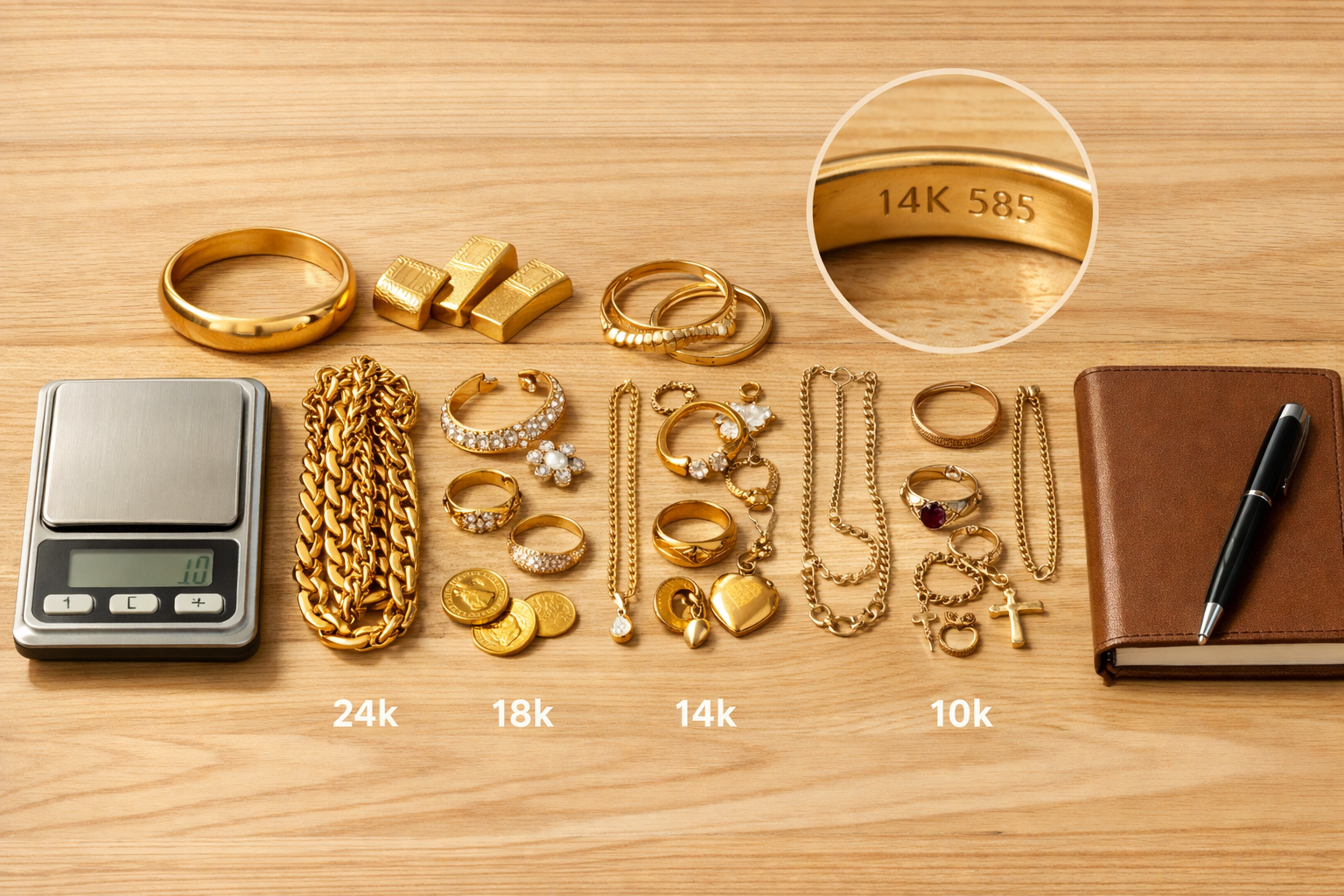
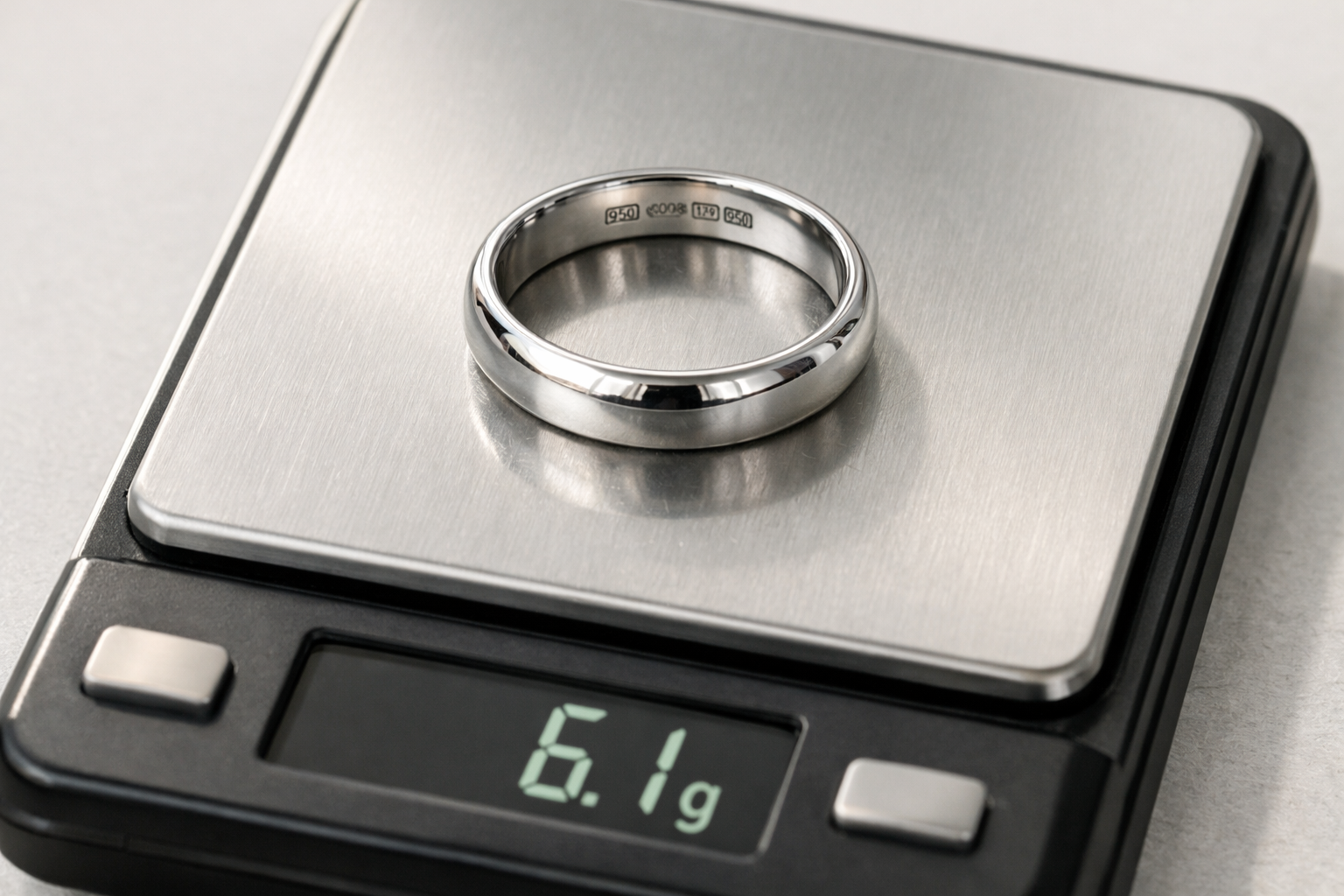
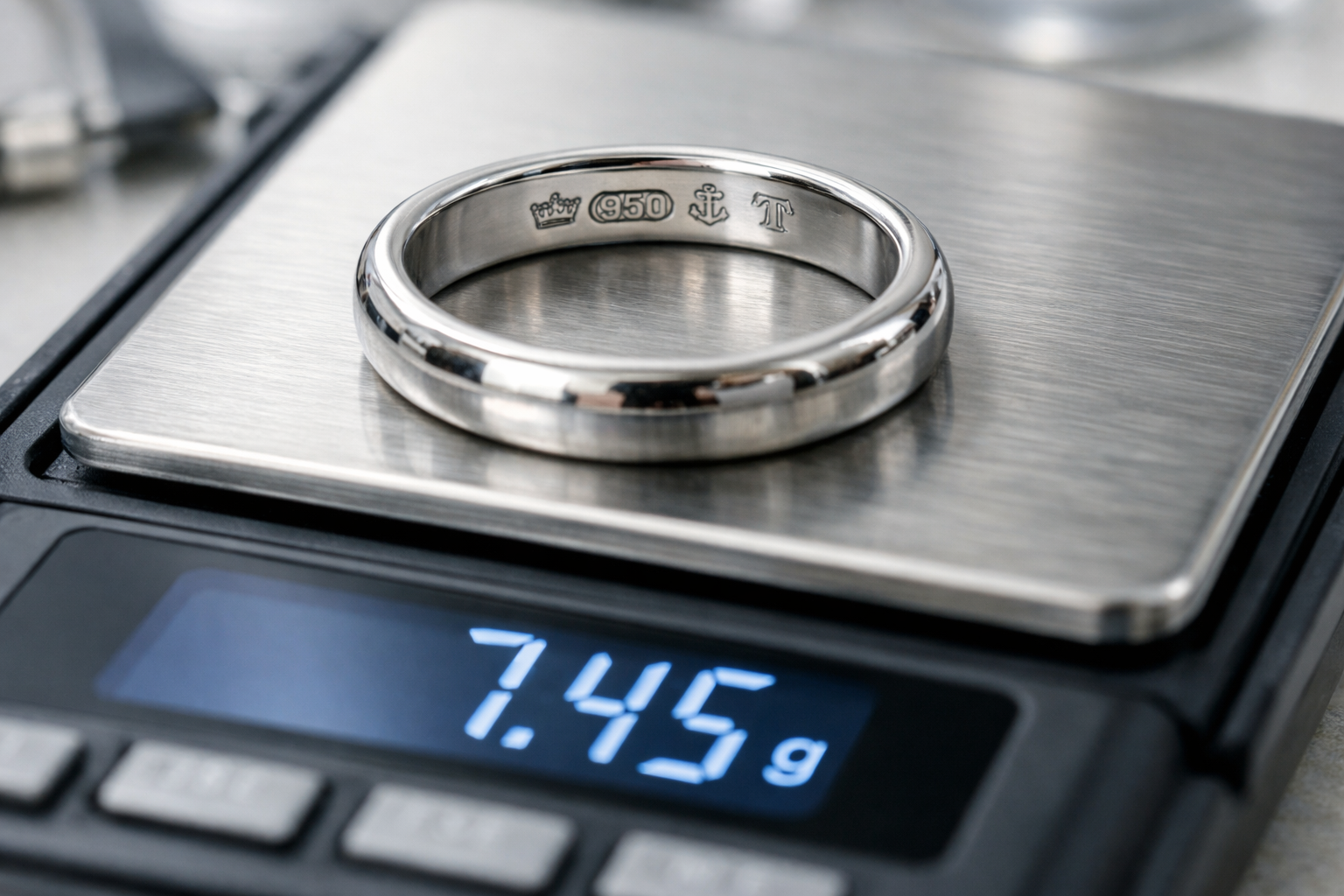
Four things drive the value you’re offered: purity, weight, market price, and the form your metal takes. Purity (karat) tells you how much of your item is fine gold. A 9ct ring, for example, contains 37.5% gold; 18ct is 75%, and 24ct is essentially pure. The higher the karat, the higher the intrinsic value per gram. Weight is straightforward: more grams of fine gold equals more value. Reputable buyers will weigh items in front of you on calibrated scales and show the calculation step by step.
The third factor is the live gold price (the “spot” price), which moves minute by minute. Offers are typically referenced to this figure so you can see how the total is derived. Finally, form matters. A plain 24ct bullion bar is valued very close to its melt value; some recognised coins can command a small premium because of strong secondary market demand; everyday jewellery, by contrast, rarely achieves a “collectible” premium because it’s often resold for metal content. Condition can help if a piece is resalable as jewellery, but dents, missing stones or broken clasps are not deal-breakers when selling for metal value.
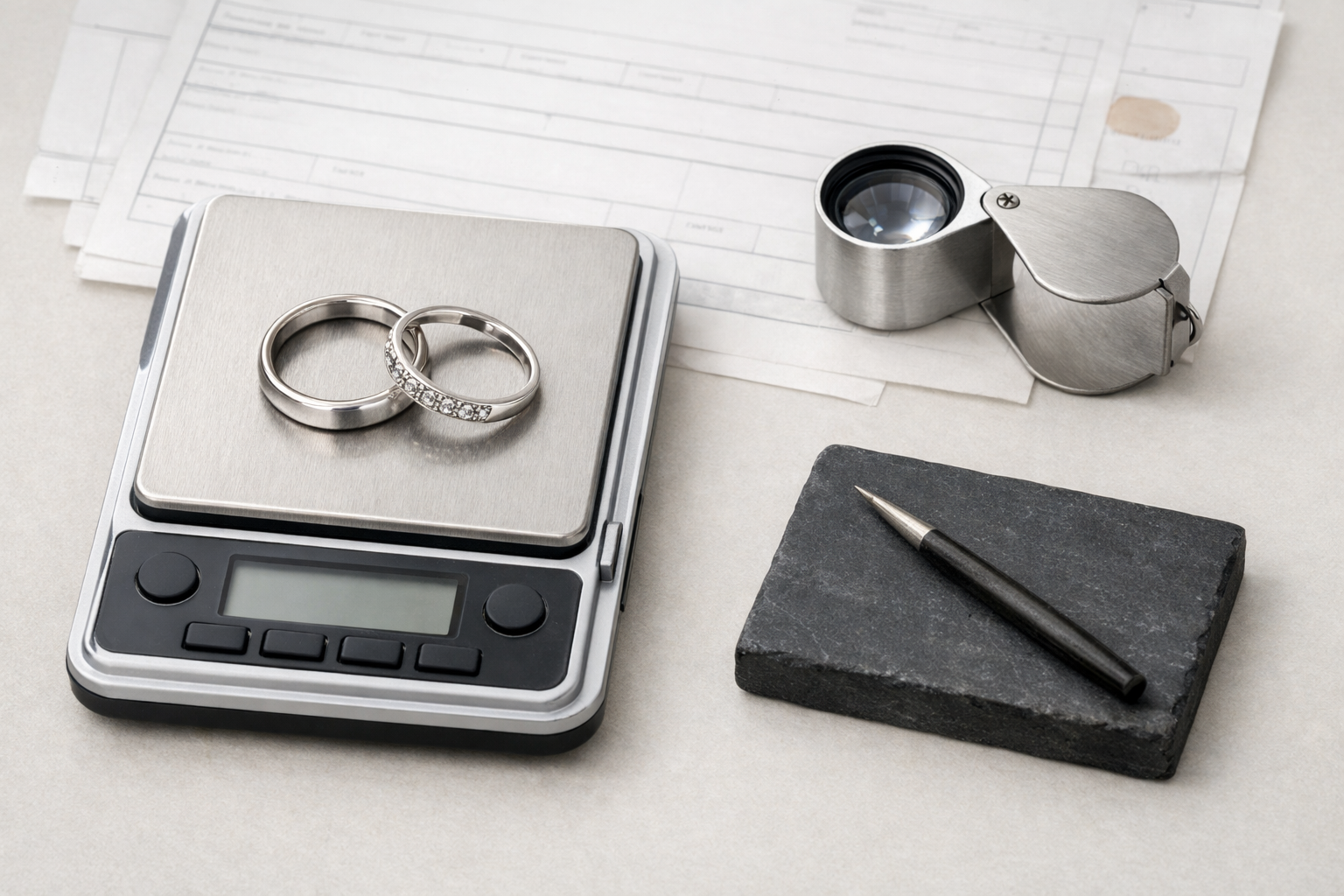
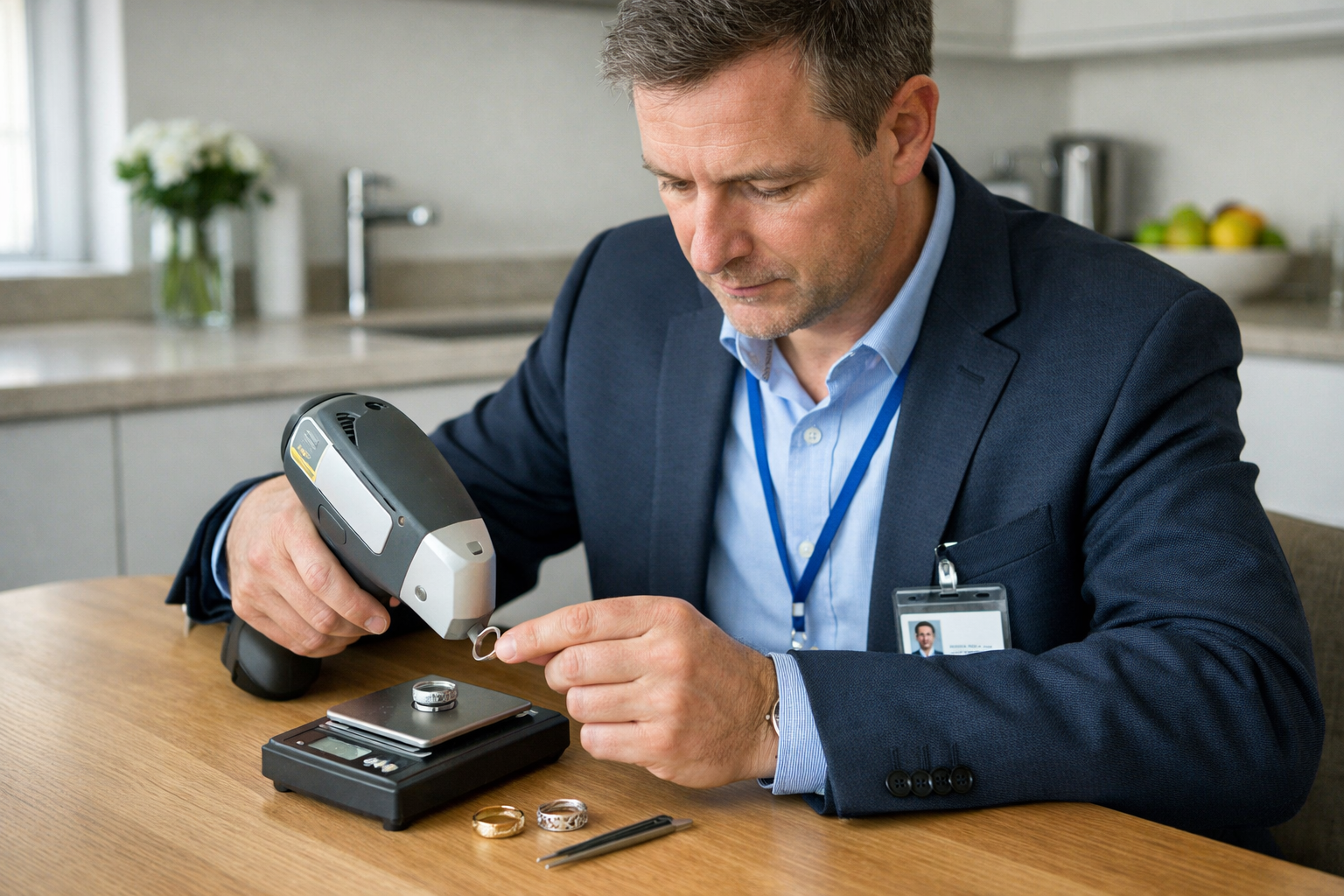
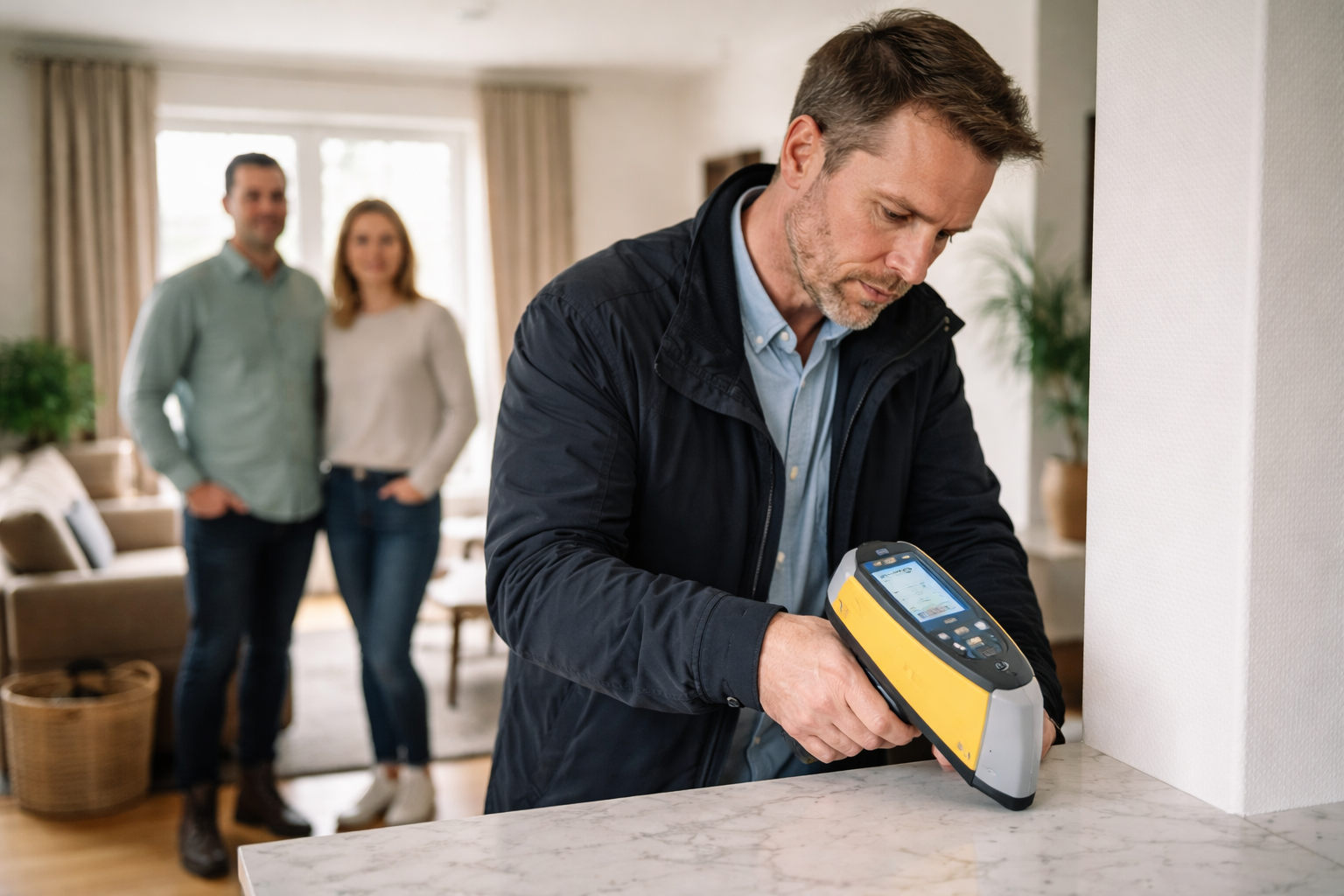
Other practical considerations include any non-gold parts (springs, stones, fillers) that reduce the overall fine gold content; alloys in white or rose gold; and verification steps such as XRF testing. A professional valuer will explain deductions for non-gold parts and confirm karat before making an offer. If you’re weighing at home, remember that kitchen or parcel scales aren’t precise enough for small items—use jewellery scales measured in 0.01 g where possible.
Quick-Reference Table: Karat Purity and Example Melt Values
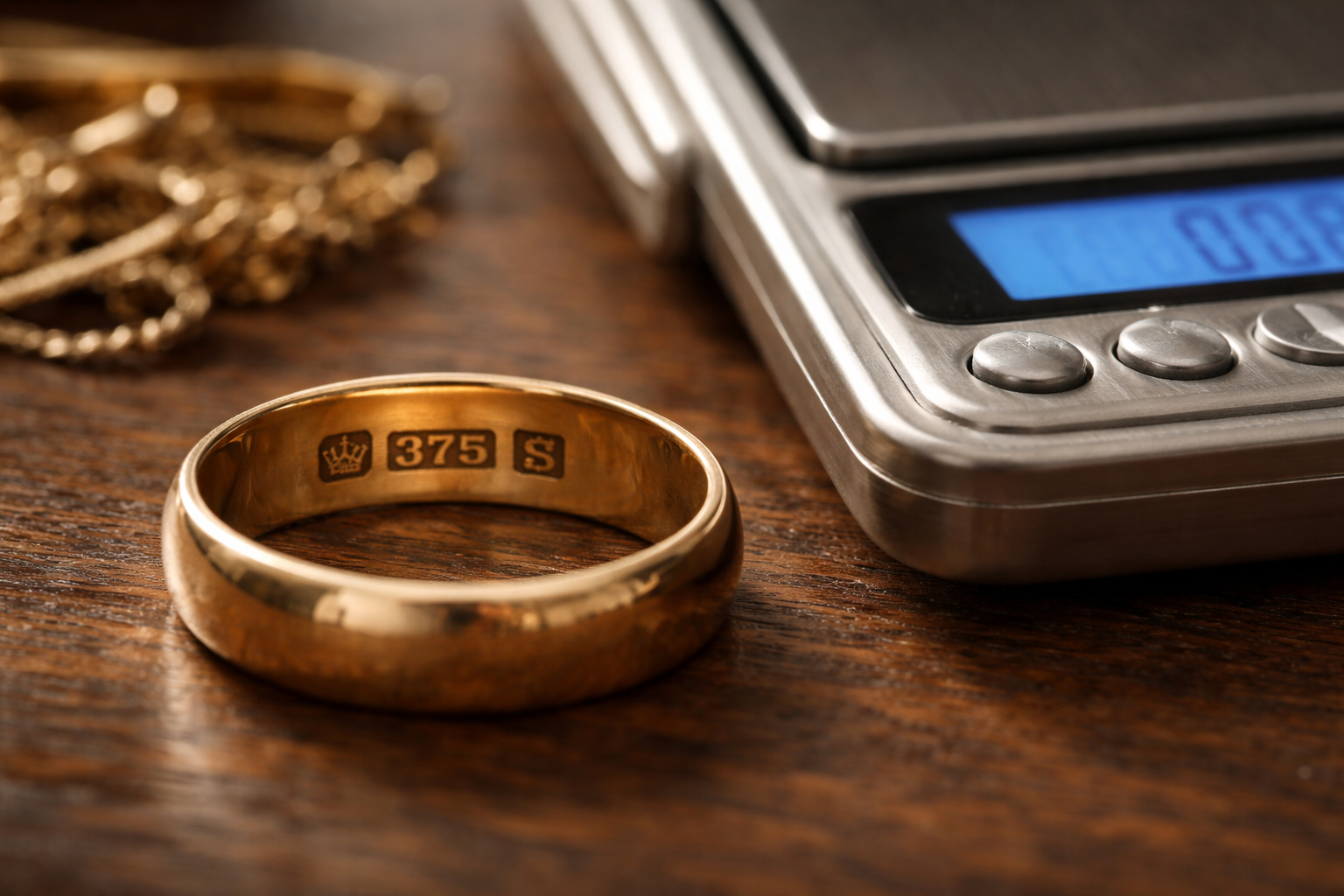
Use this table to understand how purity converts into fine gold content, then apply an illustrative spot price to estimate melt value. The figures below use a simple example spot price of £50.00 per gram for 24ct (pure) gold to demonstrate the calculation. This is a worked example for guidance—not the live market. On the day you sell, your offer should reference the current spot price and measured weight.
| Karat (UK) | Purity (Fine Gold %) | Fine Gold per 10 g (g) | Example Melt Value per 10 g at £50/g | Notes on Typical Forms |
|---|---|---|---|---|
| 9ct | 37.5% | 3.75 g | £187.50 | Common in UK jewellery; often sold for metal content |
| 14ct | 58.5% | 5.85 g | £292.50 | Less common in the UK, frequent in international pieces |
| 18ct | 75.0% | 7.50 g | £375.00 | Premium jewellery; strong intrinsic value |
| 22ct | 91.7% | 9.17 g | £458.50 | High-karat jewellery; some coins (e.g., older sovereigns) |
| 24ct | 99.9% (approx.) | 9.99 g | £499.50 | Pure bullion bars and some modern bullion coins |
How to use this in practice: weigh your item (e.g., an 18ct bracelet at 22.4 g), multiply by the purity (22.4 × 0.75 = 16.8 g of fine gold), then multiply fine grams by the live spot price per gram on the day. This yields the underlying melt value. Your final offer will reflect the buyer’s market-based pricing and any small adjustments for non-gold parts.
Coins and bars can deviate from melt value. Recognised bullion (for example, UK bullion coins) may track the market closely and sometimes attract keen bids due to liquidity. For further context on coin specifications and purity, see The Royal Mint’s bullion pages at The Royal Mint’s bullion coin information.
How Do I Weigh and Test Gold at Home Without Damage?
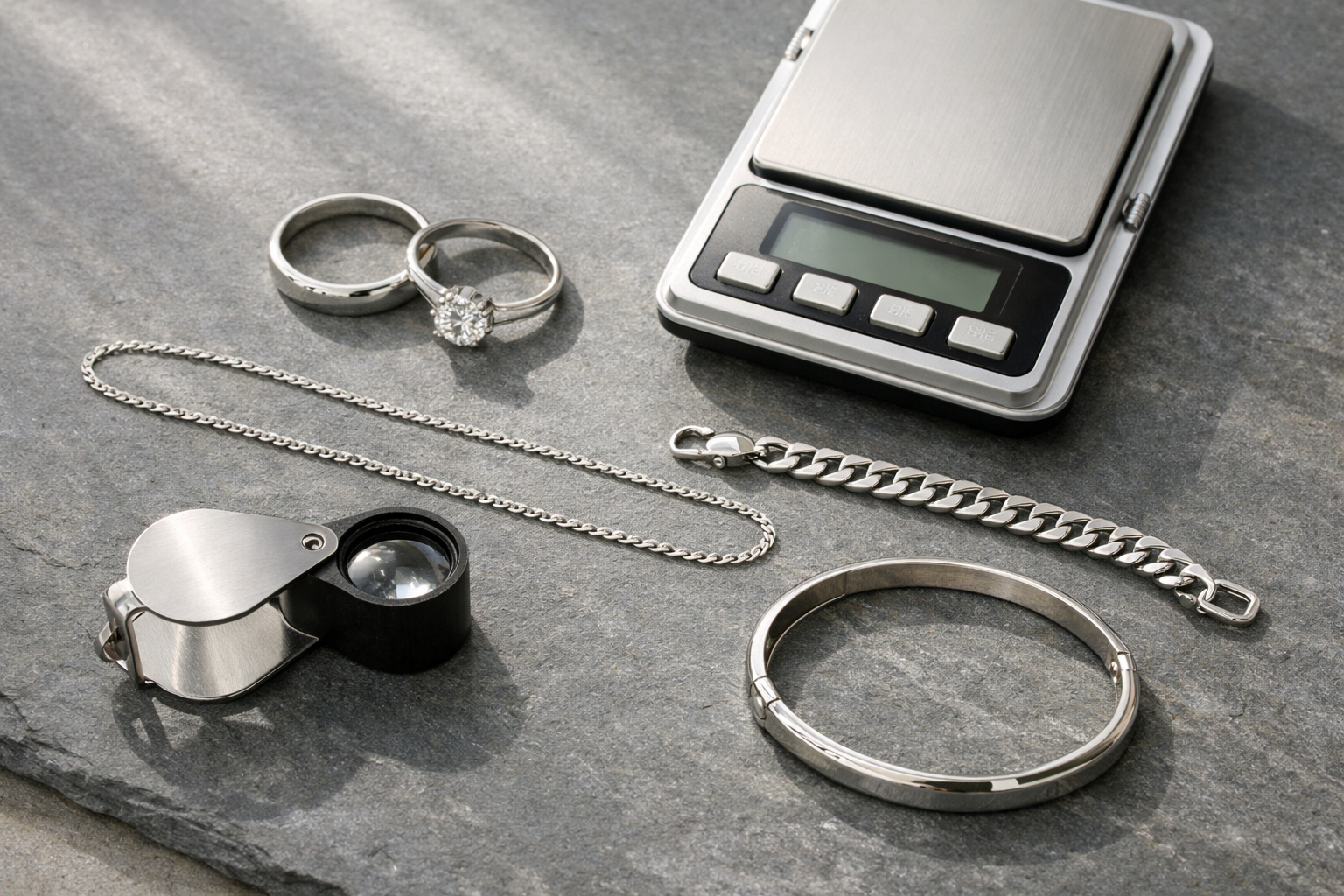
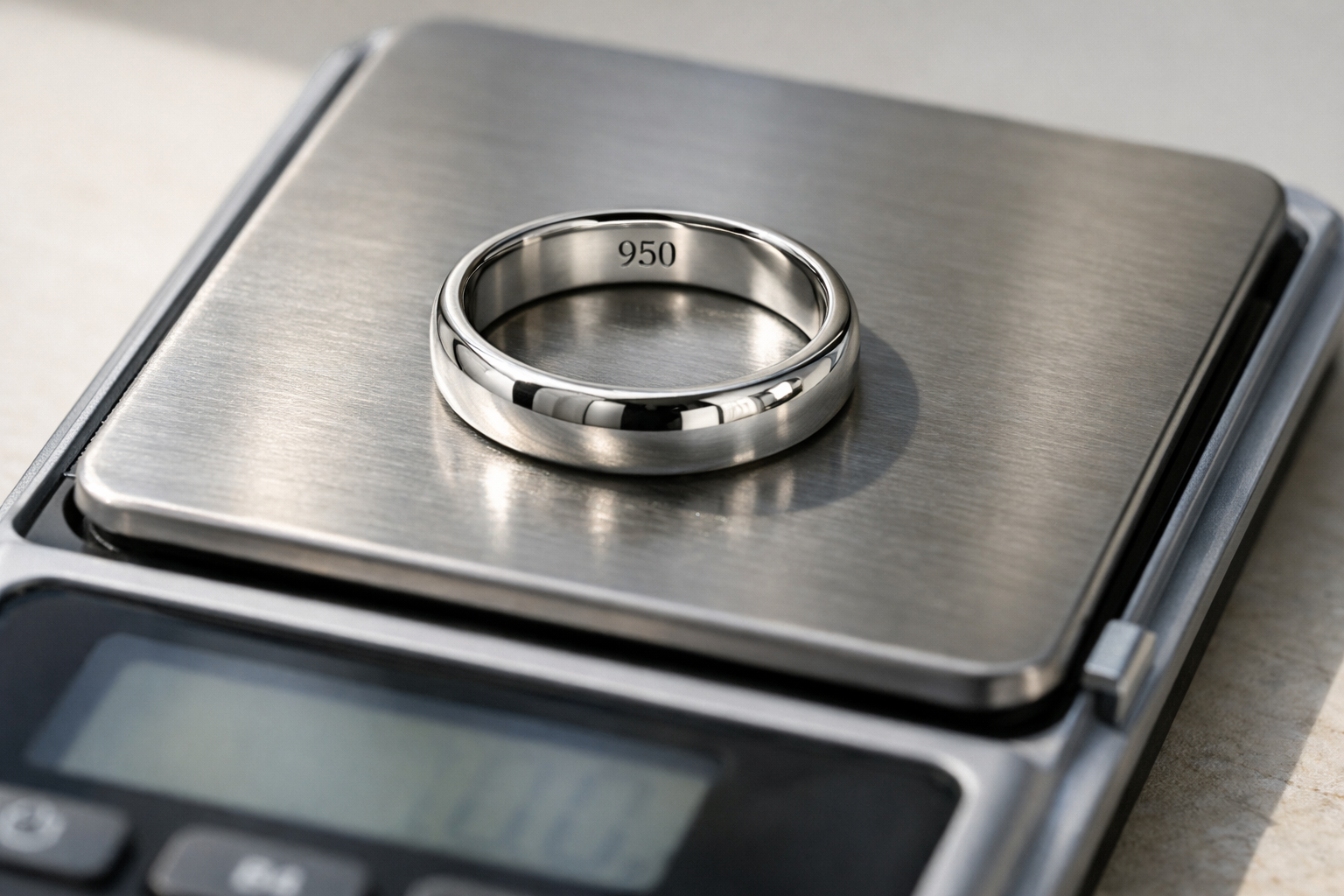
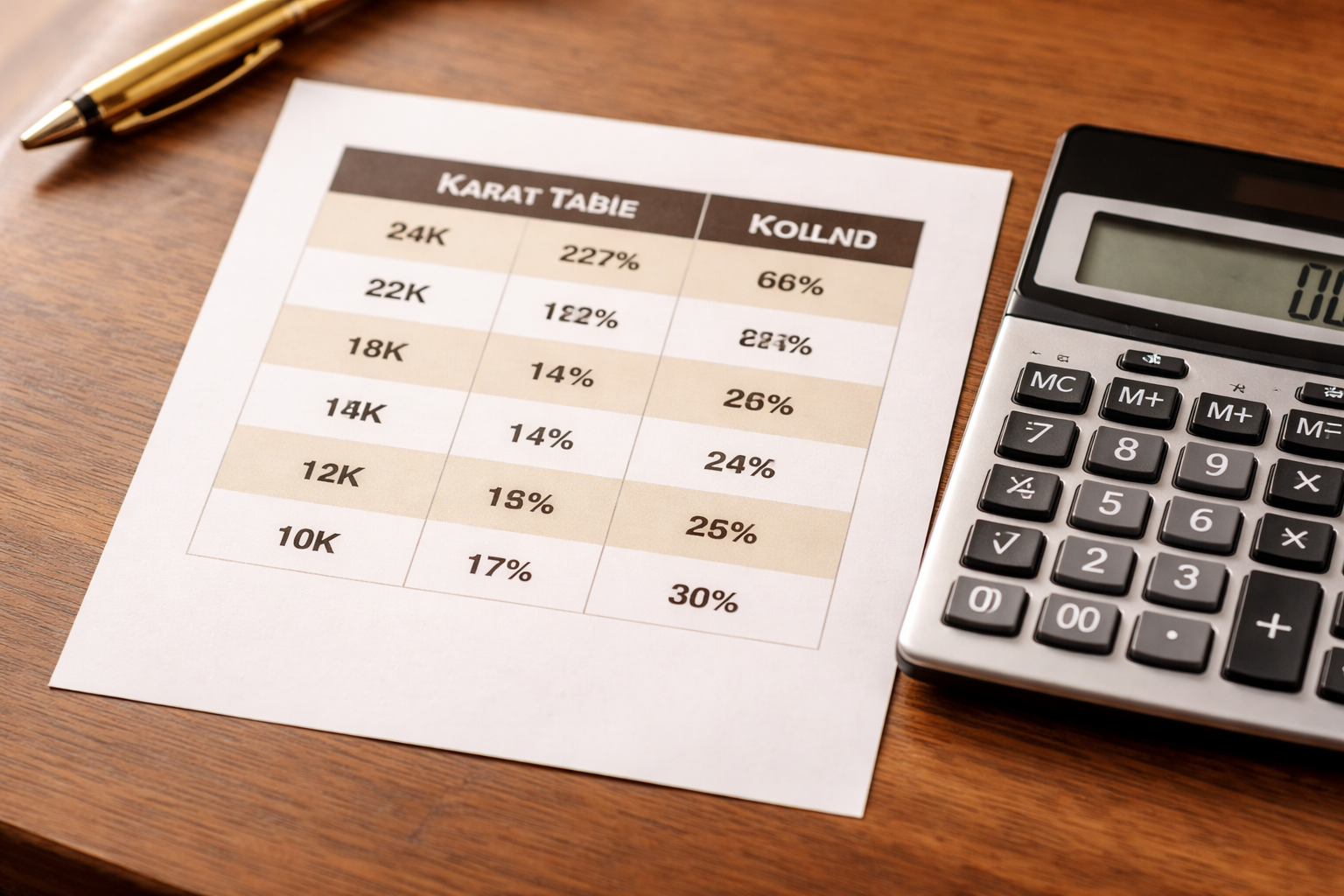
Before you meet a buyer, you can prepare by weighing and identifying your items carefully. Start by grouping pieces by hallmark and karat. UK hallmarks often show the fineness number (e.g., 375, 585, 750) and an assay office mark. Use a loupe or phone macro lens and good daylight to read them. If no hallmark is present, do not assume the piece is worthless—antique or imported items may still be gold but unmarked or worn. In such cases, a professional test is essential.
Non-destructive checks
- Use a jewellery scale accurate to at least 0.1 g (ideally 0.01 g) for small items and coins. Measure each group separately.
- Try a light magnet test—solid gold is not magnetic. If it sticks strongly, it’s likely not gold. Note: some clasps and springs contain steel, so test multiple points.
- Inspect colour and wear. Heavily worn plating that reveals base metal suggests the item is not solid gold.
When to stop testing
Acid kits and file tests can damage surfaces and reduce resale potential, especially on desirable jewellery or coins. If you’re unsure, stop at visual inspection and weighing. A reputable mobile valuer will use professional methods (including XRF where appropriate) to confirm karat without harming your items. Documenting your findings—photos of hallmarks, grouped weights—also speeds up the appointment.
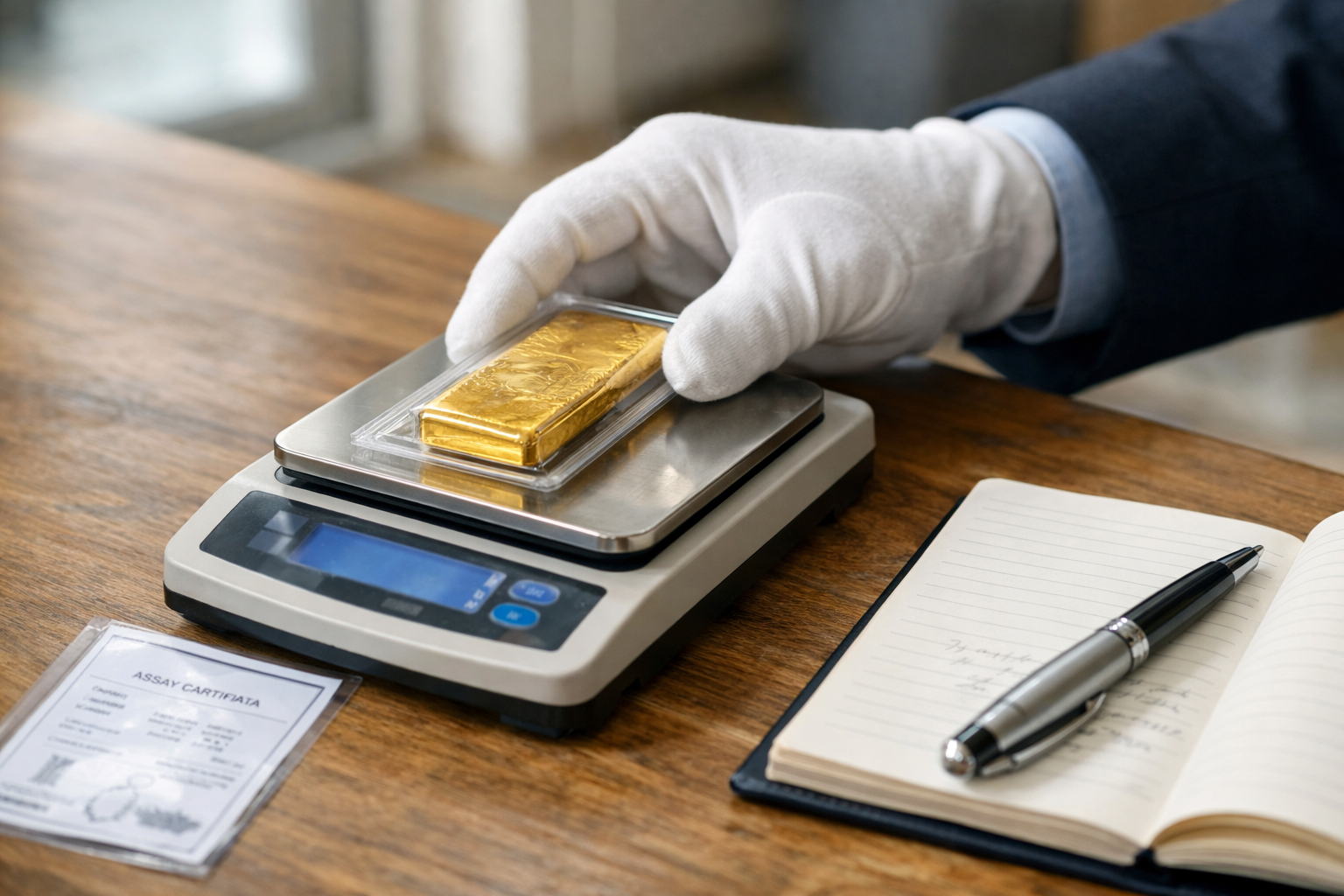
For coins and bars, match brand, weight and purity markings precisely. Keep mint packaging where possible. Any original receipts, assay cards or certificates help the buyer validate quickly, which can support a sharper market‑based offer on liquid bullion products.
Should I Sell Jewellery, Coins or Bullion — What Pays Best?
There isn’t a single “best” category; the strongest outcome depends on what you own. Everyday jewellery (especially 9ct and 14ct) typically tracks its melt value because the secondary market for pre-owned retail jewellery is selective and driven by style and condition. If your piece is a known designer brand in excellent shape, mention this—there may be scope for a resale-led offer, but most high-street designs sell for their gold content.
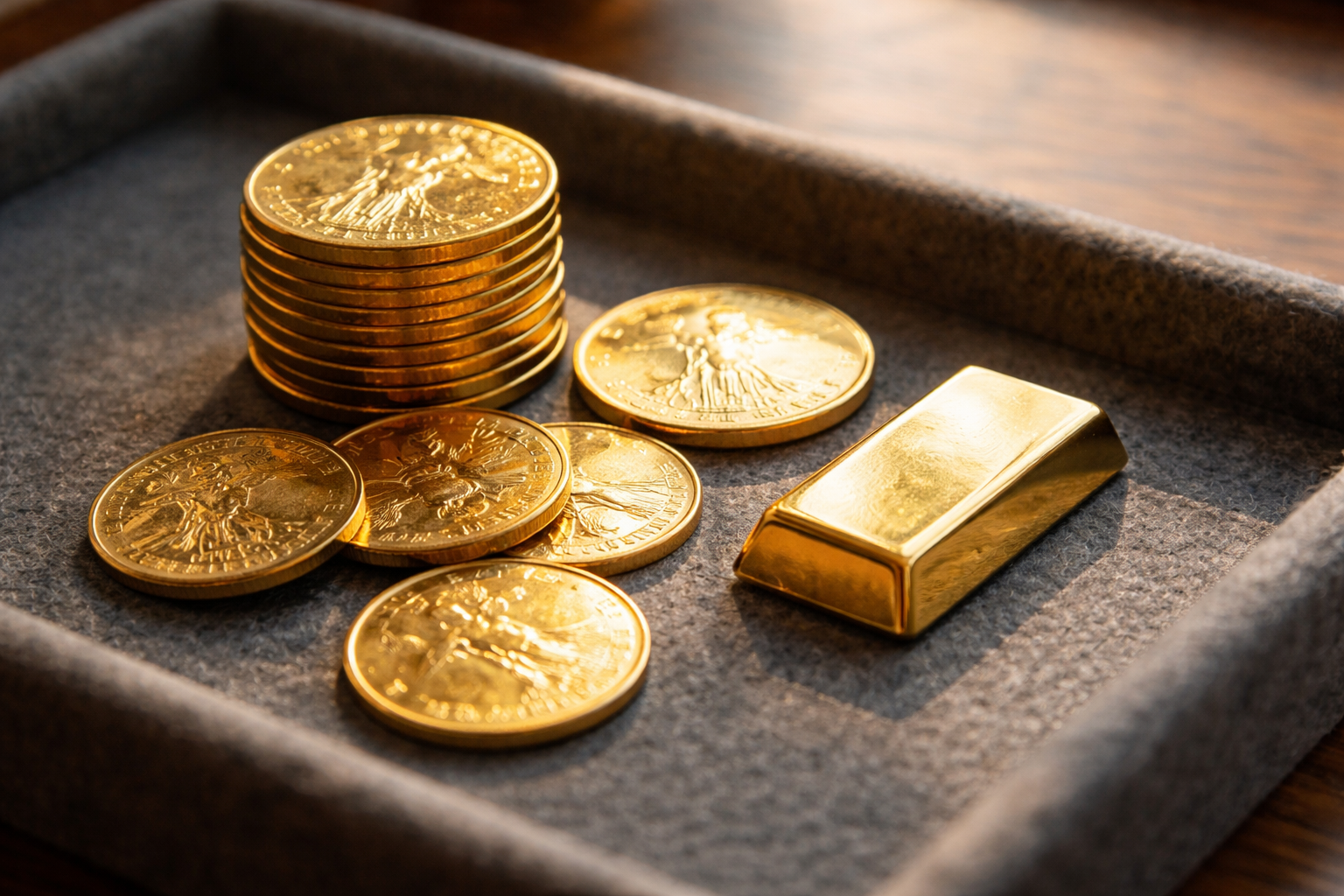
Recognised bullion coins and bars usually sell nearest to their metal value because they’re easy to authenticate, price and resell. UK investors often bring Britannias and Sovereigns; these are familiar to the market and can be processed quickly. If you hold modern bullion, read this in-depth guide on selling gold bullion bars in the UK for preparation tips that help maximise your outcome.
If you’re coin‑heavy, model your expectations on unit weight and fineness before the appointment, and note that some designs carry stronger demand than others. For example, see our article on selling Gold Britannia coins for practical specifics on identification, purity and settlement timing. The clearer your documentation (original tubes, assay cards), the smoother your valuation—and the closer your offer can track the live market.
What About Scrap and Dental Gold — Is It Worth It?
Absolutely—scrap and dental gold can add up faster than most people expect. Broken chains, single earrings, worn bangles, file-offings and old settings all contribute to fine gold weight. White gold often looks dull or yellowish under plating; that’s normal. The underlying alloy contains gold and palladium, nickel or other metals; valuation focuses on the measured karat, not the cosmetic surface. Stones, springs and pins are weighed and removed or deducted so you’re not paying for non‑gold mass.
Dental gold varies widely. Crowns may contain significant non‑gold content depending on era and source. Some are high-karat gold; others are base-metal or ceramic. Don’t worry about cleaning—professionals have standard procedures for safe handling and testing. Package dental items in a small sealed bag and keep them separate from jewellery. Be prepared for a valuation that reflects assay confirmation; sometimes the final offer is adjusted once the true gold content is established.
Even a small pile of scrap can reach a meaningful total once weighed and priced to the market. If you’re sorting at home, separate by hallmark or colour, remove obvious non-gold components where practical (e.g., steel key rings mixed into a jewellery box), and list approximate weights. If you’re thinking, “how much for my gold if it’s just scrap?”, the answer is: calculations still follow purity × weight × spot price—scrap simply skips any discussion of design premium.
How to Get a Live, Transparent Price on the Day
An open calculation is key. A professional buyer will identify karat, weigh items in your presence and show you the spot price used. Make sure the reference for the live market price is explicit, not vague. Ask which market feed they follow and how they lock the rate. Many buyers will lock a price for a short window during the appointment so your payout isn’t affected by minute‑to‑minute moves.
Clarity on compliance is a positive sign. ID checks are standard under the UK’s anti‑money laundering framework for high‑value dealers. If a company mentions AML requirements, that’s usually proof of robust process, not an obstacle. You can read more at GOV.UK guidance on high‑value dealers and AML. Expect straightforward photo ID, and occasionally proof of address for higher‑value transactions.
For coins and bullion, confirm whether the quote assumes unmixed lots (e.g., one tube of the same coin) and whether any premium applies to specific brands or sizes. With jewellery and scrap, ask to see the itemised list and weight by karat band. If you’re comparing buyers, compare like‑for‑like: same day, same reference price, same total fine gold weight. If you want a mobile, secure option, Gold Buyer offers on‑the‑spot valuation and same‑day bank transfer with pricing tied to the live rate, delivered by ID‑checked representatives.
Home Visit or Postal Kit: Which Is Right for You?
Both options can be secure; the right choice depends on your priorities. A home visit suits people with multiple items or higher values who want to see every step—testing, weighing and pricing—in person. It’s discreet, convenient and efficient, especially if mobility or time is an issue. You’ll receive an itemised valuation there and then, with same‑day bank transfer once you accept. Many sellers prefer this route for peace of mind and speed.
A postal kit suits lighter parcels or if you cannot schedule a meeting. Use tracked, insured shipping, pack items in small zip bags grouped by karat, and include your contact details. Photograph items and packaging for your own records before posting. When the parcel arrives, a professional will verify contents on camera or under dual control, then call you to discuss the valuation. If you decline, reputable buyers return the items promptly via insured post.
If you’re asking yourself, “how much for my gold and what’s the fastest way to see the number?”, an at‑home valuation is often the quickest route because testing, calculation and payment happen in one sitting. Prefer a kit? Request one from Gold Buyer to keep the process moving without travel. If you’re ready to start, you can book a valuation for a home visit or ask for a home selling kit today.
Paperwork, ID and Safe Payment: What to Expect
Legitimate buyers follow a clear process that protects both parties. First, you’ll be asked for a valid photo ID; for larger sales, proof of address is common. This supports anti‑money laundering obligations and ensures funds are sent to the correct account holder. Next, you’ll receive an itemised valuation that outlines karat, weight and the pricing reference used (the live market rate and any adjustments for non‑gold parts). Keep a copy for your records.
For payment, same‑day Faster Payments is standard in the UK banking system and will often credit within minutes, subject to your bank. For very high amounts, CHAPS may be arranged. Always confirm the payee name when your buyer sets up the transfer; Confirmation of Payee reduces misdirection risk. Never share one‑time passcodes with anyone claiming to “expedite” a transfer, and be wary of any pressure to reroute funds. The Financial Conduct Authority provides sensible consumer guidance at FCA advice on avoiding scams.
Professional representatives carry identification and will be happy to show credentials. If you’re selling at home, choose a discreet meeting spot with a clean, flat surface and good lighting. Have your items grouped and any documents (receipts, assays, certificates) ready. Your buyer should explain each step and invite questions. When everything’s clear and you accept the offer, the bank transfer is completed on the spot and a receipt is issued.
Timing the Market: Should I Wait or Sell Today?
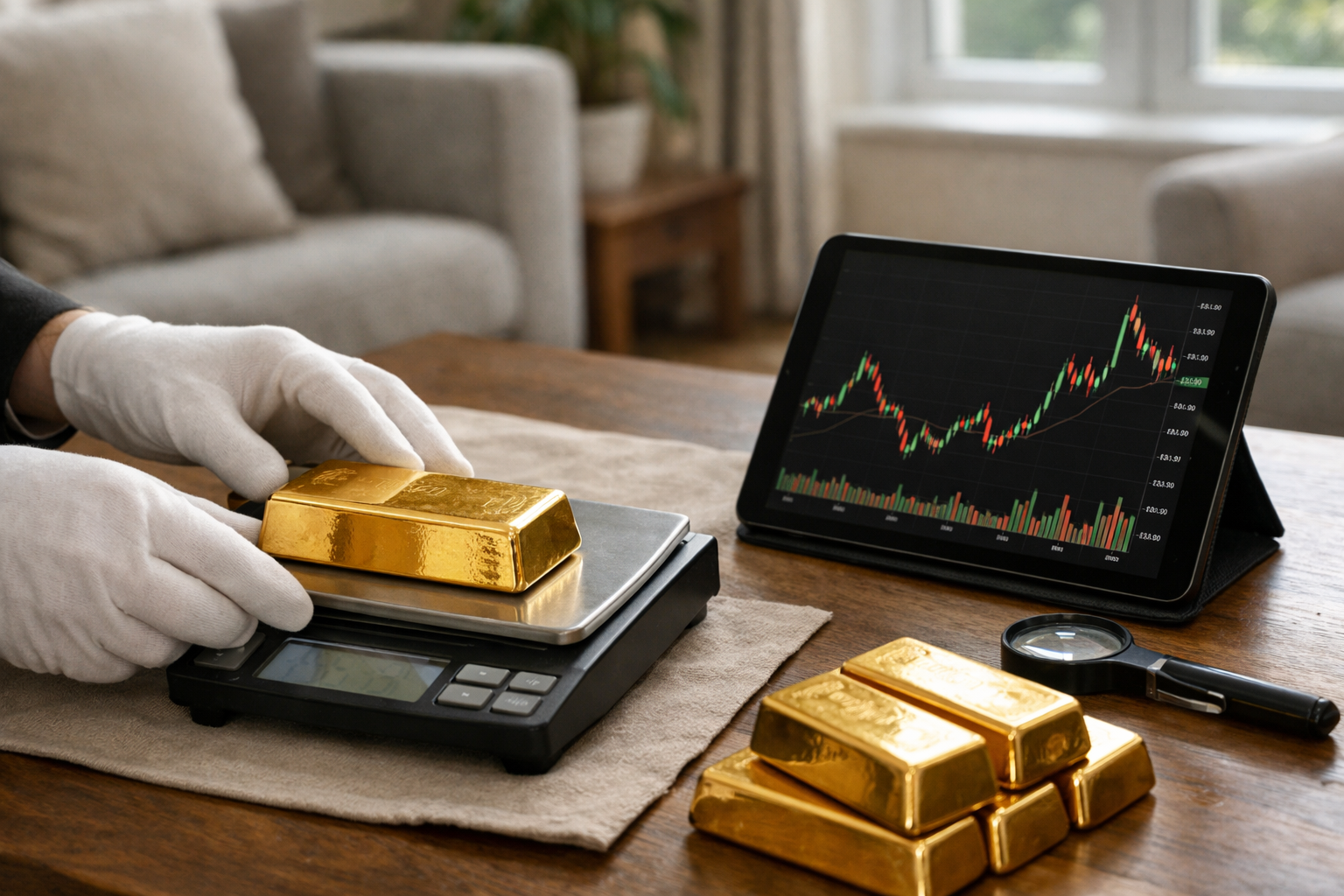
Gold prices move with currency rates, interest expectations and global risk appetite. No one can call the top with certainty. A practical approach is to decide based on your goals: are you consolidating, raising cash, or clearing unused items? If you’ve already formed the view that you won’t wear or keep these pieces, converting them at a transparent, market‑linked price can be the right move regardless of short‑term fluctuations.
Consider splitting your sale if you’re unsure—selling a portion now, and reviewing the rest later. This reduces regret if the market moves either way. Another tactic is to set a “walk‑away” line: if the day’s live price delivers at least £X (your internal number) for your lot, you proceed; if not, you pause. A buyer who is willing to talk you through the calculation in real time gives you the confidence to decide calmly without pressure.
If you’re thinking “how much for my gold if I wait a month?”, remember that the answer could be higher or lower. The key is to focus on process quality you can control: accurate testing, clear itemisation, and secure, same‑day settlement. With those in place, you can act when it suits you, whether on a rally or a routine weekday.

Local, Mobile and Transparent: How Gold Buyer Works Gold Buyer operates a mobile buying service and arranges discreet home visits and local pop‑up events, with an office listed in Chesterfield for contact and support. The process is designed for convenience and clarity: ID‑checked representatives visit at a time that suits you, test and weigh items in front of you, and price them against the live market rate. You get an on‑the‑spot valuation and same‑day payment by secure bank transfer once you accept.
Prefer not to schedule a visit? You can request a home selling kit. Pack your items safely, use tracked and insured shipping, and keep photos for your records. On receipt, your items are verified, the valuation is discussed by phone, and you decide with no obligation. Whether you choose a visit or a kit, the aim is the same: a transparent calculation you can follow and funds in your account promptly.
For specific metal types, you’ll find detailed preparation guides on the site. If you’re selling platinum jewellery, this guide on selling white gold and getting paid fast will help you distinguish plating, purity and paperwork so your valuation proceeds smoothly. If you own modern bullion, the dedicated checklists ensure your packaging and documentation are in order ahead of the appointment.
Fees, Deductions and Fair Questions to Ask: Transparent buyers don’t hide fees. Instead, they present a clear, single offer that already reflects all normal costs, based on karat, weight and the live market rate. Still, it’s wise to ask open questions. For example: how are non-gold parts deducted? Will you separate mixed karats before weighing? Can I see the scale reading and the price reference? What happens if XRF shows a different karat from the hallmark? The answers should be straightforward and consistent.
Recognised coins and bars may carry slightly different handling than scrap. Ask how the buyer verifies authenticity and whether the offer assumes intact packaging or assay cards. For jewellery, it’s normal to remove stones before final weighing if you proceed; factor this into your expectations. If you’re comparing multiple buyers, request itemised summaries so you’re not weighing a “headline number” against one that excludes obvious deductions. If you find yourself repeating “how much for my gold” at different desks and getting wildly different answers, focus on who explains the calculation best—not just who quotes the largest round number.
Finally, agree on the payment method and timing before you consent. Same‑day Faster Payments should be standard. Ask for a receipt that lists the items, the agreed amount and the transaction date. These details make your records tidy and future queries easy to resolve.
Tax, Records and Practical Aftercare
Most casual UK sellers won’t trigger tax on routine disposals of personal items, but circumstances vary. If you sell higher‑value coins or bars, read the rules on personal possessions and capital gains at GOV.UK guidance for personal possessions. Keep your receipt and any supporting documents so you can evidence cost basis and disposal proceeds if ever needed. Well‑kept records also help if you later decide to sell remaining items and want to reference weights and karats.
After the sale, tidy up your jewellery box by removing empty boxes or non‑gold items you no longer need. If you sold a watch with a gold case or bracelet, store any remaining accessories (links, clasps) somewhere safe in case you sell them separately. If part of your collection includes branded pieces you plan to sell later, gather their certificates and keep them with the item to support a stronger future valuation.
If your initial reason for selling was to de‑clutter or simplify, consider setting a reminder to review your remaining items in six months. When you return to the question “how much for my gold” in the future, you’ll already have a system for grouping, weighing and documenting—making the next valuation just as straightforward.
Frequently Asked Questions
How quickly can I get paid after accepting an offer?
With a professional mobile service, payment is typically made the same day via Faster Payments to your UK bank account. Many transfers arrive within minutes, but times vary by bank and amount. For larger sums, CHAPS can be arranged. Always confirm payee details and keep your receipt listing items, amounts and the transaction date.
Do I need to remove stones before a valuation?
No. Bring items as they are. The valuer will examine each piece and, if you proceed, stones or non‑gold elements are removed or accounted for so the weight reflects gold only. If stones are valuable and you plan to keep them, discuss this before finalising the offer so the approach is agreed.
Are coins like Britannias worth more than jewellery?
Often, yes. Recognised bullion coins are easy to authenticate and resell, so offers tend to follow the metal value closely. Jewellery usually tracks melt value unless it’s a desirable designer piece in resalable condition. If you hold bullion, see this guide on selling Krugerrands for coin‑specific steps.
Is white gold priced differently from yellow gold?
Both are priced by karat, not colour. White gold may be rhodium‑plated and alloyed with metals like palladium or nickel, but the valuation focuses on fine gold content. The key is accurate testing to confirm karat. If you’re preparing white gold pieces, this white gold selling guide explains what affects value.
Can I get a valuation at home if I’m outside major cities?
Yes—mobile services cover broad regions and often arrange local pop‑up events for added convenience. Gold Buyer provides discreet home visits and can also send a home selling kit if a visit isn’t practical. Contact the team to discuss your location and the best option for a secure, efficient appointment in 2026.
Ready to see a fair, market‑based offer and get paid fast? Arrange a discreet home visit or request a home selling kit now. Book your appointment at Gold Buyer’s valuation page and get an on‑the‑spot calculation with same‑day bank transfer.