
Maple Leaf Gold Coin: How to Value and Sell Yours

Epicurus One • November 27, 2026

A maple leaf gold coin can be valued by checking its weight, purity, authenticity and condition against the current gold market, then comparing the buyer’s offer with its potential value to collectors. To sell securely, confirm how the valuation and payment work before handing it over. A home visit or selling kit may suit you if you do not want to visit a shop.

What Is a Maple Leaf Gold Coin?

The Canadian Gold Maple Leaf is a bullion coin produced by the Royal Canadian Mint. Its maple leaf design makes it recognisable, but appearance alone does not establish that a particular coin is genuine. Coins come in different sizes and dates, so identify the specific piece before comparing prices.

The Royal Canadian Mint publishes information about its bullion products. Use the details on your coin alongside the mint’s information as a starting point, rather than treating an online image as proof of authenticity.

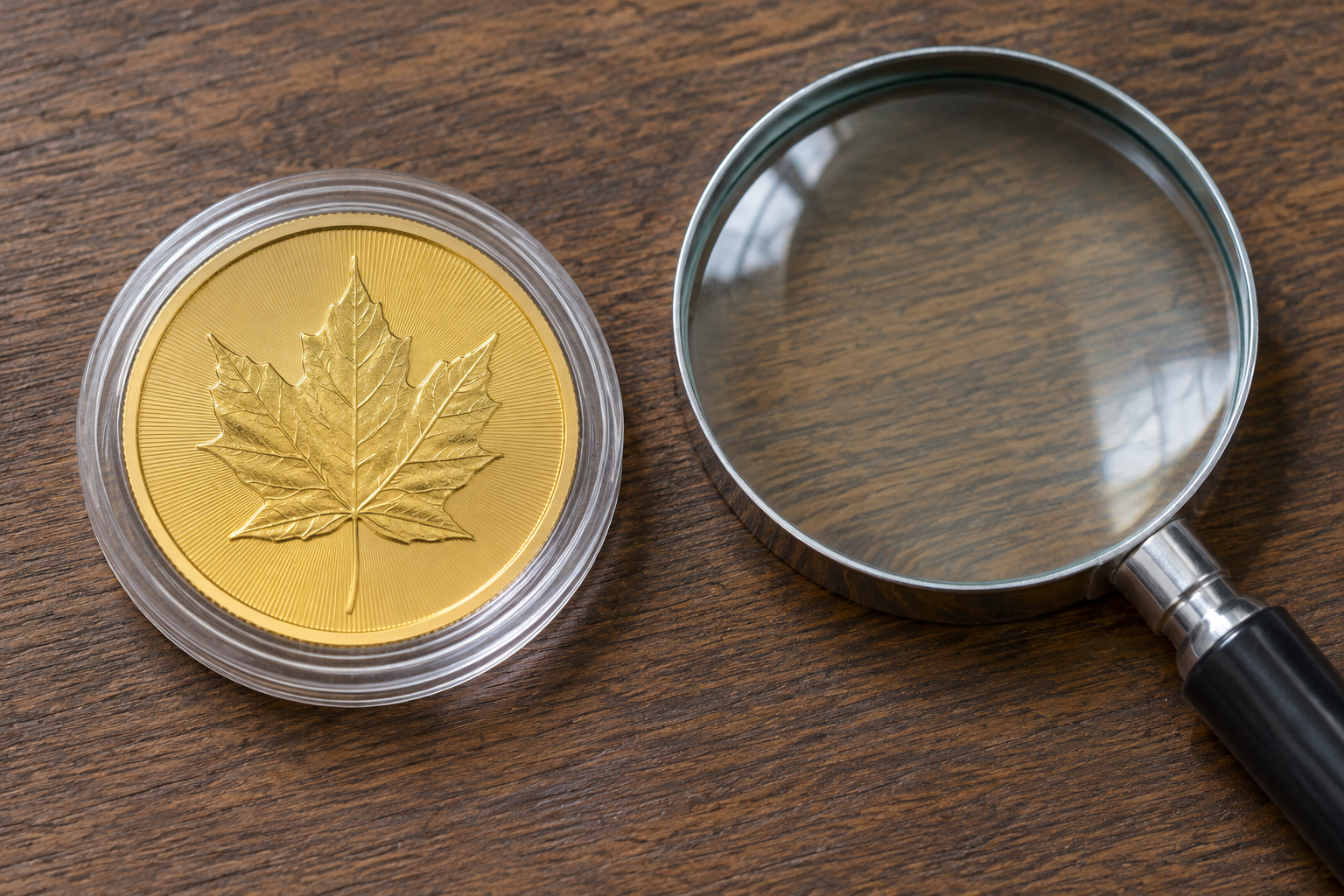
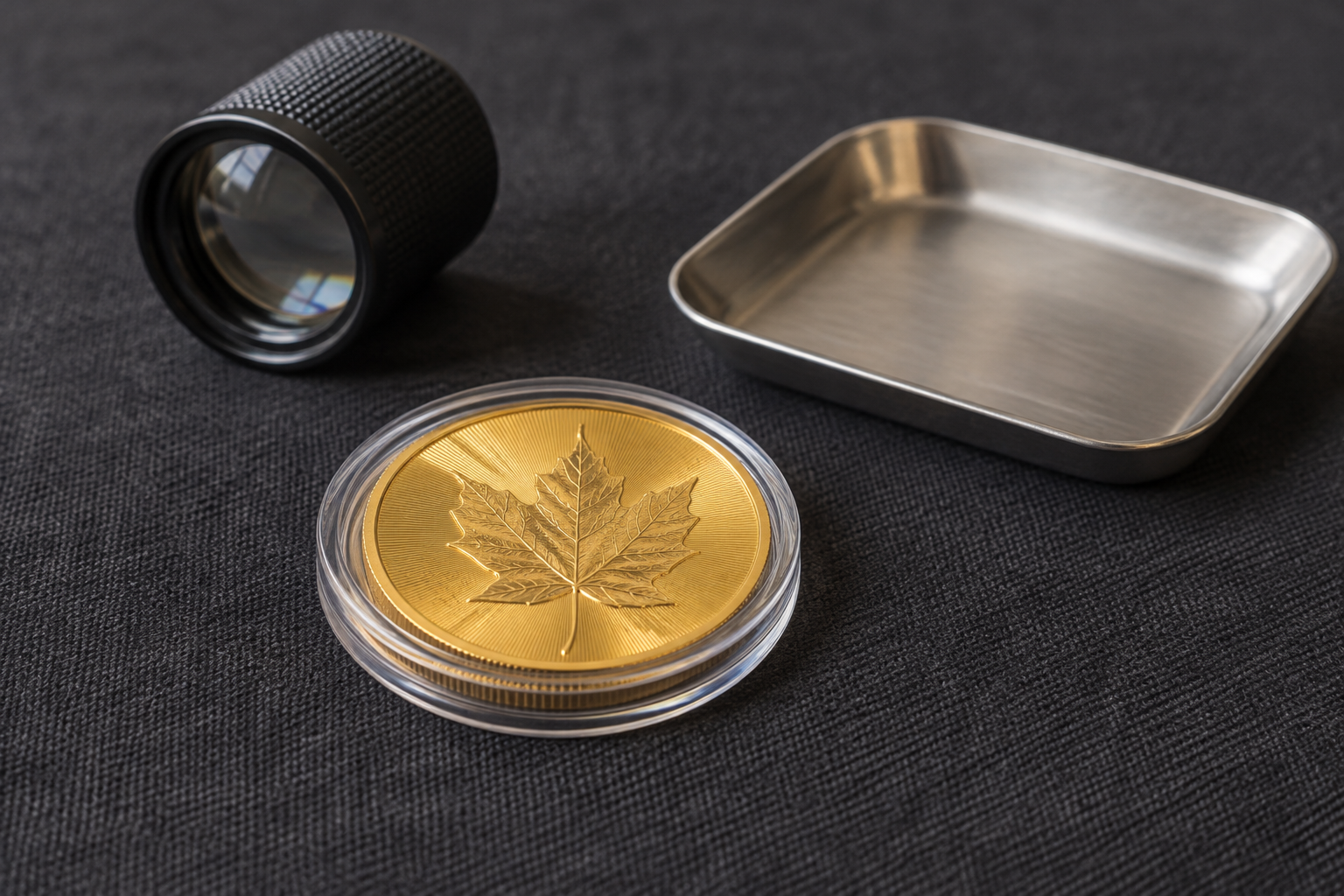
Close overhead view of a protected Maple Leaf gold coin beside a plain magnifying glass on a home desk, illustrating initial identification

For a straightforward bullion coin, the underlying gold content is usually central to its value. Some issues, however, may attract collector interest because of their particular design, scarcity or presentation. If yours looks unusual, do not assume that a calculation based on metal alone captures its full value.

  • Check the denomination, date and inscriptions without removing the coin from protective packaging unnecessarily.
  • Note the stated weight and purity if they are visible. Do not guess if an inscription is unclear.
  • Keep the coin separate from similar-looking silver, plated or commemorative items until it has been assessed.
  • Record any packaging or accompanying paperwork, while recognising that paperwork is not by itself proof of authenticity.

How Do You Identify Your Coin Before a Valuation?

Start in good natural light and handle the coin as little as possible. If it is in a capsule, leave it there unless the buyer explains why removal is necessary. Fingerprints, scratches and unsuitable cleaning can affect its appeal, particularly if it has collector value.

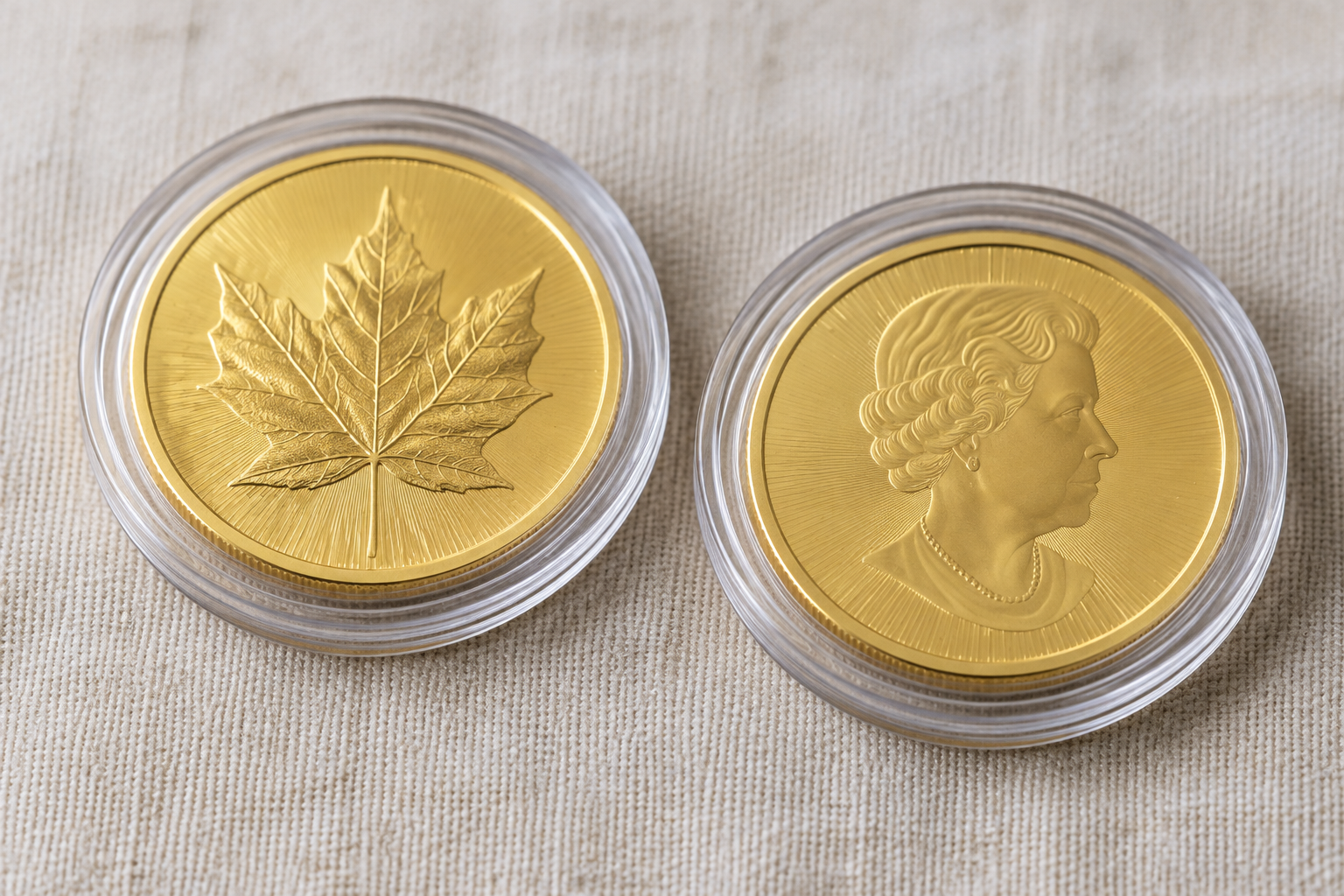
Write down what you can see rather than relying on memory during a call. Photograph both faces and the edge if it can be done safely through the holder. Clear photographs can help a buyer understand what you have, although an in-person inspection may still be needed before a firm offer.

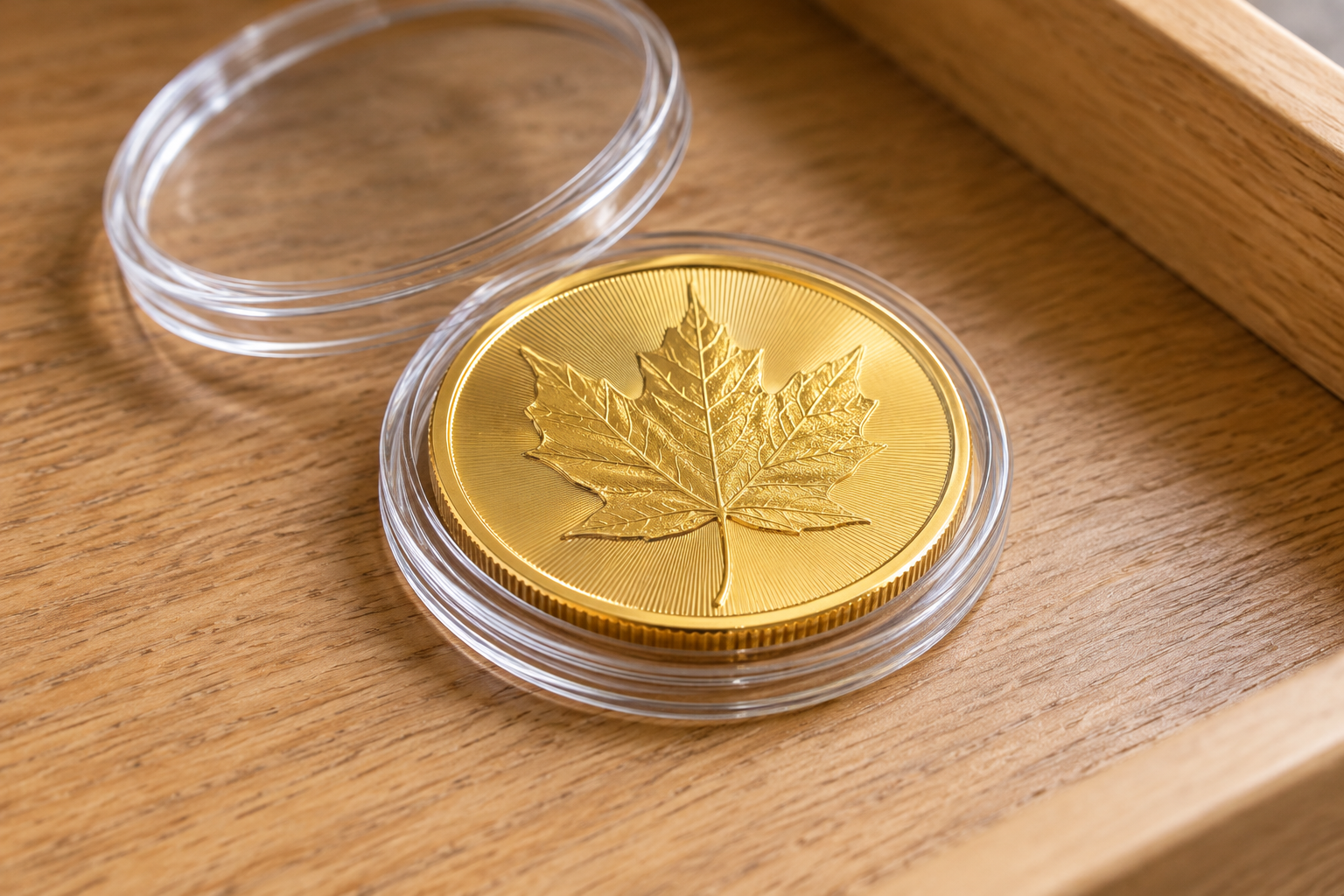
Angled view of both sides of a Maple Leaf gold coin in its capsule, photographed on a neutral cloth for a seller’s identification notes

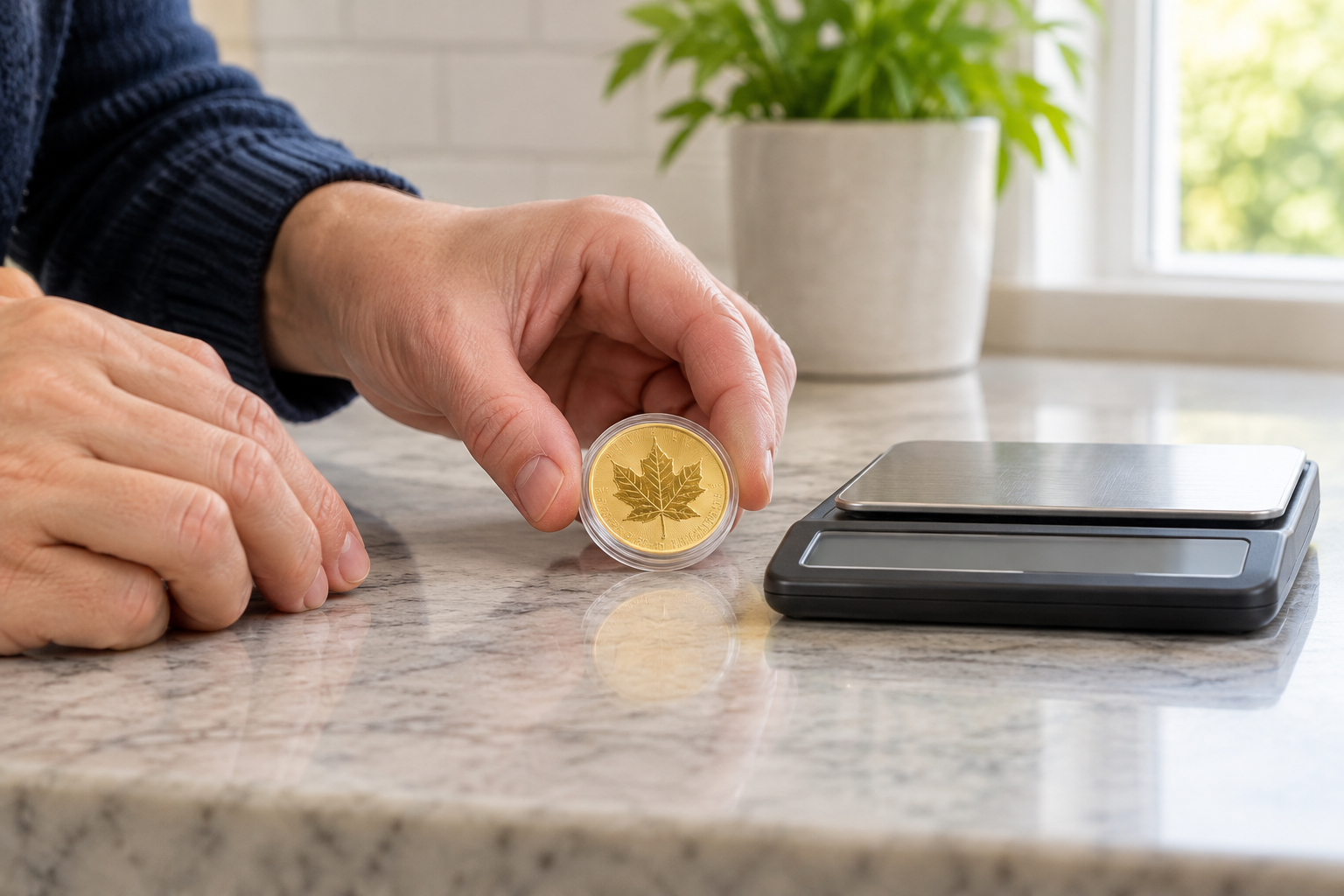
If you have a scale, remember that the weight of a capsule is not the weight of the coin. A household scale may also lack the precision needed to distinguish small differences. Ask how the buyer will weigh and test the coin rather than attempting a destructive test yourself.

Keep your notes factual: distinguish an inscription you can read from a detail you have inferred from a similar-looking coin. If you have several pieces, photograph and describe each separately so that an enquiry does not mix up their dates, sizes or holders. Mention any visible marks, but avoid rubbing the surface to investigate them. These notes give each buyer the same starting information and make it easier to discuss any differences found during inspection.

For more detail on a common size, see the guide to valuing and selling a 1 oz Canadian Gold Maple Leaf coin. If you cannot identify your coin confidently, say so when arranging an appointment; a buyer can explain what information they need.

What Determines a Maple Leaf Gold Coin’s Value?

The starting point is the value of its fine gold content at the relevant market price. A buyer then considers factors such as authentication, resale route, condition and commercial costs. The resulting offer is not necessarily the same as the public spot price or the retail price of a replacement coin.

Gold prices change, and prices may be quoted in different currencies or weight units. When comparing a market reference with an offer in pounds, make sure the figures refer to the same time, currency and quantity of fine gold. The LBMA precious metal price information is one reference for understanding the market; ask the buyer which rate they use and when it is applied.

Factor Why it matters What to ask
Fine gold content The amount of gold is the basis of a metal-value calculation. What weight and purity have you used?
Market rate The gold price and exchange rate can move between enquiries. Which rate applies, and when is it fixed?
Authenticity A buyer needs confidence that the item matches its description. What checks will you carry out?
Condition and presentation Damage or original packaging may affect resale appeal. Has condition changed your offer?
Collector interest An unusual issue may be worth assessing beyond its gold content. Is the offer based on bullion alone?
Costs and payment Fees or deductions affect what you actually receive. What is the final amount payable to me?

As a hypothetical example , imagine that a seller has a coin whose fine gold content has been confirmed. They can multiply that content by a comparable current gold rate to estimate its metal value, then ask how the offer relates to that estimate. This is a guide for discussion, not a guaranteed sale price or a substitute for authentication.

To make that comparison meaningful, first check that the gold rate and the confirmed fine gold content use matching weight units. Note the date and time of the reference alongside your calculation. If the buyer quotes in pounds but your reference is in another currency, ask what conversion was used. A difference between your estimate and the offer is a reason to ask for an explanation, not proof on its own that either figure is incorrect.

How Should You Compare Offers?

Compare the amount you will receive, not just a headline promise. Ask each buyer to explain whether the figure is an estimate or a firm offer, how long it remains valid and whether any testing, collection or other charges will be deducted. Check that each quote refers to the same coin and that the buyer has considered any distinctive issue or packaging.

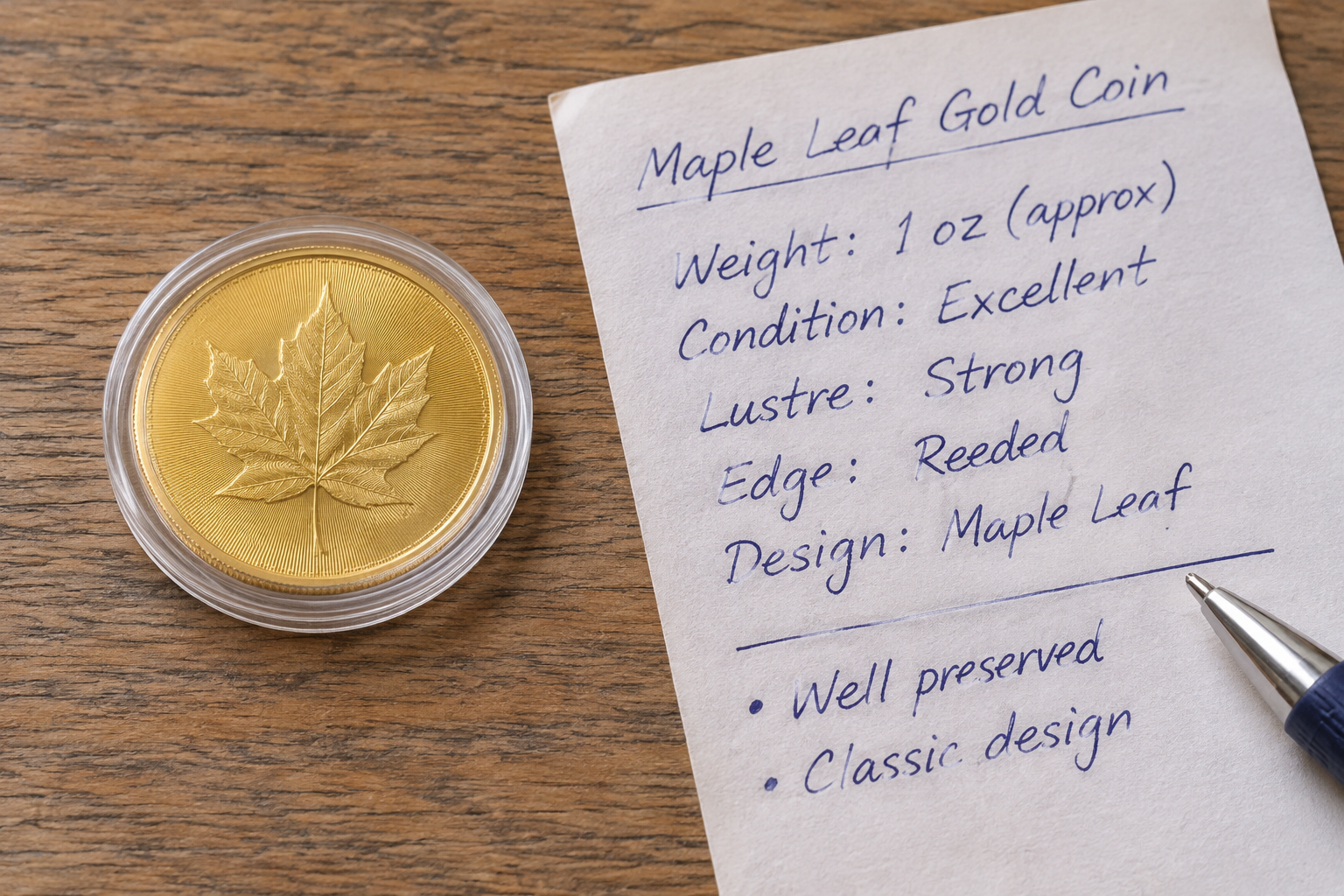
Seller’s handwritten comparison notes beside a protected Maple Leaf gold coin on a kitchen table, viewed from above, with no invented prices or logos

Retail listings can be useful for identifying similar coins, but an asking price is not proof of a completed sale. It can also include a dealer’s margin and costs that do not apply in the same way when you sell. Likewise, a metal-value estimate does not establish what a collector would pay for your particular coin.

  • Ask for the calculation: understand the weight, purity and market reference behind the offer.
  • Check the timing: find out whether a preliminary figure can change after inspection or a market movement.
  • Clarify deductions: request the net amount payable, including any applicable charges.
  • Consider the selling route: a specialist collector may assess an unusual coin differently from a bullion buyer.
  • Keep control: do not feel obliged to accept an offer before you understand it.

When recording quotes, note whether each buyer has actually inspected the coin or is working from your description. An offer made after inspection may not be directly comparable with an estimate that is still subject to checks. If enquiries take place on different days, ask whether market movement explains part of the difference. Include any return or collection charges in your notes so that convenience and the final amount can be considered together.

If convenience is important, book a valuation with Gold Buyer and ask about a home visit or local event. Explain what you have, confirm availability in your area and discuss how the offer and same-day bank transfer would work before arranging the appointment.

Prepare for a Safe Home Valuation

A home appointment lets you discuss the coin without travelling to a shop. Before agreeing to a visit, confirm the representative’s identity through the company using contact details you have found independently. Gold Buyer describes its representatives as ID-checked; you can still ask how to recognise the person attending and what identification they will show.

Choose a place where you feel comfortable and where the coin can be inspected safely. You may wish to have someone you trust present. Keep other valuables out of sight and do not share unnecessary personal or banking information while making an initial enquiry.

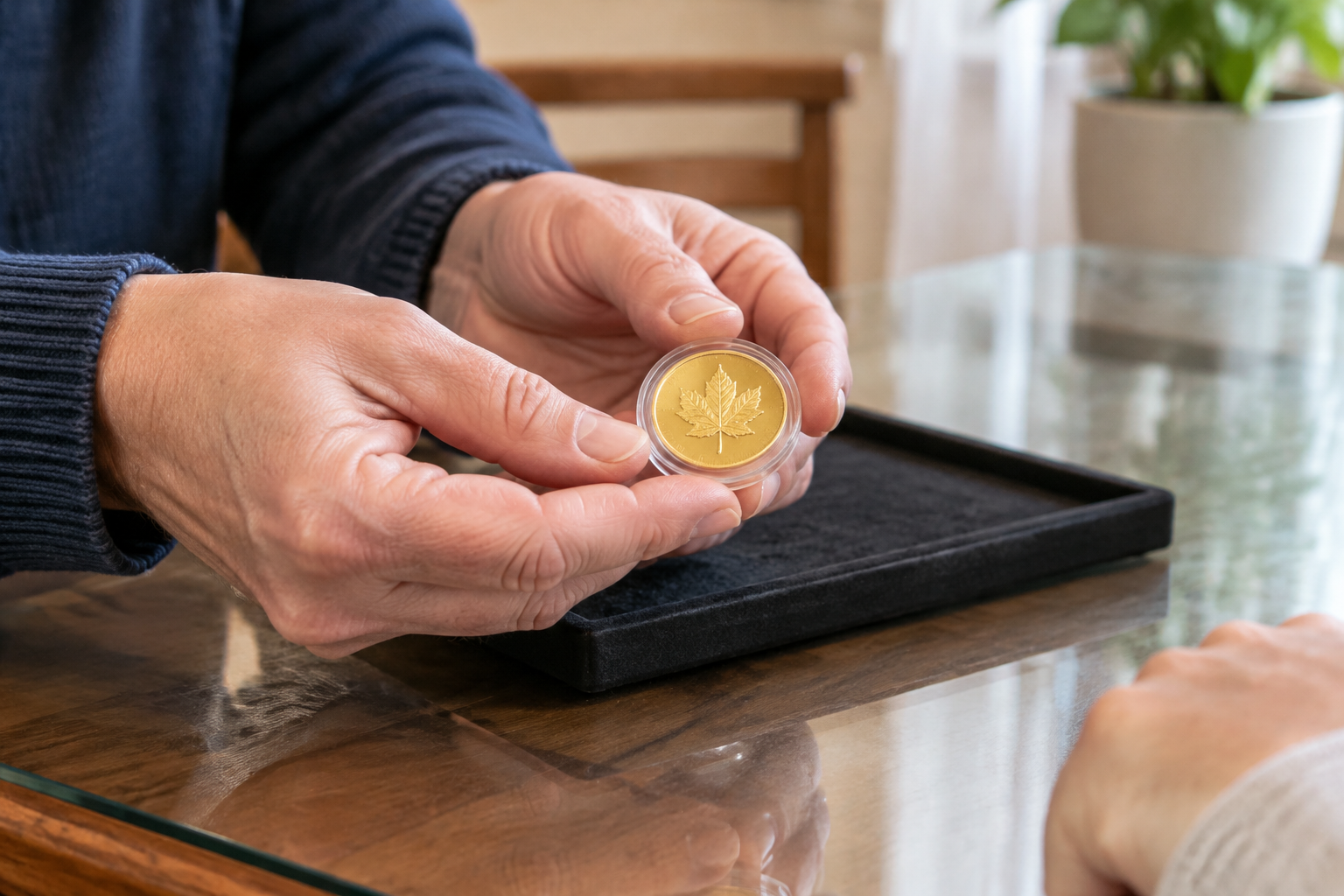
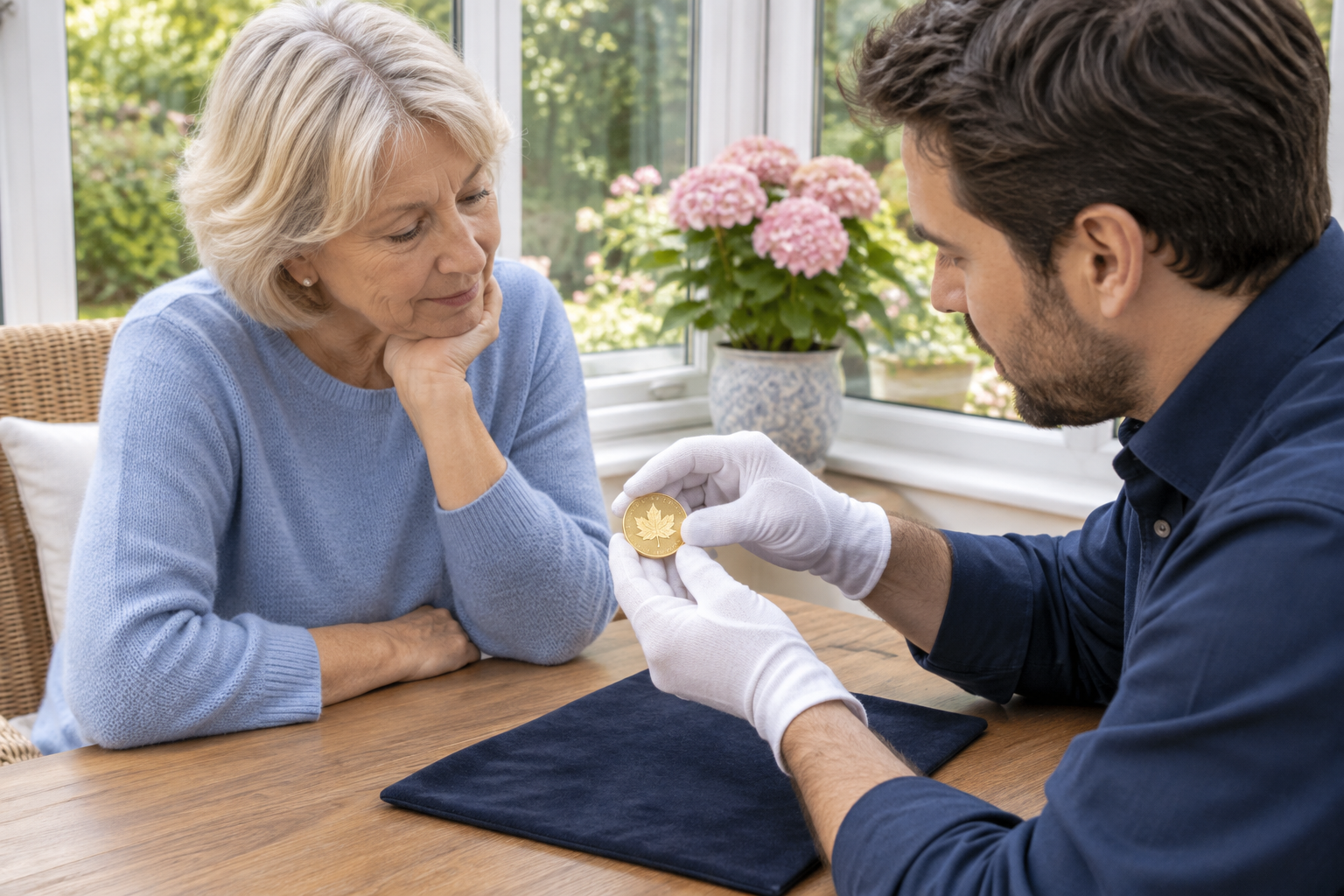
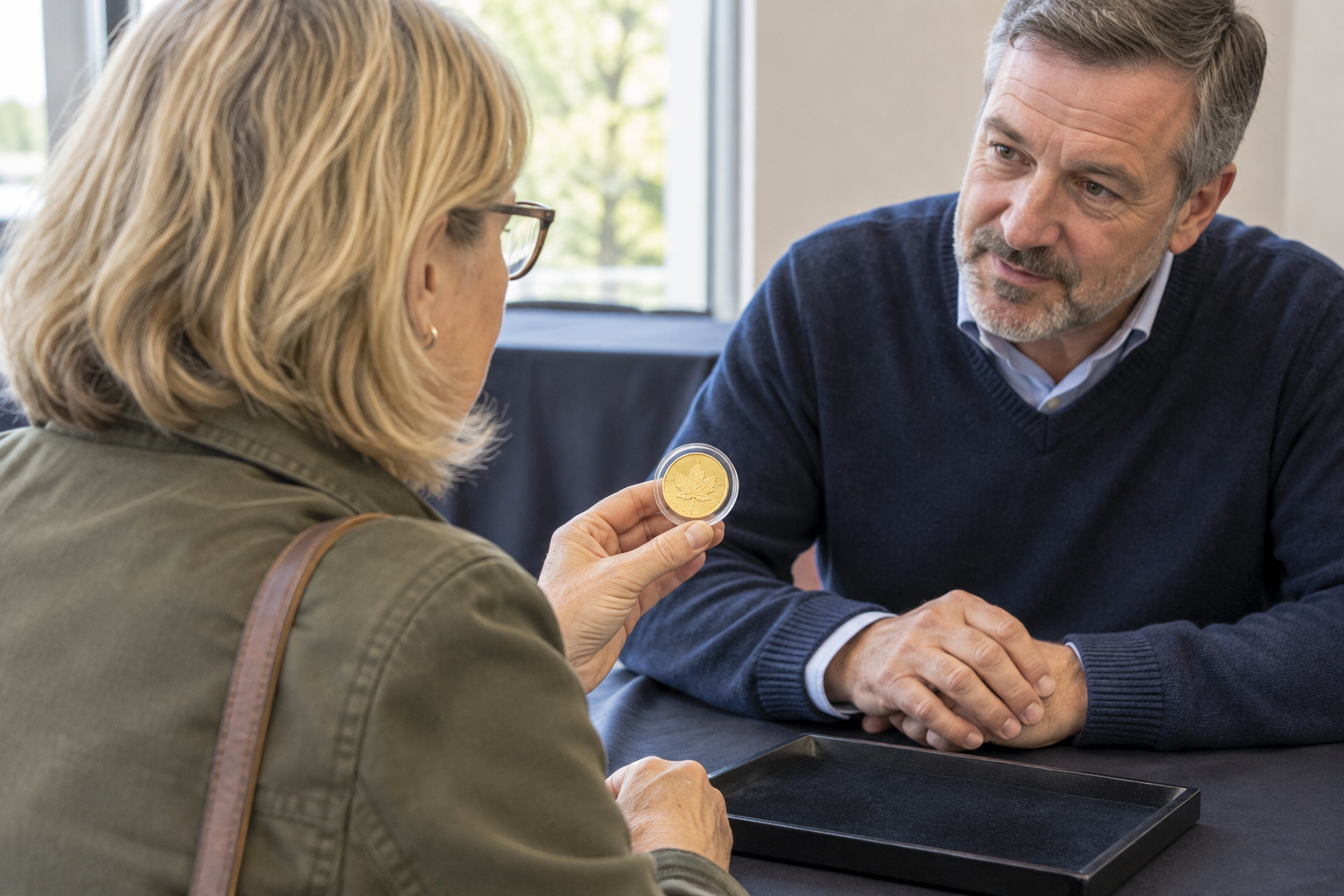
Hands presenting a protected Maple Leaf gold coin across a clear dining table during a discreet home valuation, viewed from the side

  1. Confirm the appointment, the representative’s identity and the items you want assessed.
  2. Ask what identification you will need to provide and how your information will be handled.
  3. Show the coin in its existing holder, together with any relevant packaging or paperwork.
  4. Ask the representative to explain the inspection, weight, purity and valuation.
  5. Check the final offer and payment method before deciding whether to sell.
  6. Keep a record of the agreed transaction and confirm that payment has arrived.

If the coin needs to be removed from its capsule or tested, ask what the procedure involves and whether it could mark the item. You can seek clarification or decline to proceed if you are uncomfortable. An unusual coin may merit a separate specialist opinion before any test or sale.

Have your identification notes and questions available at the appointment, and leave enough time to understand the answers. If the representative identifies a feature you had missed, ask how it affects the assessment and record the explanation. You can also ask for the offer and any conditions to be set out clearly before you make a decision. Taking time to review them is especially useful when you are considering more than one coin.

Should You Use a Home Selling Kit or Attend an Event?

If a visit is not convenient, Gold Buyer says customers can request a home selling kit. Before sending a coin, ask for the current instructions, how it should be packaged, what cover applies in transit and whether there are restrictions on the contents. Keep a clear record of what you send and follow the provider’s stated procedure.

Ask what happens after the item arrives: when it will be assessed, how the offer will be communicated, and what the return process and any costs would be if you decline. Do not assume that a postal estimate is final or that postage automatically includes the level of cover you need.

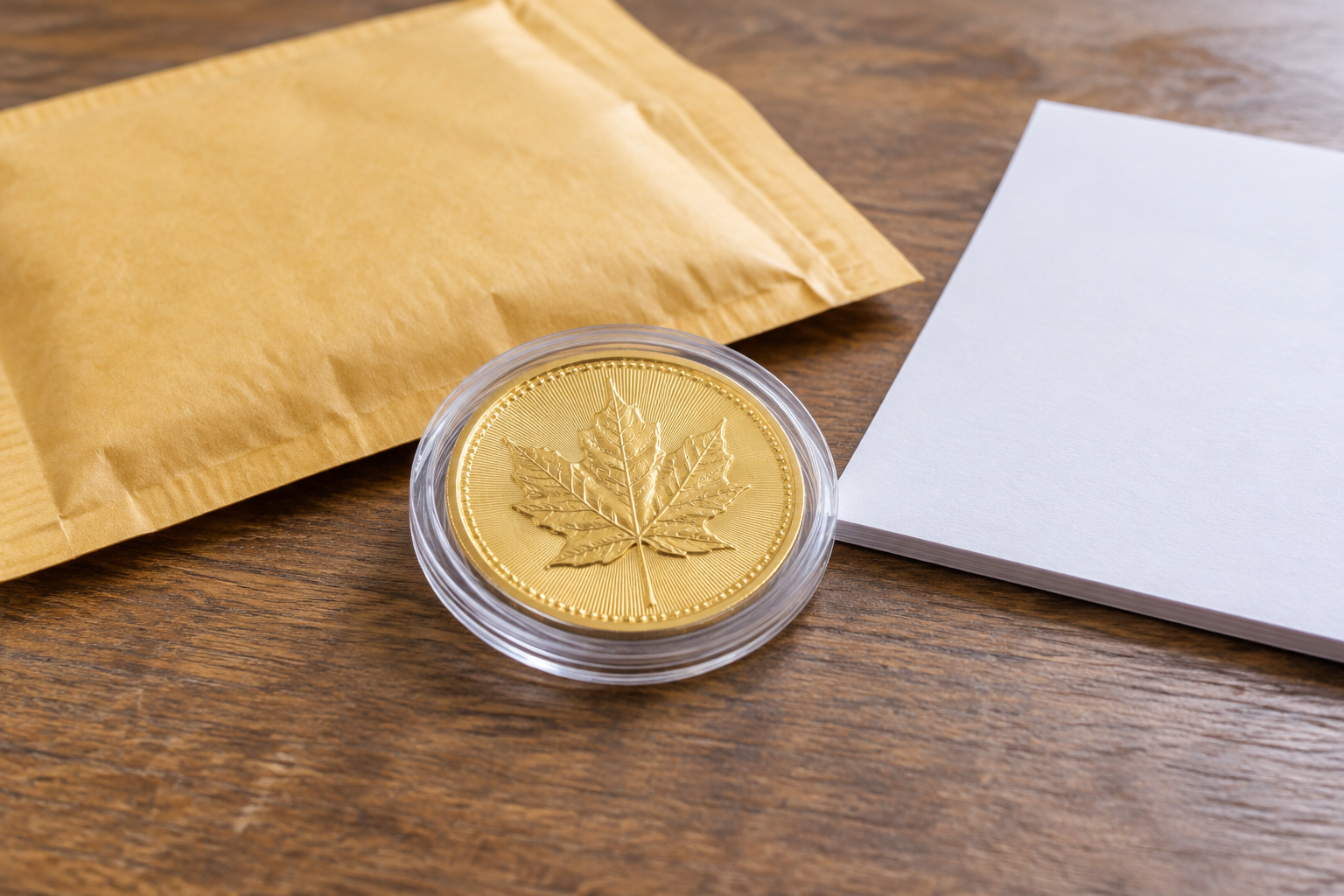
Protected Maple Leaf gold coin beside a plain padded mailing envelope and blank packing notes, viewed from a low angle before arranging a selling kit

Before dispatch, make a list of the contents and keep your photographs and relevant correspondence separately from the parcel. Check the provider’s instructions for securing the coin in its holder and for retaining any proof of posting. If you are uncertain whether the stated transit cover is suitable for your item, resolve that question before sending it rather than relying on an assumption about the envelope or service.

Local pop-up events are another possible route. Check the venue, dates and items accepted directly with the buyer before travelling. Ask whether the valuation and payment can be completed at the event, what identification is needed and whether you can take the coin away if you decide not to sell.

For a broader look at another precious-metal selling route, read how to sell silver safely in the UK. The same care with identity, fees and payment applies when you are comparing buyers for a gold coin.

Watch: Understanding the Coin

A visual introduction can help you recognise the design and learn the terminology used by bullion buyers. Treat any video as background information rather than a valuation or proof that your own coin is genuine.

Before You Accept an Offer

Read or listen to the offer carefully and check that it covers the item actually inspected. A useful discussion should leave you understanding whether the buyer is valuing the coin mainly for its gold or has also considered any potential collector appeal.

  • Is the amount a final offer, and does it include all deductions?
  • When does the quoted amount expire or become subject to a new market rate?
  • What details will appear on your transaction record?
  • When will the bank transfer be made, and how will you confirm receipt?
  • What happens if you decide not to sell?

Gold Buyer offers on-the-spot valuations and same-day payment by bank transfer. Confirm the practical arrangements for your chosen service before proceeding. If you are comparing another buyer, check their terms independently rather than assuming they work in the same way.

Keep your notes, any receipt and relevant correspondence after the sale. If the coin formed part of an estate or you are selling on someone else’s behalf, establish that you have authority to sell it first. For questions about your individual tax position, consult a qualified adviser rather than assuming every coin sale is treated identically.

Frequently Asked Questions

Can I value my coin from a photograph?

A photograph can help identify the design, date and visible condition, and it may be useful for an initial enquiry. It cannot reliably establish authenticity or precise weight on its own. A buyer may need to inspect and test the coin before making a firm offer, so ask which details can be assessed remotely and which require an appointment.

Should I clean the coin before selling it?

Generally, leave it as you found it and avoid polishing or abrasive cleaning. Cleaning can create marks or alter the surface, potentially affecting collector appeal. Keep the coin in its existing protective holder where practical, and ask a knowledgeable buyer for advice if dirt or damaged packaging makes inspection difficult.

Is a coin worth more because it is old?

Not necessarily. Age alone does not establish scarcity or collector demand. The issue, condition and authenticity matter, alongside the value of the gold it contains. If the coin has unusual features or presentation, ask whether the offer reflects those features and consider a specialist opinion before accepting a bullion-only valuation.

Will I be paid immediately after a home visit?

Gold Buyer offers same-day payment by bank transfer after a sale. Confirm when the transfer will be initiated and how you can check receipt before the appointment. Payment arrangements may differ for a selling kit or an event, so ask about the specific service you intend to use and keep your transaction record.

Can I sell a coin without its original packaging?

A coin can still be assessed without original packaging. The buyer will need to examine the item itself and may consider its condition and authenticity when making an offer. If you do have a capsule, box or associated paperwork, keep them together and mention them during the enquiry, particularly if the coin may interest collectors.

Ready to discuss your coin? Use the valuation booking link above to ask Gold Buyer about the available selling options and arrange an assessment that suits you.

By Epicurus One • November 25, 2026
Learn what affects Canadian Maple Leaf gold coin prices, how to assess an offer and how to arrange a convenient UK valuation.
By Epicurus One • November 23, 2026
Learn what affects a Canadian Gold Maple Leaf's value, how to compare offers and what to expect when selling your coin in the UK.
By Epicurus One • November 22, 2026
Learn how to identify, value and sell Canadian gold coins in the UK, compare offers and arrange a secure home valuation.
By Epicurus One • November 20, 2026
Learn how to value and sell a 1 oz Canadian Gold Maple Leaf coin in the UK, compare offers and arrange a secure, convenient payment.
By Epicurus One • November 18, 2026
Learn what affects the value of a 1 oz Gold Maple Leaf coin, how to compare offers and how to sell securely in the UK.
By Epicurus One • November 16, 2026
Learn what affects a 1 oz Maple Leaf gold coin’s value, how to assess an offer and what to expect when selling securely in the UK.
By Epicurus One • November 15, 2026
Learn how to check, value and sell a 1oz Canadian Maple Leaf gold coin securely, from understanding the gold price to arranging payment.
By Epicurus One • November 13, 2026
Understand what affects a 1oz Gold Maple Leaf coin's UK resale value, compare offers and prepare for a secure valuation and payment.
By Epicurus One • November 11, 2026
Learn how to sell jewellery safely in the UK, understand metal valuations and compare convenient ways to receive payment.
By Epicurus One • November 10, 2026
Explore how to sell gold and other precious metals in Alton, compare valuations and arrange a convenient, secure sale without visiting a shop.
Show More