
How to Identify Gold Purity: UK gold hallmarks, Carats and Testing Explained
Quick Answer
Gold hallmarks are the stamped marks that show a piece’s gold purity, maker and assay details in the UK. They help you tell whether gold is 9ct, 14ct, 18ct, 22ct or 24ct, and they are usually the fastest first check before valuation or testing.
If you own old jewellery, inherited pieces or broken chains, gold hallmarks are the quickest place to start. They tell you the likely purity, and they often explain why one item is worth far more than another of the same size. For anyone thinking about selling, understanding gold hallmarks can save time, reduce guesswork and help you spot items that deserve a proper valuation. It also makes the process less intimidating, especially if you are comparing 9ct, 14ct, 18ct, 22ct and 24ct gold before you speak to a buyer. If you want to learn how a professional valuation works after checking the marks, see how gold is valued. For readers who are already sorting necklaces, rings or chains, our gold necklace buying page is also useful. In this guide, we will explain what gold hallmarks mean, how to read the common UK numbers, what to do when there is no stamp, and how buyers test purity before making an offer.
What Gold Hallmarks Mean
Gold hallmarks are official marks that help identify a precious metal item and its purity. In the UK, they are designed to give buyers and sellers confidence about what they are looking at. If you can read gold hallmarks correctly, you can usually narrow down the carat and understand whether the item is likely to be suitable for scrap, resale or collection.
In practical terms, gold hallmarks often include a fineness number, a sponsor’s mark and sometimes an assay office symbol. That combination matters because it gives more context than a simple “gold” stamp. For a plain-language explanation, the Assay Office London guide to hallmarks is a useful starting point. You can also compare that with the World Gold Council’s overview of gold jewellery hallmarks, which explains how marks are used to identify precious metal items.
For sellers, the key point is simple. Gold hallmarks are not just decoration. They are a first check for purity, and they help separate genuine gold from gold-plated or mixed-metal pieces. However, they are not the whole story. Wear, repairs, imported jewellery and older items can all affect what you see. Therefore, the hallmark should be treated as a strong clue, not the final answer.
If you are sorting inherited pieces, start by checking the clasp, inner band, pendant bail or underside of a chain. Those are common places for gold hallmarks. Then compare the stamp against a known carat mark before you request a valuation.
How do you identify gold markings?
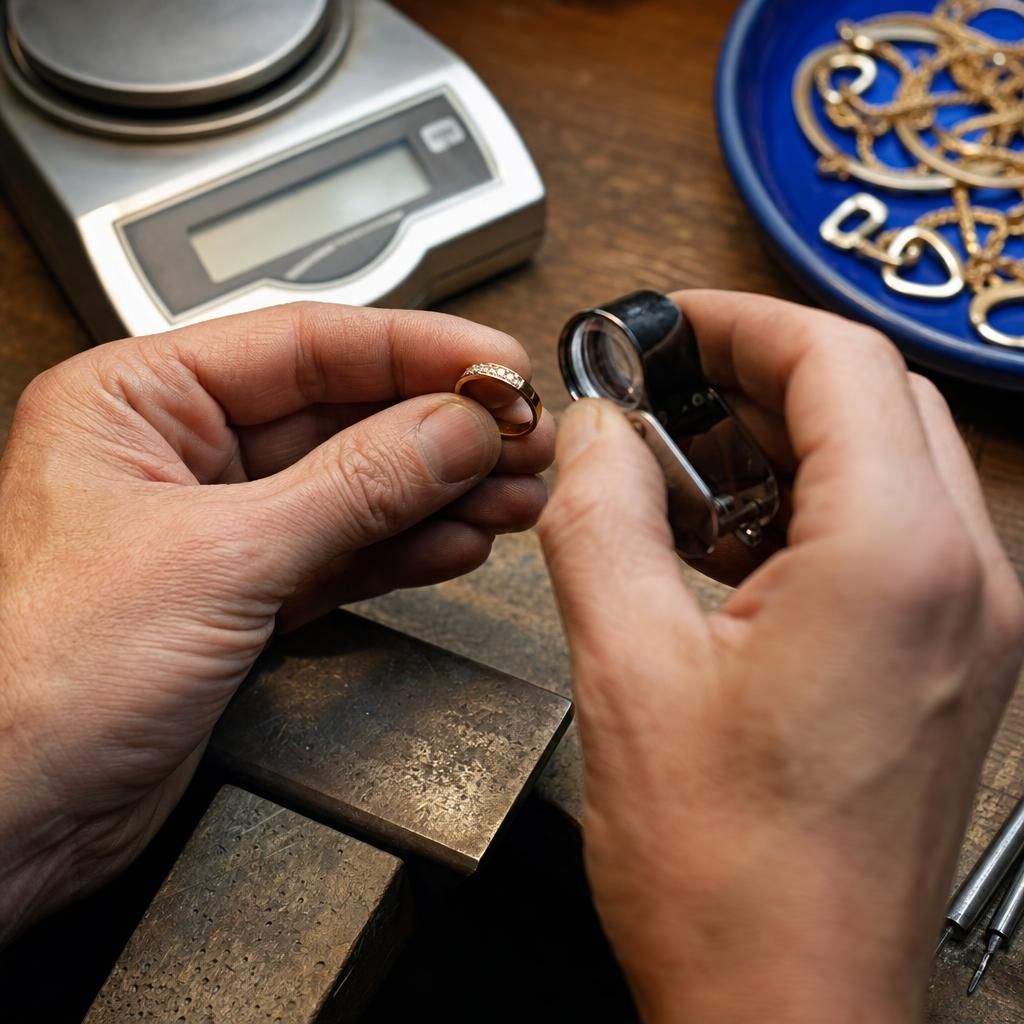
You identify gold markings by looking for small stamped numbers, letters or symbols on hidden parts of the item. Common places include the inside of rings, the back of pendants, the end of bracelets and the clasp of chains. Gold hallmarks may be tiny, so a bright light and a magnifying glass help.
The safest approach is to note every mark before you assume the purity. One number may show fineness, while another symbol may show the assay office or maker. If the item is worn, the stamp may be partial. In that case, the mark still helps, but you may need a test as well.
Common UK Gold Hallmark Numbers
The most common UK gold hallmarks use fineness numbers instead of writing the carat in full. These numbers are the easiest way to identify likely purity, and they are the marks most people look for before selling. In the UK market, the main figures you will see are 375, 585, 750, 916 and 999.
These numbers are closely tied to carat gold. They are useful because they make it easier to compare items quickly. For example, two rings may look similar, but one could be 9ct and the other 18ct. The difference in value can be significant because the amount of pure gold inside each item is very different.
A helpful rule of thumb is this: the higher the number, the higher the gold content. That matters whether you are selling jewellery, a chain, a locket or a coin. If you want to check current value alongside the hallmark, our gold price per gram UK guide can help you connect purity with price. You can also use how gold valuations are calculated to understand the offer process.
Below is a simple breakdown of the main UK gold hallmarks.
375 for 9ct Gold
375 is the hallmark commonly used for 9ct gold. It means the item is 37.5% pure gold, with the rest made up of other metals that add strength and alter colour.
This is one of the most common gold hallmarks on everyday jewellery in the UK. It is often seen on rings, chains and bracelets that are designed to be durable. Because it contains less gold than higher carats, it usually has a lower melt value than 14ct, 18ct, 22ct or 24ct gold.
585 for 14ct Gold
585 is the hallmark linked to 14ct gold. It indicates 58.5% pure gold.
This mark is less common in the UK than 9ct or 18ct, but it is still seen on imported jewellery and some higher-quality pieces. If you find this hallmark, it is worth separating the item carefully from plated pieces or costume jewellery.
750 for 18ct Gold
750 is the hallmark for 18ct gold. It means the piece is 75% pure gold, so it has a noticeably higher gold content than 9ct or 14ct.
Many buyers and jewellers treat 18ct gold as a strong balance between purity and practicality. It is common in better-quality rings, necklaces and designer pieces. Because of the higher gold content, gold hallmarks showing 750 often point to stronger valuation potential.
916 for 22ct Gold
916 is used for 22ct gold and indicates 91.6% pure gold.
This is a high-purity grade often associated with traditional jewellery and some investment-style items. It is softer than 9ct or 14ct gold, so it can show wear more easily. Even so, gold hallmarks marked 916 are important because they usually indicate a substantial gold content.
999 for 24ct Gold
999 is the hallmark most closely associated with 24ct gold. It signals gold that is essentially pure, often used for bullion and some investment products.
You may see this mark on bars or very high-purity items rather than on everyday jewellery. If you own bullion or coins, you may also find our sell gold bullion page useful. For sovereigns and similar pieces, sell gold can help you identify the right route to valuation.
What Gold Hallmarks Tell You About Carats
Gold hallmarks help you translate a stamped number into a carat level you can actually understand. That makes them one of the most practical tools for anyone planning to sell, insure or sort inherited gold. In other words, the hallmark is the shortcut; the carat is the meaning behind it.
Here is the basic relationship. 9ct gold has less gold content than 14ct. 14ct has less than 18ct. 18ct has less than 22ct. 24ct is the highest purity commonly discussed in consumer gold. That progression matters because purity drives value, but it also affects hardness, colour and wear.
This is why two chains of similar size can produce very different offers. A 9ct chain may be heavier, yet an 18ct chain of the same weight can still be more valuable because more of the metal is actual gold. Therefore, gold hallmarks are not just identification marks. They are valuation clues.
If you are checking an item before a home visit or an in-person quote, compare the stamp with the item type. For example, 9ct is common on everyday jewellery, while 22ct is more likely on special pieces or traditional designs. Meanwhile, 24ct is more likely on bullion or investment gold than on regular jewellery.
For readers who want to compare hallmark information with a valuation route, gold valuation UK explains what a professional check usually covers. That can be especially helpful if your gold hallmarks are clear but the item has dents, missing stones or repair marks.
What If Your Gold Has No Hallmark?
If your gold has no hallmark, it does not automatically mean it is fake. Older pieces, repaired jewellery and some imported items may be unmarked or only partly marked. However, you should not assume purity from appearance alone.
No hallmark means you need a closer look. A buyer may test the item, weigh it and inspect it for wear, solder lines or plating. That is especially important for scrap gold, odd earrings and inherited mixed lots. It is also common with items that have been resized, since repair work can sometimes affect the visible stamp.
A missing mark is one reason people choose a trusted local valuation rather than sending items away blindly. If you want a discreet, face-to-face route, our home visit gold buyer service is designed for that kind of situation. For customers in the Midlands and South, gold buyer near me can also help you find a local option.
The important thing is to stay cautious. Do not rely on colour, weight or magnet tests alone. Many non-gold metals can look convincing. A proper assessment is better, especially when gold hallmarks are missing, unclear or worn smooth.
How Gold Buyers Test Purity
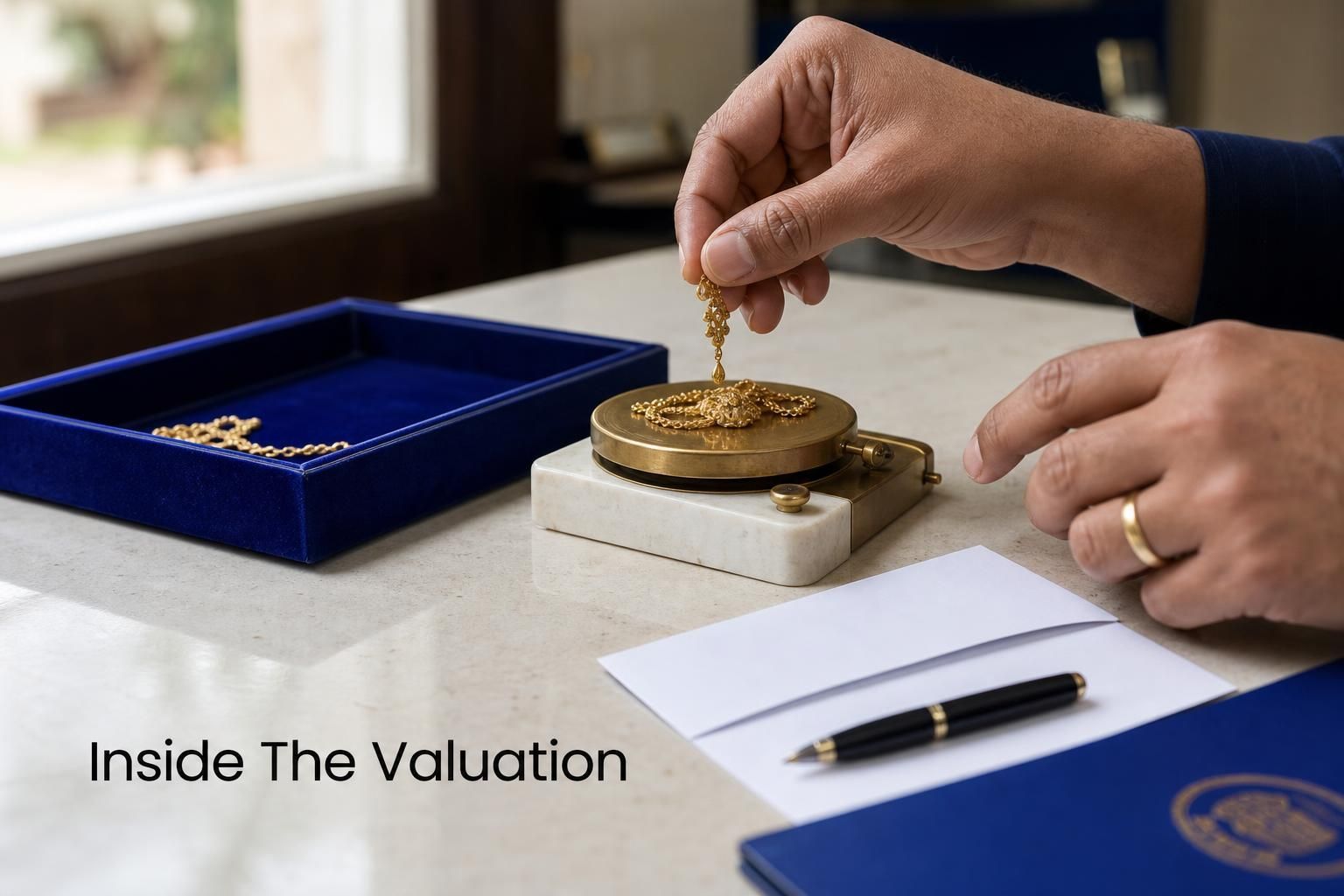
Gold buyers test purity because gold hallmarks are useful, but not always enough. A clear stamp helps, yet a professional test confirms whether the item matches the mark and whether there is any plating, solder or alloy variation.
Testing usually starts with visual inspection. Then a buyer may weigh the item and compare the hallmark to expected purity. Depending on the piece, a buyer may also use electronic methods or other non-destructive checks. For some items, more detailed testing may be needed if the stamp is unclear or the item looks altered.
This is where a good valuation process matters. A buyer should explain what they are doing and why. If you want to see the process step by step, how gold is valued gives a clear overview. For a broader buying route, Gold Buyer covers jewellery, bullion, scrap gold and inherited pieces.
Here is a short practical video that shows common gold hallmarks in a visual format.
If you are also trying to read makers’ stamps or jewellery symbols beyond purity, this second guide is useful.
The main takeaway is simple. Gold hallmarks guide the test, but they do not replace it. A trustworthy buyer checks both the mark and the metal before making an offer.
Why Purity Changes the Price
Gold purity changes the price because buyers pay for the amount of actual gold in the item. That is why gold hallmarks matter so much before you sell. The higher the purity, the more pure gold the piece contains, and the stronger the underlying value is likely to be.
This is especially important with mixed collections. You may have 9ct rings, 18ct necklaces and a 22ct bracelet in the same box. Although they may weigh differently, each item must be assessed on its own hallmark and purity. As a result, sorting pieces by mark before valuation can make the process faster and more accurate.
Purity also affects how a buyer treats the item. A fine 18ct chain with gold hallmarks may be considered very differently from broken scrap gold with no obvious maker’s marks. Likewise, a 24ct bullion bar is assessed differently from an inherited ring. If you are comparing routes to sale, gold price today and sell gold in the UK are helpful pages to review alongside your hallmark check.
For larger or investment-style pieces, you may also want to see sell gold bars safely and how to sell gold coins. Those pages are especially relevant if your gold hallmarks point to higher-purity bullion rather than jewellery.
In short, purity changes the price because it changes how much sellable gold is actually present. That is why identifying gold hallmarks first is such a smart move.
Get Your Gold Checked Professionally
If you are unsure about gold hallmarks, a professional check is the safest next step. A good buyer will help you identify the mark, confirm the purity and explain the valuation clearly before you decide whether to sell.
This is especially useful if you have inherited items, broken jewellery or pieces with faded stamps. It is also helpful if you want a private appointment or a home visit rather than posting valuables away. For those situations, contact Gold Buyer to arrange a convenient valuation, or explore how to sell inherited gold if you are sorting a family collection.
If your item is a chain, bracelet or necklace, you may also want to use sell scrap gold for broken pieces, or sell gold necklaces for wearable jewellery. The right route depends on purity, condition and item type.
Before any sale, make sure you know the hallmark, the carat and the likely gold content. That simple preparation helps you ask better questions and compare offers with confidence. It also reduces the risk of underestimating valuable pieces hidden in a mixed box.
If you want a fast, local and discreet option, a trusted buyer can turn a confusing box of gold hallmarks into a clear offer. That is often the easiest way to move from curiosity to cash without pressure.
Key Takeaways
- Gold hallmarks are the quickest starting point for identifying gold purity in the UK.
- 375, 585, 750, 916 and 999 are the main hallmark numbers to know.
- No hallmark does not always mean fake, but it does mean you should test the item carefully.
- Purity affects value because buyers pay for the actual amount of gold present.
- A professional valuation is the safest next step if the mark is worn, unclear or missing.
Frequently Asked Questions
How do I check the hallmark on gold?
Check the inside, back or clasp of the item with bright light and a magnifier. Gold hallmarks are usually tiny, so you may need to rotate the piece to see the full stamp clearly. Look for a fineness number such as 375, 585, 750, 916 or 999, then compare it with the item’s style and weight.
What does a 9ct gold hallmark look like?
A 9ct gold hallmark often shows 375, which is the standard UK fineness number for 9ct gold. You may also see a maker’s mark and an assay office symbol. The exact layout can vary, so the key sign is usually the 375 stamp rather than a full “9ct” word mark.
What are the codes for gold?
The most common UK codes for gold are 375 for 9ct, 585 for 14ct, 750 for 18ct, 916 for 22ct and 999 for 24ct. These gold hallmarks show the fineness of the metal. Higher numbers mean a higher proportion of pure gold.
How do I identify gold markings on inherited jewellery?
Start by checking hidden areas such as clasps, ring insides and pendant bails. Gold hallmarks may be worn or partial on older pieces, so take a photo and compare the number with standard UK purity marks. If the stamp is missing or unclear, a professional test is the safest option.
Can I sell gold without hallmarks?
Yes, you can still sell gold without hallmarks if the item tests as genuine gold. Missing gold hallmarks simply mean the buyer will need to verify purity more carefully. That is common with old, worn, repaired or imported pieces.